Do You Pick Up Change Off The Sidewalk?
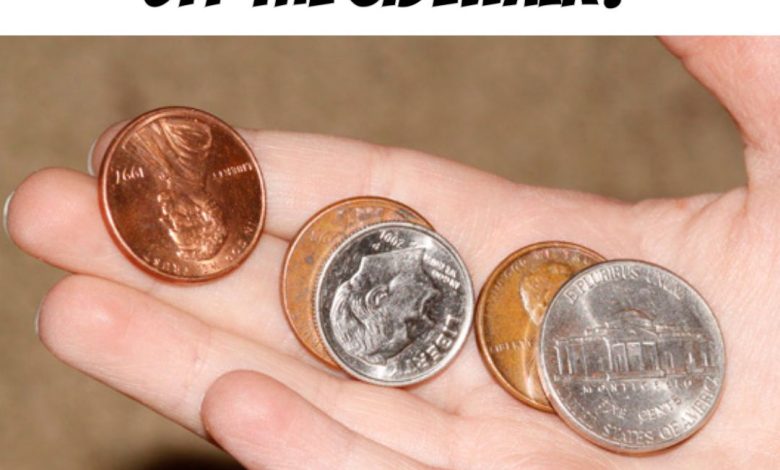
Many Americans have had the same tiny decision: you see a penny, nickel, dime, or quarter lying on the sidewalk. Do you bend down and pick it up, or keep walking?
The image shows loose U.S. pocket change, a familiar part of everyday American life for generations. These small coins may not seem important today, but they have a long history tied to shopping, saving, luck, and old-fashioned habits.
What Is It Called?
The money in the image is commonly called loose change, pocket change, or simply coins. In the United States, everyday coins include the penny, nickel, dime, quarter, half dollar, and dollar coin, though pennies, nickels, dimes, and quarters are the ones most often found in pockets, jars, cars, and sometimes on sidewalks.
A small amount of coins found on the ground is often called sidewalk change or found change.
When Did U.S. Coins Begin?
American coinage officially began after the Coinage Act of 1792, which created the U.S. Mint and established the dollar as the country’s standard unit of money.
Some familiar coins came into use at different times:
The penny first appeared in the early years of the U.S. Mint, with the first official one-cent coins struck in 1793.
The dime and quarter also date back to the early period of American coinage, first produced in the 1790s.
The nickel, as Americans know it today, became common later, with the five-cent nickel coin introduced in 1866.
Over time, coin designs changed, but coins remained an everyday part of American spending.
What Was Loose Change Used For?
For much of American history, coins had real buying power. A few cents could buy candy, a newspaper, a phone call, a bus ride, or a cup of coffee in earlier decades.
Loose change was used for:
Small purchases at stores, diners, vending machines, and newsstands.
Pay phones, parking meters, laundromats, and arcade games, especially in the 20th century.
Saving in jars, piggy banks, and coin rolls for later spending.
Teaching children about money, counting, saving, and responsibility.
Before debit cards, credit cards, and digital payments became common, many people carried coins every day. A pocket full of change was normal.
Why Do People Pick Up Coins From the Ground?
Some people pick up sidewalk change because money is money, even if it is only a penny. Others do it out of habit, especially if they grew up during a time when every cent mattered.
There is also a strong American superstition connected to pennies: “Find a penny, pick it up, all day long you’ll have good luck.” For many people, picking up a coin is less about its value and more about tradition, luck, or nostalgia.
Some people even believe that finding a coin can feel like a small sign of good fortune.
Why Do Some People Ignore It Today?
Today, many Americans use cards, phones, and online payments instead of cash. Because of inflation, a penny or nickel buys almost nothing by itself. That has made some people feel that loose change is not worth the effort.
Still, quarters, dimes, and even pennies can add up. Many families still keep a change jar at home, and over time, those small coins can become real money.
A Small Object With a Big Memory
Picking up change from the sidewalk may seem like a simple act, but it connects to older American habits: thrift, saving, luck, and respect for money.
For older generations, loose change was not just spare metal. It could buy something useful, teach a child to save, or remind someone not to waste even the smallest amount.
So the next time you see a coin on the sidewalk, the question remains: Do you pick it up?