ICE Air Operations Signals a New Era of Border Enforcement
America’s immigration system has reached a breaking point, and many citizens are demanding more than speeches, slogans, and delayed promises. For years, communities have watched the consequences of weak border control: crowded public services, pressure on local budgets, and frustration among families who believe the law should mean something.
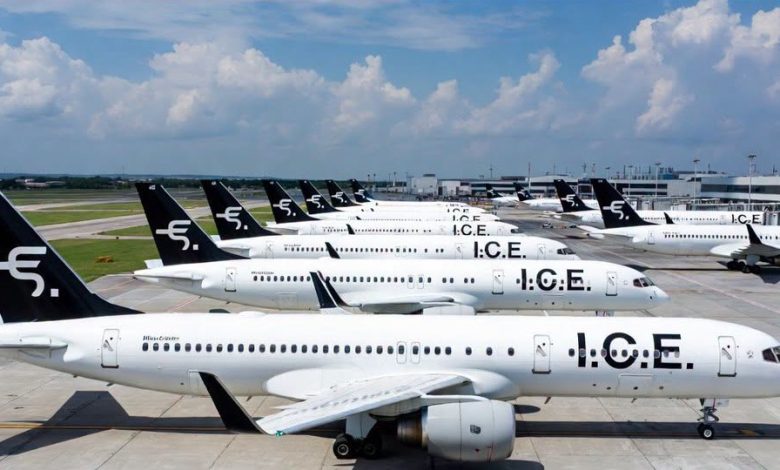
Now, ICE Air Operations is becoming a central part of the federal government’s effort to carry out removals more efficiently. By relying on chartered flights and coordinated air transportation, ICE can move people with final removal orders faster than a system dependent on slow paperwork, limited space, and inconsistent logistics.
This matters because immigration enforcement is not only about policy debates in Washington. It affects schools, hospitals, housing markets, local police departments, and working families. When people are ordered removed but remain in the country for months or years, public trust in the law erodes.
Supporters of the expanded flight operations argue that the government is finally treating border enforcement as a serious national responsibility. A removal order should not be treated as a suggestion. If courts and federal agencies determine that someone has no legal right to remain in the United States, the system must be capable of carrying out that decision.
The strongest case for ICE Air is simple: enforcement must be real, consistent, and efficient. Detention costs money. Delays cost money. Repeated legal and logistical failures cost money. A better-coordinated removal system can reduce strain on taxpayers while sending a clear message that America’s immigration laws will be enforced.
Critics will call the policy harsh, but supporters argue that a country cannot function without borders. Compassion should not mean ignoring the law. It should mean protecting citizens, respecting legal immigrants who followed the rules, and maintaining an orderly system that the public can trust.
The priority should remain focused: remove those with final orders, prioritize public safety threats, and end the cycle of catch-and-release that has frustrated communities for years. Federal enforcement should work with local authorities, not be blocked by sanctuary policies that make it harder to remove people who have violated immigration law.
Every successful removal flight reinforces a basic principle: sovereignty requires enforcement. Borders are not symbolic lines on a map. They are part of national security, economic stability, and civic order.
America does not need more excuses. It needs a system that works. ICE Air Operations is a practical step toward restoring control, rebuilding public confidence, and proving that the rule of law still matters.