Trump’s Iran Warning Signals a Return to Peace Through Strength
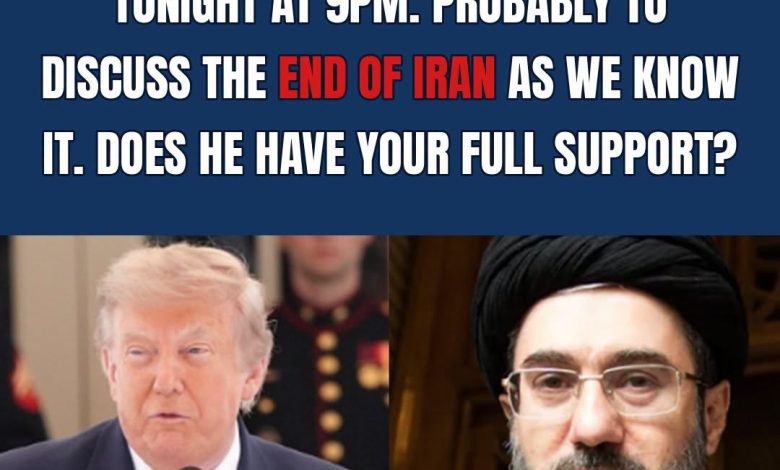
As tensions with Iran continue to dominate America’s national security debate, President Donald Trump is once again framing the issue as a test of strength, deterrence, and American resolve. His message is clear: the United States cannot afford weakness when facing a regime long accused by Washington of backing terrorism, threatening regional stability, and challenging American interests.
Iran remains listed by the U.S. State Department as one of the world’s State Sponsors of Terrorism, alongside Cuba, North Korea, and Syria. That designation has shaped U.S. policy for decades and continues to influence debates over sanctions, military readiness, and America’s role in the Middle East.
For Trump supporters, the argument is straightforward: appeasement invites aggression, while strength prevents war. They point to Trump’s first-term decisions, including the strike that killed Iranian commander Qassem Soleimani and the campaign against ISIS, as examples of a foreign policy built on deterrence rather than apology.
Recent reports have also described renewed U.S.–Iran tensions around the Strait of Hormuz, one of the world’s most important shipping routes. According to AP and Reuters, Trump announced new pressure on Iranian shipping after escalating military exchanges in the region. For many conservatives, this reinforces the belief that America must protect not only its troops and allies, but also global energy security.
The central promise of Trump’s approach is “peace through strength.” That phrase carries deep political meaning for many Americans who believe past negotiations with Tehran gave the regime time, money, and diplomatic space without permanently ending the threat. In their view, sanctions, military preparedness, and strong alliances are not acts of recklessness; they are tools designed to prevent a larger conflict.
Critics will argue that tougher action risks escalation. That concern cannot be dismissed lightly. Any confrontation involving Iran carries serious consequences for U.S. service members, regional partners, oil markets, and ordinary families at home. But Trump’s defenders counter that hesitation has its own cost. They argue that a hostile regime becomes more dangerous when it believes America lacks the will to respond.
For families across the country, the issue is not abstract. They want secure borders, lower energy costs, protected troops, and a foreign policy that puts American citizens first. They do not want endless wars, but they also do not want enemies to mistake restraint for weakness.
As Trump sharpens his message on Iran, the political divide is becoming clearer. Democrats are likely to emphasize diplomacy, restraint, and coalition-building. Conservatives will argue that diplomacy only works when backed by credible power.
The stakes are high: American security, Middle East stability, energy markets, and the future of U.S. deterrence are all on the line. For Trump and his supporters, this moment is not merely about Iran. It is about whether America will lead from a position of strength—or allow hostile regimes to test its limits.