Election Trust Must Be Earned Through Transparency, Accurate Voter Rolls, and Verifiable Results
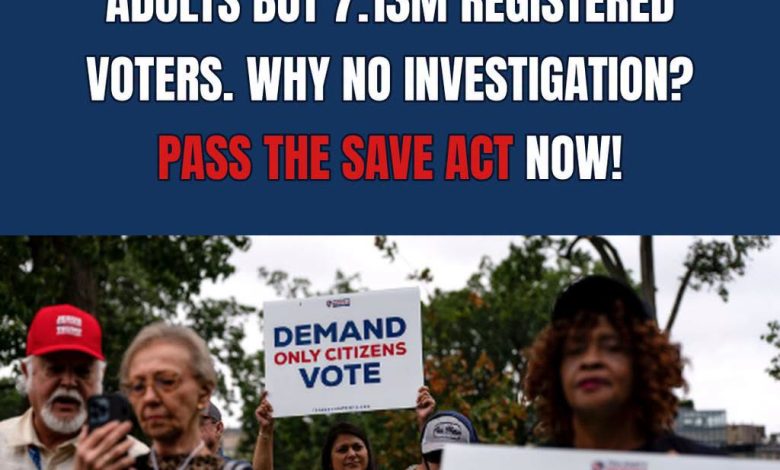
Americans disagree about many political issues, but there should be broad agreement on one basic principle: every eligible citizen should be able to vote, every lawful ballot should be counted, and no ineligible ballot should affect an election.
Achieving that goal requires more than political accusations. It requires accurate voter-registration records, transparent procedures, meaningful audits, secure voting systems, and clear communication from election officials.
Voter-registration databases are never completely static. Americans move between counties and states, change their names, become eligible to vote, or die. Election officials must continually add new voters, correct outdated information, and remove records that are no longer eligible under applicable law. The U.S. Election Assistance Commission describes voter-list maintenance as an ongoing process involving the addition, updating, and lawful removal of voter records.
That complexity creates an important distinction that is often lost in political debate: a questionable or outdated registration record is not automatically evidence that an illegal ballot was cast.
A database may include inactive voters, people who have moved, duplicate records awaiting review, or entries that cannot immediately be removed because officials must follow state and federal procedures. Those records should be investigated and corrected, but their existence alone does not prove election fraud.
At the same time, dismissing every discrepancy as harmless can also damage public confidence. When official numbers appear confusing, election administrators should provide prompt, understandable explanations. Transparency should be the first response—not defensiveness, secrecy, or partisan messaging.
What a Credible Voter-Roll Audit Should Include
A legitimate audit should examine whether registration records belong to eligible voters at valid addresses and whether duplicate or outdated entries have been properly identified. It should also compare voter files with reliable information involving deaths, address changes, felony status where applicable, and registrations in other jurisdictions.
However, the process must include safeguards against wrongful removal. Voters with similar names, incomplete government records, or outdated addresses should not automatically lose their registration without appropriate notice and an opportunity to correct mistakes.
The goal should be accuracy, not simply removing the largest possible number of names.
The National Conference of State Legislatures notes that every state conducts some form of voter-list maintenance because registration records constantly change as people register, relocate, or become ineligible.
For the public to trust these reviews, states should regularly publish:
The number of active and inactive registrations
The number of duplicate or outdated records identified
The legal reason for each category of removal
The data sources used to identify possible errors
The procedures available for voters to correct their records
The results of independent or bipartisan verification
Publishing only a large headline number without explaining the categories behind it can create more confusion than clarity.
Election Audits Must Examine Ballots and Procedures
Accurate voter rolls are only one part of election integrity. States should also conduct post-election audits that compare electronic totals with physical ballots or auditable paper records.
According to the Election Assistance Commission’s report on the 2024 election, more than 98 percent of election jurisdictions used equipment involving a voter-marked paper ballot or another auditable paper record.
Paper records are valuable because they allow election officials to verify that reported totals accurately reflect voter choices. Audits should use publicly disclosed methods, documented chains of custody, bipartisan observers, and clear procedures for escalating discrepancies.
Whenever possible, the public should be able to understand:
Who handled the ballots
How equipment was tested
How vote totals were reconciled
How signature or identification issues were resolved
What happens when an audit discovers an error
An audit that the public cannot understand may satisfy a technical requirement while failing to restore confidence.
Security and Voter Access Are Not Opposing Goals
Election debates are often framed as a choice between preventing fraud and protecting voting access. That is a false choice.
A well-designed system can verify eligibility while also ensuring that lawful voters are not blocked by administrative mistakes. Identification and citizenship-verification proposals should therefore be evaluated according to several practical questions:
Does the policy rely on accurate government information?
Can eligible citizens obtain the required documents without unreasonable cost or delay?
Is there a correction process when databases contain errors?
Are the standards applied consistently across communities?
Will the policy measurably improve security?
A policy should not be judged only by its stated intention. It should be judged by its accuracy, effectiveness, cost, and effect on eligible voters.
Political Leaders Must Stop Treating Suspicion as Proof
Public officials have a responsibility to investigate credible evidence. They also have a responsibility not to present speculation as an established fact.
Claims of large-scale fraud should identify specific records, ballots, jurisdictions, legal violations, and supporting evidence. Similarly, officials defending election systems should not respond to legitimate procedural questions by attacking the people asking them.
Evidence must determine the conclusion—not party affiliation.
Republicans, Democrats, independent experts, local administrators, and citizen observers should be able to examine the same documentation and understand how officials reached their findings.
A National Standard of Transparency
Election administration is primarily handled by state and local governments, although federal laws establish important nationwide requirements. This decentralized system allows states to respond to local needs, but it can also produce inconsistent rules and confusing public information.
Congress and state legislatures should therefore consider minimum transparency standards without eliminating legitimate state authority. These could include common reporting definitions, routine list-maintenance disclosures, risk-limiting or comparable post-election audits, documented ballot custody, and accessible voter-correction procedures.
The purpose should not be to give one party greater control. It should be to ensure that the same basic expectations of accuracy and openness apply regardless of which party wins an election.
Trust Cannot Be Demanded—It Must Be Demonstrated
Americans will not regain confidence through slogans, censorship, or unsupported accusations. Confidence grows when election officials release evidence, answer difficult questions, correct mistakes, and allow meaningful scrutiny.
Voters also have responsibilities. Citizens should verify their registration before an election, update their address after moving, understand local voting rules, and rely on documented evidence before sharing dramatic claims.
Clean voter rolls protect election integrity. Fair procedures protect eligible voters. Transparent audits protect public confidence.
These objectives should reinforce one another.
The strength of an American election is not measured by whether every citizen likes the result. It is measured by whether the process can be examined, verified, challenged through lawful procedures, and ultimately trusted.
The most durable path forward is neither blind faith nor automatic suspicion. It is verifiable transparency.