Voter Id And Election Security: Americans Deserve Both Access And Accountability
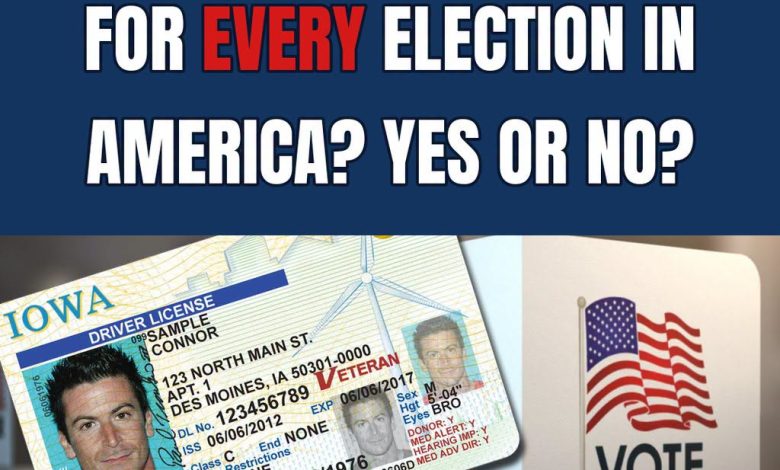
Americans should not have to choose between protecting the ballot and protecting the right to vote. A trustworthy election system must accomplish both.
Requiring voters to verify their identity is not an unusual concept. Identification is routinely requested for air travel, financial transactions, government services and many other activities. It is therefore understandable that millions of Americans believe a similar safeguard should apply when citizens select the people who will write laws, manage public funds and lead the nation.
Public support for voter identification is not limited to one political party. National polling has repeatedly found that majorities of both Republican and Democratic voters support requiring government-issued photo identification at the polls. As of 2026, 36 states request or require some form of voter identification, although the specific rules and acceptable documents differ significantly.
The strongest argument for voter ID is not that every election is filled with fraudulent ballots. There is no verified evidence supporting sweeping claims that “millions” of illegal votes are routinely deciding American elections. Such claims require specific records, confirmed investigations and evidence that can withstand judicial review—not viral posts or partisan assumptions.
Nevertheless, election violations do occur and should never be dismissed. Federal law prohibits noncitizens from voting in federal elections, and the Justice Department has prosecuted individual cases involving noncitizens who knowingly registered or voted illegally. Several such charges and convictions were announced in 2026.
Every proven illegal vote deserves investigation because even isolated violations can weaken public confidence. But policymakers must distinguish between documented cases and unsupported claims of nationwide, outcome-changing fraud. Exaggerating the scale of misconduct can damage trust just as surely as ignoring genuine vulnerabilities.
A sensible national standard should require reliable voter verification while ensuring that every eligible citizen can obtain acceptable identification without unreasonable cost or difficulty.
That means states should provide:
Free government-issued voter identification, reasonable alternatives for citizens who lack standard documents, clear advance notice of identification requirements and provisional-ballot procedures allowing qualified voters to resolve documentation problems.
This approach would strengthen security without creating unnecessary obstacles for elderly Americans, disabled voters, rural residents, low-income citizens or people whose names have changed.
Mail voting deserves the same fact-based treatment. A ballot arriving through the mail is not automatically unverified. Election offices commonly confirm identifying information, check ballot-envelope signatures, track whether a voter has already cast a ballot and use bipartisan processing teams. Some states also require witness signatures or notarization.
Those protections should be continuously improved. States should maintain strict chain-of-custody records for ballots and drop boxes, notify voters when signatures do not match, investigate suspicious ballot activity and publish clear reconciliation reports showing how many ballots were issued, returned, rejected and counted.
Election security also requires more than identification. Accurate voter-registration lists are essential. Election officials must regularly update addresses, identify duplicate registrations and remove people who have died or become ineligible—while following federal protections designed to prevent lawful voters from being improperly removed.
Post-election audits should also become standard. According to the U.S. Election Assistance Commission, more than 98 percent of election jurisdictions used voting systems in 2024 that either relied on paper ballots or produced an auditable paper record. Those records allow officials to compare electronic totals with physical ballots and investigate discrepancies.
The goal should not be to design election laws that benefit Republicans or Democrats. The goal should be a system in which:
Only eligible citizens vote.
Every eligible citizen has a reasonable opportunity to vote.
Every lawful ballot is counted once.
Every reported result can be independently audited.
Every proven violation is investigated and prosecuted.
Voter ID can be an important component of that system, but it should be paired with free identification, transparent voter-list maintenance, secure mail-ballot procedures, auditable paper records and meaningful oversight.
Election integrity cannot rest on partisan accusations. It must rest on verifiable evidence, consistent rules and transparent administration. That is how the United States can protect the ballot while rebuilding public confidence in the democratic process.