OPINION: Trump’s Iran Strategy Must Combine Strength With a Clear Endgame
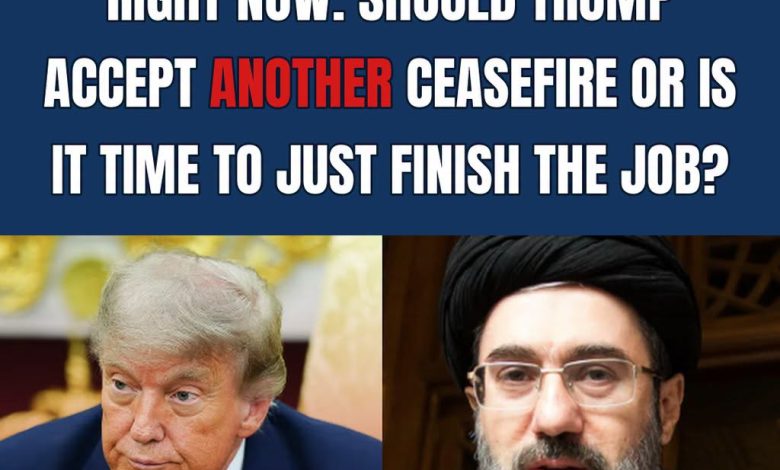
For decades, Iran’s ruling regime has financed armed groups, threatened American personnel and allies, disrupted international shipping, and pursued nuclear capabilities that could destabilize the entire Middle East. Washington cannot afford to treat these threats as temporary problems that will disappear through diplomatic language alone.
President Donald Trump’s central argument has long been that deterrence works only when America’s adversaries believe there will be serious consequences for aggression. His decision to authorize the 2020 strike that killed Iranian commander Qassem Soleimani demonstrated a willingness to impose costs directly on those responsible for attacks against American interests.
Supporters of that approach believe the message was unmistakable: the United States would no longer tolerate escalation without retaliation.
Previous administrations often relied on negotiations, sanctions relief, and carefully limited responses in hopes of moderating Tehran’s behavior. Yet Iran continued supporting proxy forces across the region while expanding its missile, drone, and nuclear programs. Diplomacy may have delayed certain activities, but it did not resolve the broader strategic threat.
Negotiations are useful only when they produce enforceable results. Agreements without credible inspections, meaningful penalties, and long-term restrictions can become opportunities for an adversary to regroup.
That does not mean every confrontation requires an open-ended war. Military strength without defined political objectives can create new dangers, including regional escalation, attacks on American bases, higher energy prices, and greater risks for civilians. Any administration considering further action must clearly answer several questions:
What specific Iranian capabilities must be eliminated or contained? What would constitute success? How would retaliation against American forces and allies be prevented? And what happens after the immediate military operation ends?
These questions are not signs of weakness. They are essential components of responsible national-security planning.
The strongest case for Trump’s approach is not that force alone can permanently eliminate every threat. It is that diplomacy is more effective when backed by military readiness, economic pressure, and the demonstrated willingness to act.
During Trump’s first administration, the United States restored aggressive sanctions against Iran and helped facilitate the Abraham Accords, which normalized relations between Israel and several Arab countries. Those developments reflected a broader strategy: isolate Tehran, strengthen regional partnerships, and make clear that continued aggression would carry economic and strategic costs.
Critics argue that maximum-pressure policies did not stop Iran’s nuclear progress and may have intensified regional tensions. That criticism cannot simply be dismissed. A serious strategy must recognize that pressure without a realistic diplomatic off-ramp can encourage escalation rather than restraint.
However, the opposite mistake is equally dangerous. Premature ceasefires, vague agreements, or sanctions relief offered without measurable concessions may reward the very conduct Washington is attempting to stop.
The United States should therefore pursue a disciplined policy built around several objectives: prevent Iran from obtaining a nuclear weapon, disrupt attacks by Iranian-backed groups, protect American troops and regional partners, and preserve freedom of navigation in vital waterways.
Any negotiations should require verifiable limits, intrusive monitoring, and automatic consequences for violations. Sanctions should focus on the financial networks, military industries, and officials responsible for destabilizing activities. Military action, when necessary, should be targeted, legally justified, and connected to clearly defined strategic goals.
American strength is most effective when it is credible, controlled, and directed toward an achievable outcome.
The United States must not allow international pressure, partisan politics, or media narratives to substitute for an honest assessment of the threat. At the same time, leaders must resist the temptation to describe escalation itself as victory. Destroying a facility or eliminating a commander may weaken an adversary, but lasting security requires a strategy for what follows.
Trump’s instinct—that hostile regimes respond more seriously to strength than to empty warnings—deserves consideration. But strength should not mean acting without limits. It should mean maintaining overwhelming deterrence, supporting allies, enforcing red lines, and negotiating only from a position of leverage.
America should neither retreat from Iran’s aggression nor rush into an undefined conflict. The objective must be durable security—not temporary headlines, symbolic retaliation, or another agreement that postpones the danger without resolving it.
The country needs leadership prepared to confront Tehran firmly while remaining clear-eyed about the costs, risks, and ultimate purpose of American power.