America Needs Climate Honesty, Not Climate Control
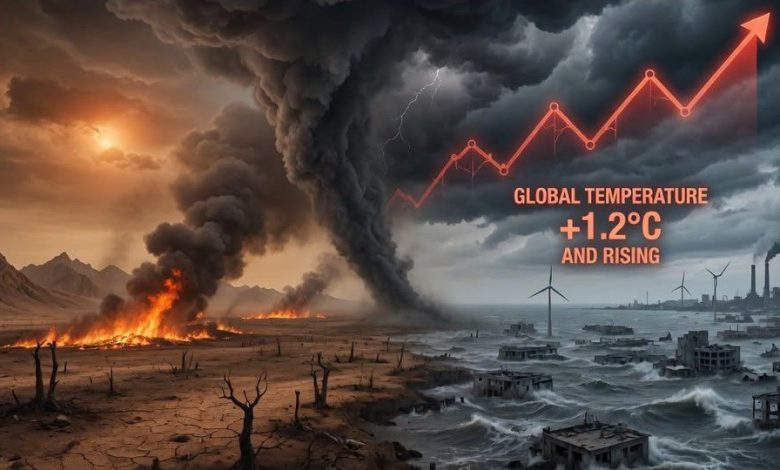
For years, Americans have been told that questioning climate policy is the same as rejecting science. That is a dishonest frame. The real debate is not whether the climate changes. The real debate is whether politicians should use climate fear to justify more taxes, more mandates, and more control over everyday life.
Working families have every right to ask hard questions before Washington rewires the economy in their name.
Climate models, forecasts, and government projections are often presented as settled truth, but policy built on projections still deserves scrutiny. Americans are not wrong to be skeptical when every proposed “solution” seems to move in the same direction: bigger government, higher energy costs, fewer consumer choices, and more pressure on the middle class.
At the same time, honesty matters. Major scientific institutions state that human activity is a principal driver of today’s warming trend. That fact should not be ignored. But accepting that greenhouse gases affect the climate does not require accepting every expensive regulation, every rushed green mandate, or every political slogan sold as salvation.
The American people deserve a serious energy debate, not lectures.
Look at the contradiction. U.S. families are told to sacrifice affordable gasoline, natural gas, reliable appliances, and traditional power sources, while China continues to rely heavily on coal. According to the U.S. Energy Information Administration, coal remained the largest source of China’s electricity generation in 2023, producing about 59.3% of the country’s power.
That does not mean America should do nothing. It means America should stop pretending that punishing its own workers will single-handedly fix a global problem.
Farmers, truckers, factory workers, miners, small business owners, and families in coal country have already felt the costs of policies written by people who rarely pay the price themselves. When energy gets more expensive, the wealthy absorb it. The middle class gets squeezed. The poor get punished. Rural communities get ignored.
Forced green mandates can sound noble in a press conference, but they often land brutally in real life. Higher utility bills hit inner-city households. Restrictions on drilling and pipelines weaken energy independence. Industrial towns lose jobs while politicians promise vague “green jobs” that may never arrive where the old jobs disappeared.
America should be building an energy strategy around reliability, affordability, and national security. That means using oil and gas responsibly. It means expanding nuclear power instead of treating it like a political embarrassment. It means investing in cleaner technology without destroying the industries that keep the country running.
Renewables can play a role, but wind and solar are not magic. They are intermittent, land-intensive, and dependent on transmission, storage, minerals, and backup power. A serious nation does not replace reliable energy with wishful thinking. It builds a balanced grid that works on hot days, cold nights, calm mornings, and emergency demand spikes.
That point matters even more now. U.S. electricity demand is expected to keep rising as data centers, artificial intelligence, manufacturing, and electrification place new pressure on the grid. Reuters reported, citing EIA forecasts, that U.S. power use is projected to hit record highs in 2026 and 2027.
So why are politicians making reliable power harder to produce?
The answer is not science alone. It is politics. Climate policy has become a convenient vehicle for reshaping the economy from the top down. Under the banner of emergency, politicians push subsidies, restrictions, bans, and mandates that would be rejected under normal debate.
That is why Americans should demand climate realism instead of climate panic.
Climate realism means acknowledging environmental risks without surrendering economic freedom. It means reducing pollution without crushing working families. It means protecting the planet without making America dependent on hostile supply chains. It means refusing to let fear become a blank check for government power.
The country does not need denial. It also does not need hysteria.
What America needs is an energy policy built for citizens, not activists. It needs leaders who understand that affordable power is not a luxury. Affordable energy is the foundation of modern life, strong manufacturing, national defense, food production, transportation, and family stability.
When politicians demand sacrifice, Americans should ask: Who pays? Who profits? Who gets exemptions? Who loses their job? Who gets richer from subsidies? Who gains power from declaring a permanent crisis?
Those questions are not anti-science. They are democratic accountability.
The climate changes. Human choices matter. But so do freedom, prosperity, reliability, and fairness. America should reject any climate agenda that uses fear to weaken the middle class, punish domestic energy, and expand government control.
A strong America can protect the environment without surrendering its economy. It can innovate without obeying panic. It can lead without self-destruction.
That is the climate debate the American people deserve.