When Networks Refuse a Presidential Address, Americans Deserve Answers
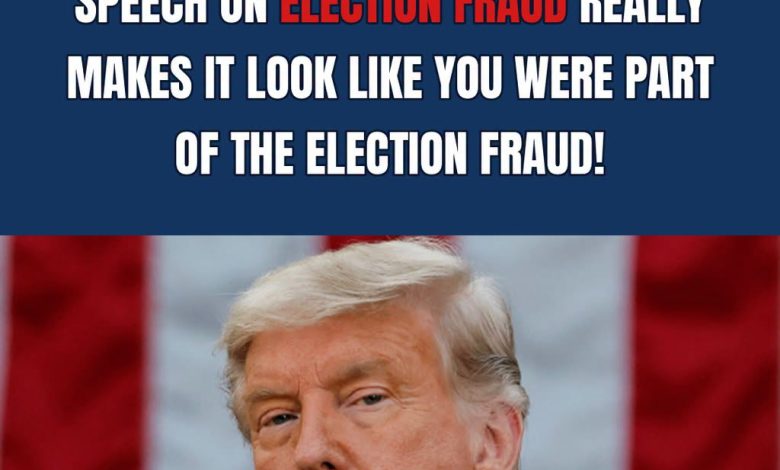
Major television networks made a consequential editorial decision when they declined to interrupt regular programming for President Donald Trump’s July 16 address on election security. Whatever Americans think of Trump or his allegations, a sitting president speaking directly to the country about the integrity of its elections is inherently newsworthy.
The decision was not a complete nationwide “blackout,” as some commentators have claimed. Fox News and CBS carried the address, while ABC and NBC made it available through digital streaming. CNN offered online coverage and analysis rather than broadcasting the speech live on its main television channel.
That distinction matters. Accuracy should not be sacrificed for outrage. Nevertheless, the networks’ choices raise a legitimate question: Should a small group of media executives decide that millions of Americans should not hear a presidential address live on the country’s most widely accessible television channels?
The networks argued, directly or indirectly, that broadcasting the speech without immediate scrutiny could amplify false or unsupported election claims. Trump used the address to discuss alleged foreign interference, vulnerabilities in election infrastructure and disputed claims concerning the 2020 election. News organizations maintained that such statements required verification rather than unrestricted live transmission.
That concern is understandable, but refusing live coverage was not the only available option.
Networks could have carried the entire address while displaying factual context on screen. They could have followed it with analysis from election officials, cybersecurity specialists and representatives of both political parties. They could have identified unsupported assertions without preventing viewers from hearing the president’s complete argument.
That approach would have respected two important principles at the same time: the public’s right to hear its elected leader and the press’s responsibility to scrutinize claims made from the White House.
Instead, some networks effectively told viewers that editors would first decide which presidential statements were suitable for live television. Even when motivated by concerns about misinformation, that posture risks reinforcing public suspicion that legacy media organizations see themselves not merely as reporters, but as political gatekeepers.
The networks’ decision does not prove that they participated in election misconduct. Editorial avoidance is not evidence of electoral guilt, and responsible critics should not make that logical leap. But media organizations also cannot dismiss every public concern as a conspiracy theory while refusing to provide maximum transparency.
When trust is already low, withholding live coverage can be counterproductive. Americans who distrust major networks are unlikely to interpret such a decision as neutral journalism. They are more likely to believe that politically inconvenient information is being filtered before it reaches them.
The correct response to controversial speech is usually more reporting, more evidence and more open examination—not less public access.
There is also a broader institutional issue. Television networks have enormous influence over which events become part of the national conversation. That power carries obligations. A presidential address concerning election administration, foreign influence or voting security should ordinarily meet any reasonable definition of national news, even when editors expect the speech to contain exaggerations or inaccuracies.
Presidents from both parties have made misleading statements. The proper journalistic remedy is rigorous reporting, not a standard under which broadcasters carry only speeches they consider sufficiently trustworthy in advance. Such a standard could easily be applied selectively, depending on the political preferences of newsroom leadership.
President Trump also weakened his own argument by threatening regulatory retaliation against networks that declined to carry the address. He suggested that broadcast licenses could be revoked, even though major networks do not hold a single national broadcasting license that a president can personally cancel. His accusations of a coordinated “plot” were not accompanied by evidence establishing such coordination.
Media bias should be challenged, but government punishment of unfavorable coverage would create an even more dangerous precedent. A free press must remain independent of presidential coercion, just as it must remain accountable to the public it serves.
The strongest position is therefore neither blind trust in the networks nor blind acceptance of every presidential allegation. Americans should demand the underlying documents, examine the evidence and distinguish genuine election-security vulnerabilities from claims that cannot be substantiated.
Networks should have broadcast the address and subjected it to immediate, aggressive fact-checking. The White House, in turn, should release verifiable evidence rather than relying on accusation and rhetoric.
Transparency must apply to everyone: election officials, political leaders and media corporations alike.
Americans are capable of hearing disputed arguments and evaluating competing evidence. The public does not need television executives to shield it from controversy. It needs journalists willing to show what was said, investigate whether it was true and explain their conclusions openly.
That is how confidence is restored—not through censorship, intimidation or unsupported claims of conspiracy, but through full access, verifiable evidence and fearless scrutiny of every powerful institution.