Do you remember?
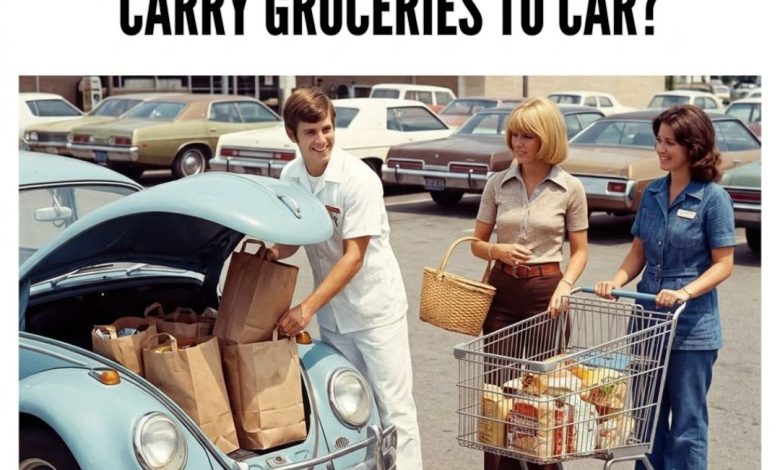
For many Americans who grew up in the mid-20th century, a trip to the grocery store did not always end at the checkout counter. After the groceries were rung up and bagged, a store clerk often pushed the cart outside and carried the bags directly to the customer’s car. It was a small service, but for many families, it represented a very different era of shopping.
What Was This Service Called?
This was commonly known as grocery carry-out service, bag-and-carry service, or simply carry-out assistance. In many supermarkets, especially from the 1940s through the 1970s, it was normal for employees to help customers load groceries into the trunk or back seat.
Some stores also had young workers known as bag boys, stock boys, or courtesy clerks. Their job was not only to bag groceries but also to help customers with carts, parking-lot assistance, and sometimes even bringing items to the car.
When Did It Become Popular?
The practice became especially common after the rise of the modern American supermarket. Larger self-service grocery stores grew rapidly in the 1930s and 1940s, and by the postwar years, shopping by car had become part of everyday suburban life.
By the 1950s and 1960s, many American families were driving to supermarkets instead of walking to small neighborhood grocers. Because customers often bought a full week’s worth of food at once, stores offered carry-out help as a way to make the shopping experience easier and more personal.
What Was Its Purpose?
The main purpose was simple: customer service.
Clerks helped shoppers carry heavy paper bags filled with canned goods, milk, produce, flour, meat, and household supplies. This was especially helpful for parents with children, older shoppers, pregnant women, and anyone buying a large amount of groceries.
It also helped stores build loyalty. A polite clerk who smiled, loaded the bags carefully, and thanked the customer made the store feel friendly and dependable. In a competitive grocery business, good service mattered.
Why Do People Remember It So Fondly?
Many people remember this tradition because it reflected a time when shopping felt more personal. Employees often knew regular customers by name. The store was not just a place to buy food; it was part of the neighborhood routine.
There was also a sense of pride in service. A courtesy clerk was expected to be helpful, respectful, and careful with the customer’s purchases. For many teenagers, working as a bag boy or grocery clerk was one of their first jobs.
Why Did the Practice Decline?
Over time, grocery shopping changed. Stores became larger, labor costs increased, and many supermarkets shifted toward faster, lower-cost service models. Plastic bags, bigger parking lots, self-checkout lanes, and warehouse-style stores also changed the experience.
Today, some supermarkets still offer carry-out help, especially when customers ask for it. But it is no longer as common or automatic as it once was.
A Small Service That Said a Lot
The image of a clerk loading paper grocery bags into a family car brings back memories of a different shopping culture. It reminds Americans of an era when grocery stores emphasized personal service, courtesy, and face-to-face connection.
For many people, it was not just about carrying groceries. It was about feeling cared for as a customer. And that is why this simple tradition still brings back so much nostalgia today.