Buffalo Flag Dispute Reignites Debate Over Patriotism, Public Property, and American Unity
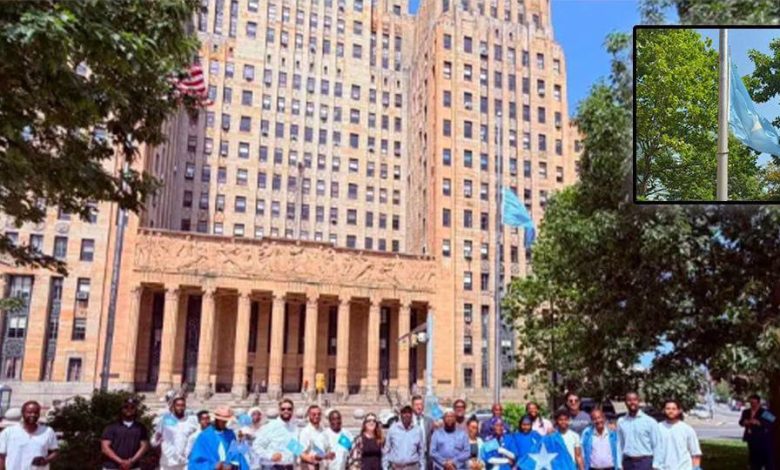
A controversy in Buffalo, New York, has sparked a national conversation about what symbols should be displayed on public government property — and where cities should draw the line between cultural recognition and civic unity.
According to local reports, a Somali flag raised in Niagara Square near Buffalo City Hall to mark Somalia’s Independence Day was later cut down and stolen overnight. City officials said the flagpole was damaged, and the Buffalo Police Department is investigating the incident. The flag had reportedly been raised by HEAL International, an organization that has participated in similar flag-raising events in the city for several years.
The vandalism itself should be condemned. Destroying or stealing property is not patriotism; it is lawlessness. But the incident has also reopened a larger and legitimate debate: Should foreign national flags be flown on public flagpoles outside American government buildings?
For many Americans, City Hall is not just another public space. It represents the authority, identity, and unity of the American people. That is why critics argue that government buildings should prioritize the American flag above all others, especially during the week of Independence Day.
This debate became even more heated because Buffalo had recently canceled its city-sponsored Fourth of July fireworks plans, citing logistical and safety concerns, while the Somali flag display drew public attention at the same time. That timing led some residents and political critics to question whether the city was sending the wrong message about national priorities.
Supporters of cultural flag-raising ceremonies say such events recognize immigrant communities that contribute to American cities. Buffalo officials noted that Niagara Square flagpoles have previously been used by various groups representing countries and communities including Ukraine, Greece, Ireland, Puerto Rico, Italy, Bangladesh, and others.
Still, many Americans believe there must be a clearer standard. Cultural appreciation should not create confusion about civic allegiance. Immigrants can honor their heritage while also embracing the country that welcomed them. But on official government grounds, the symbol that should unite everyone is the Stars and Stripes.
The issue is not about attacking one community. It is about asking whether public institutions should adopt a simple rule: at City Hall, schools, courthouses, and other government buildings, the American flag should remain the central and dominant national symbol.
America has always been a nation of immigrants, but it is also a nation built around shared civic principles. Assimilation does not require people to erase their family history, but it does require a commitment to the Constitution, the rule of law, the English-speaking civic culture, and the national symbols that bind Americans together.
Buffalo’s flag dispute should push local governments across the country to create transparent policies before controversies erupt. If cities allow foreign or cultural flags on public property, they should explain when, why, and under what conditions. If they decide only the American flag should fly on official government flagpoles, that policy should apply equally to every group.
At a time when the country is already deeply divided, public officials must be careful with symbolic decisions. The American flag should never feel like an afterthought on American soil. It should remain the one banner under which citizens and newcomers alike can stand together.
The lesson from Buffalo is clear: respect heritage, condemn vandalism, but keep American unity first.