Could America Rally Behind Trump Again? The Third-Term Question Stirring Conservatives
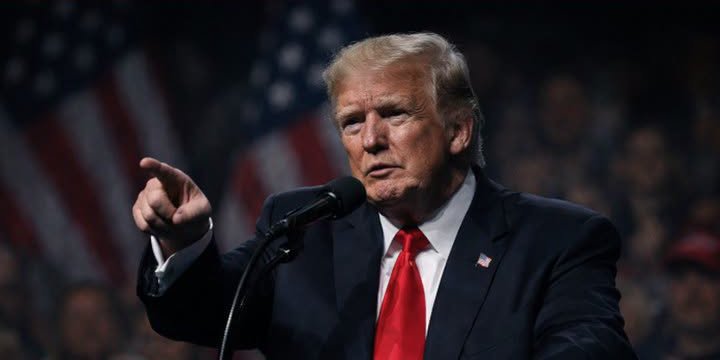
Across the country, millions of Americans continue to see Donald J. Trump as more than a former president. To them, he represents a political movement built on America First, border security, economic nationalism, and a direct challenge to the Washington establishment.
Trump, who is officially recognized as the 45th and 47th President of the United States, remains one of the most powerful figures in American politics. His supporters argue that his leadership style gave voice to citizens who felt ignored by both major parties, especially working-class families, small business owners, and voters concerned about immigration, inflation, and national sovereignty.
The question some conservatives continue to ask is simple but controversial: If the Constitution allowed it, would Americans support Trump for another term?
Under current law, the answer is legally complicated. The 22nd Amendment states that no person may be elected president more than twice. That means a third elected term is not permitted unless the Constitution itself were changed. Still, the discussion reflects something larger than one election cycle: the deep loyalty Trump commands within the Republican base and the belief among many supporters that his agenda remains unfinished.
For Trump voters, his presidency is remembered for tax cuts, a hardline immigration policy, deregulation, conservative judicial appointments, and a foreign policy message centered on strength. Supporters also credit him with reshaping the Republican Party into a more populist and nationalist movement, one less focused on traditional Washington politics and more focused on trade, borders, energy, and cultural issues.
Critics, however, see the idea of a third term as dangerous, arguing that presidential term limits exist to protect the republic from concentrating too much power in one person. That tension is exactly why the debate continues to attract attention. For supporters, Trump symbolizes strength and resistance. For opponents, the very discussion raises alarms about democratic norms and constitutional guardrails.
What cannot be denied is that Trump changed American politics. His rallies, slogans, and confrontational style created a movement that outlasted his first administration and returned him to the center of national power. Whether Americans admire him or oppose him, Trump remains a defining figure of the modern political era.
A third Trump term may not be legally possible under the Constitution as it stands today, but the question still reveals something important: many conservatives do not simply want another Republican president — they want the return of Trump’s political vision.
For them, America First is not just a campaign slogan. It is a demand for stronger borders, economic independence, cultural confidence, and leadership that refuses to apologize for putting the United States first.
In that sense, the real debate is not only about whether Trump could run again. It is about whether the movement he built will continue shaping America long after his time in office ends.