Feeding Our Future Scandal Raises New Questions About Political Oversight in Minnesota
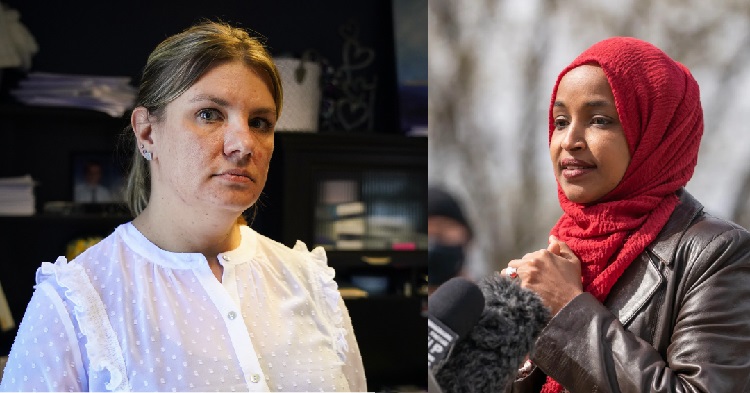
The Feeding Our Future fraud scandal has already gone down as one of the most shocking abuses of taxpayer money in recent American history. Now, a new allegation from convicted nonprofit founder Aimee Bock has pushed the case back into the national spotlight — and placed renewed scrutiny on Minnesota Rep. Ilhan Omar.
According to the New York Post, Bock claimed in a jailhouse interview that she believes Omar knew about the massive fraud operation tied to pandemic-era meal programs. Bock alleged that Omar “was in on” the scheme, though no public evidence has proven that claim, and Omar has not been charged with any crime.
What is proven is the scale of the fraud. Federal prosecutors said Feeding Our Future and related operators exploited child nutrition programs during the COVID-19 pandemic, falsely claiming millions of meals had been served while taxpayer dollars were diverted for personal gain. The Department of Justice said Bock and co-defendant Salim Said were convicted in March 2025 in connection with a $250 million fraud scheme.
In May 2026, Bock was sentenced to 500 months in federal prison for what prosecutors described as her lead role in the operation. DOJ officials said the scheme diverted money meant to feed Minnesota children during a national emergency.
The political question now is not only who stole the money, but how such a massive operation continued for so long without being stopped.
Omar’s name has entered the debate because she introduced legislation in March 2020 aimed at protecting students’ access to school meals during COVID-related school closures. Her office said the bill was designed to keep children from going hungry when schools shut down and meal distribution systems were disrupted.
Critics argue that the emergency flexibility created during the pandemic weakened oversight and opened the door for abuse. Supporters counter that the policy goal was legitimate: feeding children during an unprecedented crisis. The hard truth is that both things can be true — a program can be well-intended and still dangerously vulnerable to fraud.
Omar has denied any wrongdoing. In a statement reported by The National News Desk, she called claims that she had knowledge of the scheme “flat-out false.” She also said she had championed feeding children and later demanded accountability once the fraud became public.
That denial matters. A convicted fraudster’s accusation is not proof. Bock has an obvious incentive to shift blame toward politicians, state officials, or anyone else who might make her role appear smaller. But dismissal without scrutiny would also be a mistake. When hundreds of millions of taxpayer dollars disappear from a program meant to feed children, Americans deserve a full accounting from everyone connected to the system.
Omar herself previously sent a letter to USDA officials in February 2022 calling for answers about the reported misuse of federal meal funding. In that letter, she condemned the theft of money intended for vulnerable children and asked what safeguards were being put in place to prevent future fraud.
That record complicates the political narrative. It does not prove innocence, but it also undercuts any attempt to present Bock’s allegation as established fact.
For American taxpayers, the bigger issue is institutional failure. A program designed to help children became a pipeline for fraud. Oversight broke down. Red flags were missed or ignored. Prosecutors stepped in only after enormous damage had already been done.
The Feeding Our Future case should not become just another partisan shouting match. It should become a national warning. During emergencies, government can move fast — but when it moves fast without strong verification, honest citizens pay the price and bad actors cash the checks.
Congress, state officials, and federal agencies should be forced to answer a basic question: Who knew what, when did they know it, and why did the system keep paying out?
Until those answers are public, the scandal will remain more than a criminal case. It will remain a test of whether America still has the will to protect taxpayers, punish fraud, and hold powerful people accountable — regardless of party, office, or political protection.