Denmark Reopens Fierce Debate Over Islamic Call to Prayer in Public Spaces
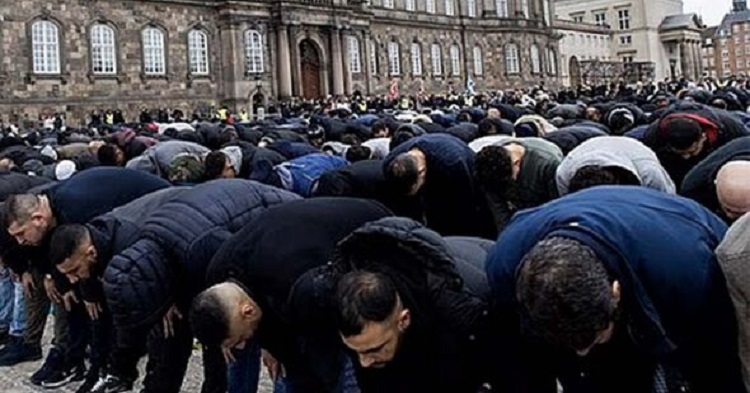
Denmark is once again stepping into one of Europe’s most sensitive cultural battles: whether the Islamic call to prayer should be broadcast publicly through loudspeakers.
The country’s Minister for Immigration and Integration, Morten Bødskov, has resumed an official review into whether Denmark can legally ban or restrict the public broadcasting of the adhan, the Islamic call to prayer. Bødskov took office on June 3, 2026, according to Denmark’s Ministry of Immigration and Integration.
Bødskov has argued that religious loudspeaker broadcasts should not dominate Danish public space, saying the call to prayer “should not be heard over Danish rooftops,” according to reporting cited by the Copenhagen Post and other outlets.
For Americans watching from across the Atlantic, the Danish debate raises a familiar question: Where should a free society draw the line between religious liberty and shared civic space?
Supporters of the proposal say the issue is not private worship. Muslims in Denmark would still be able to pray, gather, and worship inside mosques. The dispute centers on amplified religious messages projected into neighborhoods, especially when those messages are heard by residents who did not choose to participate.
Critics see the matter differently. They argue that a nationwide restriction could unfairly target one faith and may run into constitutional problems. Denmark’s constitution protects religious worship, though that protection is limited by concerns such as public order.
This is not Denmark’s first clash over religion, immigration, and national identity. In 2018, Denmark passed a public face-covering ban that affected garments such as the niqab and burqa, a move defended by supporters as a cultural-integration measure and criticized by human-rights groups as discriminatory.
The call-to-prayer debate is politically powerful because it touches more than noise rules. It forces governments to answer a deeper question: Should public spaces remain religiously neutral, or should visible and audible religious expression be treated as part of pluralistic democracy?
For many Danes who support the restriction, the answer is straightforward. They believe public neighborhoods should not become platforms for amplified religious declarations, whether Islamic, Christian, or any other faith. For them, the state has a duty to protect cultural cohesion and prevent one religious tradition from reshaping the soundscape of daily life.
Opponents warn that this logic can become dangerous if applied selectively. If church bells are tolerated while the adhan is restricted, they argue, the government must explain why one form of religious sound is cultural heritage while another is treated as a threat.
That distinction will likely become central if the proposal moves forward. A policy framed as a general noise rule may stand a better legal chance than one aimed directly at Islam. A ban that appears to single out Muslim worship could face much tougher scrutiny.
For the United States, Denmark’s debate is worth watching. America’s First Amendment gives religious expression far stronger protection than many European systems, but local fights over school prayer, public religious displays, zoning rules, and noise ordinances show that the same tension exists here too.
Denmark has not yet enacted a final nationwide ban. What it has done is reopen a major legal and cultural investigation at a time when immigration and integration remain defining issues across Europe.
The outcome is uncertain. But the message from Copenhagen is clear: Denmark is willing to confront a question many Western governments prefer to avoid — how much public space should religion occupy in a modern secular democracy?