Taylor Swift’s Alan Jackson Tribute Shows Why Country Fans Still Care About Authenticity
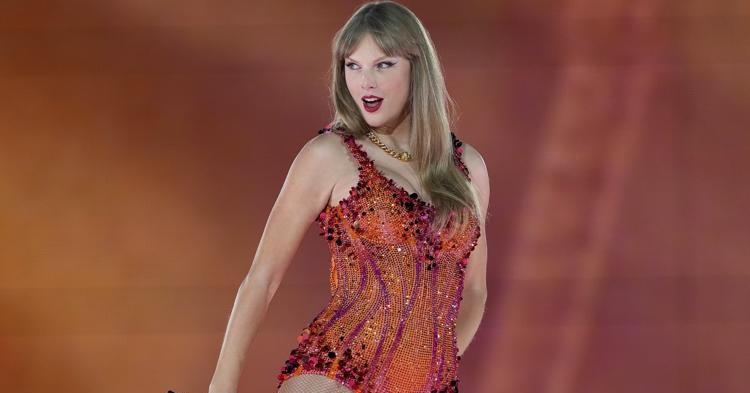
At Alan Jackson’s “Last Call: One More for the Road — The Finale” concert in Nashville, what should have been a simple tribute moment became one of the most talked-about scenes of the night. Taylor Swift appeared in a prerecorded video message honoring Jackson’s decades of songwriting, but the crowd reaction was divided, with cheers mixed with noticeable boos as her face appeared on the screen.
For some fans, the moment was not just about Swift. It was about a larger question that has followed modern country music for years: Who truly belongs to the genre, and who only returns to it when it is convenient?
Swift began her career in Nashville, building her early success on country storytelling, acoustic arrangements, and girl-next-door sincerity. But over time, she became one of the biggest pop stars in the world, leaving behind the traditional country lane that first introduced her to millions of American listeners. That evolution made her wildly successful — but it also changed the way many country fans see her.
Jackson, by contrast, has long represented a different kind of country legacy. His music is rooted in family, small-town life, faith, heartbreak, working-class dignity, and plainspoken storytelling. His final full-length concert was not just another celebrity event; it was a farewell to a career built on consistency and trust with the audience. The show also carried emotional weight because Jackson has been open about living with Charcot-Marie-Tooth disease, a degenerative nerve condition that has affected his ability to perform.
That is why the reaction to Swift’s tribute struck a nerve. To her supporters, the boos were unfair and disrespectful during a night meant to honor Jackson. To her critics, the response reflected years of frustration with celebrities who seem to treat country music as a temporary image rather than a permanent home.
Swift’s recent return to country-flavored music has only intensified that debate. Her new original song, “I Knew It, I Knew You,” written for Disney and Pixar’s Toy Story 5, has been described as a return to her country roots. But for skeptical country fans, a harmonica-driven soundtrack single is not enough to erase the perception that she moved on from Nashville once pop superstardom offered a bigger stage.
The deeper issue is not whether Swift has talent. Her commercial success is undeniable. The issue is whether country audiences still see her as authentic. In country music, authenticity is not just a marketing word. It is the currency. Fans want to believe an artist means what they sing, respects where they came from, and understands the people listening.
That is where Alan Jackson and Taylor Swift now represent two very different paths. Jackson stayed closely tied to the sound and values that made him a country legend. Swift reinvented herself into a global pop brand. Both paths can produce success, but they do not produce the same kind of loyalty.
The crowd reaction in Nashville was not just noise. It was a reminder that country fans have long memories. They remember who stayed, who left, and who comes back when the moment is useful.
Swift’s video tribute may have been sincere. But sincerity is not always enough when the audience believes the connection has already been broken.
In the end, Alan Jackson’s farewell belonged to Alan Jackson — a country legend whose songs still feel close to the people who made him famous. And whether the boos were fair or not, they sent a clear message: in country music, fame can open the door, but authenticity is what keeps you inside.