Donald Trump’s “America First” Legacy Will Be Debated for Generations
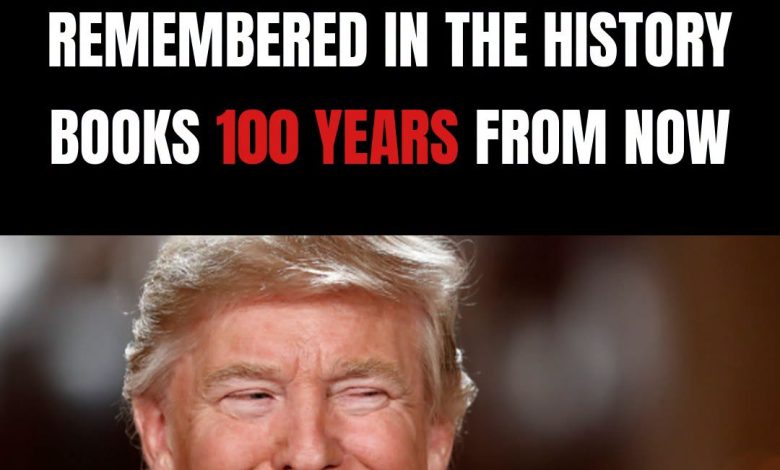
History rarely judges a president according to the political passions of his own era. It examines what changed, which institutions were challenged, and whether the country emerged stronger or weaker. By that standard, Donald Trump’s presidency will remain one of the most consequential—and fiercely debated—chapters in modern American history.
Trump entered Washington not as a conventional politician, but as a direct challenge to the political establishment. His central message was unmistakable: the federal government should place American workers, citizens, industries, and national sovereignty ahead of international expectations.
That philosophy became known as “America First.”
Supporters saw it as a long-overdue correction to decades of trade agreements, foreign interventions, and immigration policies that they believed benefited political elites while leaving working-class communities behind. Critics viewed the same agenda as disruptive, confrontational, and overly nationalistic. Yet few can reasonably argue that Trump failed to transform the national debate.
On trade, his administration rejected the assumption that globalization was automatically beneficial to every American community. Trump imposed tariffs, renegotiated major agreements, and pressured foreign governments over market access and industrial policy. Although economists continue to debate the long-term consequences, his focus on manufacturing, supply chains, and unfair foreign competition permanently changed the language of American economic policy.
Even political leaders who opposed Trump later adopted tougher positions on China, domestic production, and strategic industries. That shift may become one of the most enduring elements of his legacy.
Immigration was another defining issue. Trump argued that a nation unable or unwilling to control its borders could not protect its labor market, security, or sovereignty. His policies were condemned by opponents as unnecessarily harsh, while supporters believed they restored enforcement after years of political avoidance.
Regardless of one’s position, Trump forced Washington to confront questions that both parties had repeatedly postponed: Who should be permitted to enter the country? How should asylum laws operate? What obligations does the government have to citizens when immigration systems become overwhelmed?
His judicial appointments may prove even more historically significant. By appointing hundreds of federal judges, including three Supreme Court justices during his first term, Trump helped reshape the judiciary for decades. Conservatives celebrated these appointments as a return to textualism, constitutional restraint, and limits on federal power. Progressives warned that the courts were being moved sharply to the right.
Because federal judges often serve for life, Trump’s judicial influence will extend far beyond the immediate political battles surrounding his presidency.
Energy policy also reflected the America First framework. Trump promoted expanded domestic oil and natural-gas production, reduced environmental regulations, and argued that energy abundance was essential to economic and national security. His supporters credited this approach with reducing dependence on hostile or unstable foreign suppliers.
Critics countered that deregulation weakened environmental protections and delayed the transition toward cleaner energy. Nevertheless, Trump helped establish energy independence and energy security as central components of American geopolitical strategy.
Foreign policy produced a similarly complicated record. Trump frequently criticized prolonged military engagements and questioned whether international alliances were distributing their financial and security burdens fairly. At the same time, he supported greater military spending and presented unpredictability as a tool of deterrence.
His administration pursued negotiations in the Middle East, pressured NATO allies to increase defense spending, confronted China, and attempted direct diplomacy with adversaries. Supporters describe this as “peace through strength.” Opponents argue that his approach sometimes weakened traditional alliances and created uncertainty.
Future historians will have to examine outcomes rather than slogans.
Trump’s presidency was also inseparable from conflict with the media, federal agencies, political opponents, and the legal system. His supporters believed that these institutions attempted to undermine an elected president because he threatened their influence. His critics believed that investigations and legal challenges were necessary responses to unprecedented behavior.
These competing interpretations will not disappear quickly. The archives, court records, internal communications, and government documents released over the coming decades will shape how future generations understand those confrontations.
The COVID-19 pandemic will remain one of the most difficult parts of any historical assessment. Trump’s administration supported the rapid development of vaccines through Operation Warp Speed, but his public messaging, disputes with health officials, and handling of the national crisis generated intense criticism. A complete evaluation must acknowledge both the speed of vaccine development and the failures, confusion, and human costs that accompanied the pandemic response.
Trump’s cultural influence may be just as important as his policy record. He gave political representation to millions of Americans who felt ignored, mocked, or displaced by economic and cultural change. His blunt style energized supporters who believed traditional political language concealed dishonesty and institutional failure.
At the same time, that style often deepened divisions and made compromise more difficult. To understand Trump’s legacy honestly, admirers must acknowledge his polarizing conduct, just as critics must acknowledge the political failures that created the conditions for his rise.
A century from now, Trump may not be remembered through the daily controversies that dominated television and social media. Instead, historians may focus on the structural questions his movement raised: the limits of globalization, the legitimacy of political institutions, border sovereignty, industrial decline, judicial power, cultural fragmentation, and America’s role in the world.
His legacy will not be simple. It will contain achievements, failures, contradictions, and unresolved disputes.
But one conclusion is already difficult to deny: Donald Trump disrupted the political status quo and permanently altered the direction of American politics.
Whether history ultimately views that disruption as a national correction or a dangerous rupture will depend not only on Trump himself, but also on what America becomes in the decades that follow.