Trump Backs Mike Lindell, Igniting a Populist Battle for Minnesota’s Future
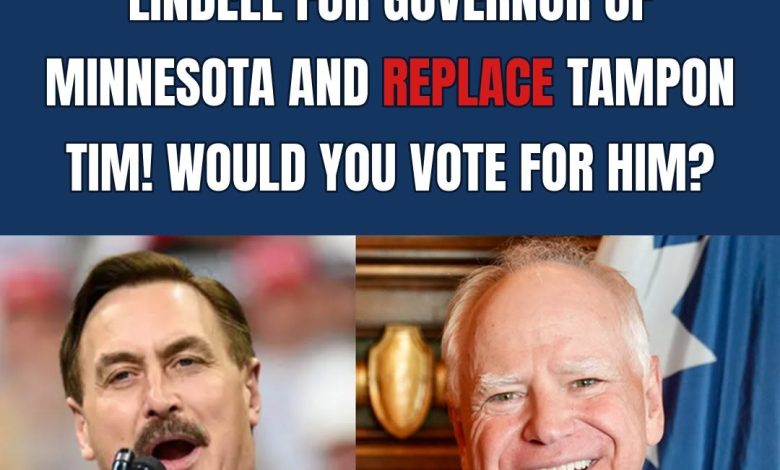
President Donald Trump has officially endorsed MyPillow founder Mike Lindell for governor of Minnesota, giving one of his most loyal political allies a major boost just weeks before the state’s August 11 Republican primary. Trump praised Lindell as a hardworking patriot and argued that the businessman could lead Minnesota in a dramatically different direction.
For conservative voters frustrated with government spending, high taxes, public-safety concerns and ideological battles in schools, the endorsement sends an unmistakable message: Trump wants Minnesota Republicans to choose a political outsider rather than another conventional officeholder.
Lindell’s appeal rests largely on his personal story. He transformed MyPillow into a nationally recognized company and built his public identity around entrepreneurship, persistence and recovery from addiction. Supporters see that background as evidence that he understands risk, job creation and the challenges faced by ordinary Americans outside the political establishment.
His candidacy also reflects a broader change within the Republican Party. Many GOP voters are no longer satisfied with candidates who offer cautious language and minor policy adjustments. They want leaders who will directly confront bureaucratic waste, progressive cultural policies and government programs that appear unaccountable to taxpayers.
Trump’s endorsement gives Lindell valuable national attention, but it does not guarantee him the nomination. He remains part of a crowded Republican field that includes Minnesota House Speaker Lisa Demuth and several other candidates competing for conservative voters. Republican contenders have emphasized proposals involving lower taxes, reduced state spending and a smaller government footprint.
That competition matters. Minnesota Republicans must decide whether Lindell’s outsider status and national following outweigh the advantages offered by candidates with legislative or administrative experience.
Lindell’s supporters argue that experience inside government is precisely the problem. They believe Minnesota needs someone willing to challenge entrenched agencies, examine how taxpayer money is spent and reject policies designed primarily to satisfy activist organizations. His confrontational style may be unconventional, but it resonates with voters who believe polite political management has failed to deliver meaningful reform.
Public safety, education and affordability are likely to remain central issues. Conservatives want schools to concentrate on academic achievement, parental involvement and classroom discipline. They want police departments supported rather than treated as political targets. They also want state leaders to recognize that rising taxes and regulatory costs can make it more difficult for families and employers to remain in Minnesota.
However, Lindell cannot build a successful general-election campaign on anger alone. He will need detailed plans showing exactly what spending he would reduce, how he would improve educational performance and how his administration would make Minnesota more competitive without disrupting essential services.
He must also confront the controversy surrounding his repeated claims about the 2020 presidential election. Those claims have not been substantiated by evidence sufficient to overturn the certified result, and they have exposed him to extensive legal and political scrutiny. Conservative voters may share concerns about election administration, but a gubernatorial campaign must address far more than one national election.
That is an important test for Lindell. Can he translate his political loyalty and personal resilience into a practical governing agenda? Can he persuade independent voters who may support lower taxes and safer communities but remain skeptical of his election-related activism?
The race is taking place during a period of major transition in Minnesota politics. Gov. Tim Walz ended his campaign for a third term, while Democratic Sen. Amy Klobuchar has emerged as the most prominent candidate on the Democratic side. The open-seat contest gives Republicans an opportunity, but it also means their eventual nominee must appeal beyond the party’s most committed base.
Trump’s endorsement has now elevated Lindell from a famous outsider to a central figure in the Republican primary. It will energize America First voters, attract national attention and force every other GOP candidate to explain why Republican voters should choose them instead.
Minnesota voters ultimately face a serious decision—not merely between personalities, but between competing visions of government. One vision trusts larger public institutions and progressive policy experimentation. The other calls for lower spending, stronger accountability, parental authority and renewed emphasis on individual responsibility.
Mike Lindell now has the president’s backing. His next challenge is proving that he has the discipline, policy knowledge and coalition needed to turn a powerful endorsement into an effective administration.