Religious Freedom Must Include Freedom From Excessive Public Noise
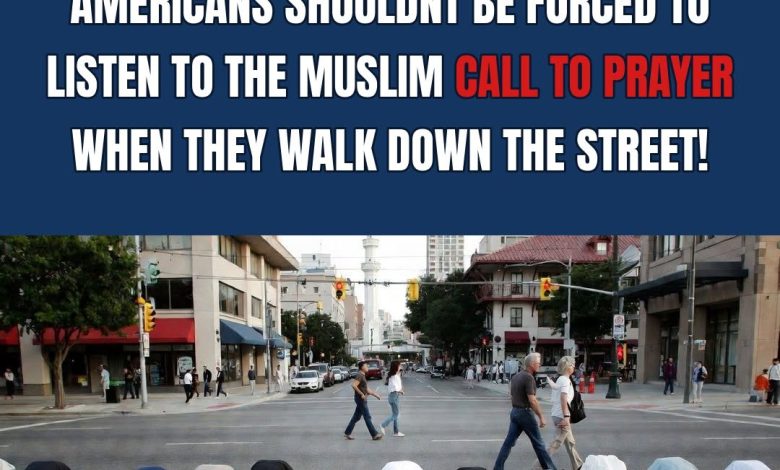
Religious liberty is one of America’s most important constitutional traditions. People of every faith—and people with no religious faith—must remain free to worship, gather, speak and live according to their convictions. But that freedom does not automatically include the right to broadcast religious messages at disruptive volumes throughout residential neighborhoods.
As some communities consider or approve amplified calls to prayer, residents are raising legitimate questions about noise, frequency, enforcement and equal treatment under local law. These concerns should not be dismissed as hostility toward religion. They are part of a broader civic debate about how public spaces should be shared.
The central issue is not whether a particular religious tradition belongs in America. Muslim Americans possess the same religious rights as Christians, Jews, Hindus, Buddhists and everyone else. The issue is whether amplified outdoor broadcasts—religious or otherwise—comply with neutral noise ordinances designed to protect residents’ peace, sleep and daily routines.
A fair policy must apply the same standards to every institution. Mosques, churches, synagogues, temples, political organizations and commercial businesses should all face comparable restrictions regarding volume, duration, timing and frequency. City officials undermine public trust when they selectively enforce rules or create exceptions without clearly explaining their legal basis.
Residents also deserve a transparent public process. Before approving recurring amplified broadcasts, local governments should provide notice, conduct sound-impact assessments and allow people who live nearby to comment. Officials should consider practical limits, including decibel caps, restricted hours and shorter broadcast periods.
At the same time, public debate must avoid treating an entire religious community as foreign or inherently threatening. American identity has never depended on citizens practicing only one faith or sharing one cultural background. It depends on a common commitment to constitutional rights, civic responsibility and equal treatment under the law.
Religious freedom is strongest when it is reciprocal. Worshippers should be protected from discrimination, while neighbors should be protected from excessive and unavoidable noise. Neither principle requires eliminating religion from public life, and neither permits one group to disregard reasonable community standards.
The solution is straightforward: enforce neutral noise regulations consistently, protect peaceful worship and reject special treatment for or against any religion. That approach preserves both individual liberty and the shared public space on which a diverse constitutional society depends.