Opinion: Mamdani’s Netanyahu Arrest Threat Crosses A Dangerous Line
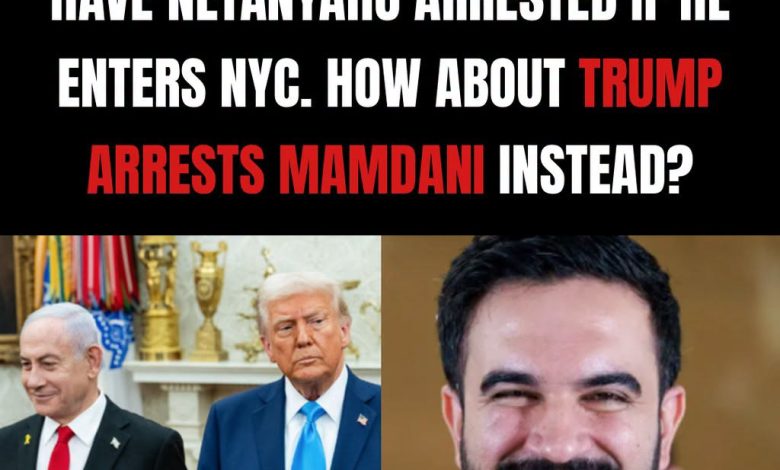
New York City Mayor Zohran Mamdani has once again placed himself at the center of a national controversy by exploring whether Israeli Prime Minister Benjamin Netanyahu could be arrested during a future visit to New York.
Mamdani, who took office on January 1, 2026, has said that his administration is consulting with the city’s lawyers about possible action connected to an International Criminal Court warrant against Netanyahu. However, he has also acknowledged that his legal authority remains uncertain.
That uncertainty is not a minor technical detail. It is the central issue.
Foreign policy, international diplomacy and the treatment of visiting foreign leaders are primarily federal responsibilities—not tools for a city mayor to use in ideological political theater.
The ICC issued its warrant on November 21, 2024, alleging that Netanyahu bears responsibility for war crimes and crimes against humanity connected to the Gaza conflict. Those remain allegations, not a criminal conviction, and Israel has firmly rejected both the accusations and the court’s jurisdiction.
The United States is also not a party to the Rome Statute, the treaty that created the ICC. This means an ICC warrant does not automatically function like a domestic American arrest warrant that the New York Police Department can simply enforce.
Mamdani’s position therefore raises a serious constitutional and diplomatic question: Should a local official attempt to interfere in America’s relationship with one of its closest Middle Eastern allies?
Netanyahu is not merely a private visitor. He is the elected leader of Israel, a democratic country that has spent years confronting Hamas, Hezbollah, Iranian-backed militias and other armed groups openly committed to its destruction.
Americans can debate Netanyahu’s military decisions. They can demand transparency regarding civilian casualties, humanitarian aid and the conduct of the war. But there is a significant difference between criticizing an allied government and having a city mayor publicly search for a mechanism to detain its leader.
New York City Hall should not become an independent foreign-policy department.
The controversy is especially serious because Netanyahu may travel to New York for meetings connected to the United Nations. The United Nations Charter and the U.S.-UN Headquarters Agreement provide important protections intended to allow representatives and official delegations to perform their duties without improper local interference.
President Donald Trump has responded by saying that Netanyahu will not be arrested in the United States. Whatever Americans think about Trump or Netanyahu, the president’s response emphasizes a basic principle: American foreign policy must be conducted at the national level.
Some critics have gone further and suggested that Mamdani himself should be arrested. That would also be an irresponsible response unless investigators possessed credible evidence that he had committed a specific crime.
Political speech—even provocative or misguided political speech—is not automatically criminal. Disagreement with Israel, support for Palestinian rights or criticism of Netanyahu does not by itself constitute support for terrorism. Accusations involving terrorist organizations require evidence, due process and an identifiable violation of federal law.
Conservatives should not oppose abuses of legal authority by one side while demanding equally questionable abuses against the other.
The stronger criticism of Mamdani is therefore not that he must be imprisoned. It is that his proposal appears legally doubtful, diplomatically reckless and far outside the proper priorities of municipal government.
New Yorkers elected a mayor to address crime, housing, transportation, public order, homelessness and the cost of living. They did not elect a competing secretary of state or an unofficial international prosecutor.
Mamdani’s supporters will argue that no national leader should stand above international law. That principle deserves serious consideration. But international justice cannot be applied selectively, improvised by local politicians or used mainly to generate headlines.
The same standards must apply to allegations involving Israeli officials, Hamas commanders, Iranian-backed militias and every other party accused of attacking civilians.
Justice requires evidence, lawful jurisdiction and consistent standards—not ideological shortcuts.
Mamdani’s proposed action risks weakening New York’s credibility, straining relations with Israel and creating unnecessary conflict between city authorities and the federal government. It may also encourage future mayors to treat local police powers as instruments of personal foreign-policy agendas.
Americans should reject that precedent.
The proper response is not political retaliation or unsupported accusations against Mamdani. It is a firm defense of constitutional authority, federal supremacy in foreign affairs and the rule of law.
New York’s mayor should protect New Yorkers. The president and Congress should conduct American foreign policy. And no politician—left or right—should be allowed to confuse personal ideology with lawful authority.