The Voter Id Debate Deserves Facts—not A Misleading Obama Center Comparison
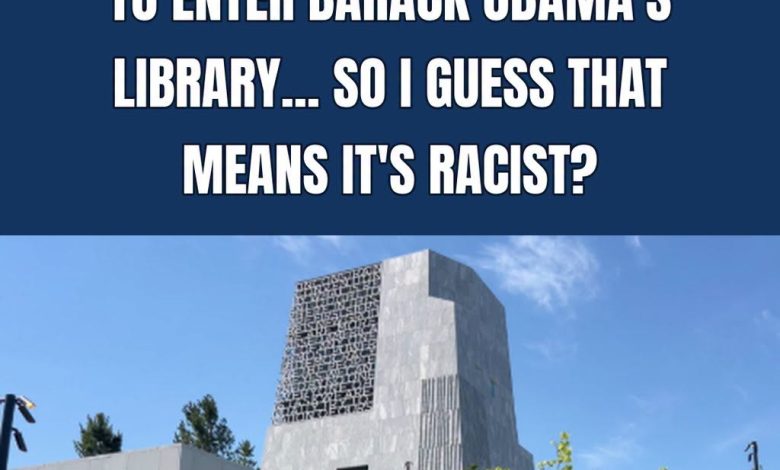
Americans can have a legitimate debate about voter identification. Supporters argue that requiring identification strengthens public confidence and helps election officials verify that each ballot is connected to an eligible voter. Opponents warn that overly restrictive rules can create unnecessary obstacles for lawful voters.
But that debate should begin with accurate information, not a misleading claim about Barack Obama’s presidential center.
Contrary to a widely circulated political talking point, the Obama Presidential Center’s published visitor policy does not say that every person must show photo identification simply to enter the campus or museum. The policy states that visitors and their bags may be subject to security screening. Its ticketing page says photo identification may be requested to prove Illinois residency for discounted admission or free-resident programs—not as a universal entrance requirement. Much of the campus, including its outdoor spaces and public-library branch, is open without museum admission.
There is also frequent confusion between two different institutions. The Barack Obama Presidential Library is administered by the National Archives and Records Administration, while the Chicago complex operated by the Obama Foundation is known as the Obama Presidential Center and includes a museum, community facilities and a Chicago Public Library branch. Treating these names as interchangeable can lead to inaccurate claims about their policies.
Even if a museum required identification from every visitor, however, it would not automatically settle the voter ID debate. A museum controls access to a particular building or paid experience. Voting is a fundamental act of citizenship governed by federal and state election laws. Security screening at a private or nonprofit institution and eligibility verification at a polling place serve different legal and civic functions.
That distinction does not mean identification has no place in elections.
According to the National Conference of State Legislatures, 36 states request or require some form of identification for in-person voting. These laws differ significantly. Some states demand government-issued photo identification, while others accept documents such as bank statements or utility bills. Some permit voters without identification to sign an affidavit or cast a ballot that officials later verify. Under stricter systems, voters may have to return after Election Day with qualifying documents before their provisional ballots are counted.
Those differences matter. Describing every voter ID law as either perfectly harmless or inherently discriminatory ignores how the rules actually operate.
Evidence about turnout is also more complicated than political slogans suggest. A Government Accountability Office review found that most registered voters in the examined studies possessed qualifying identification, but estimated ownership ranged from 84% to 95% and varied among racial and ethnic groups. The studies reviewed by the GAO produced mixed results: some found no statistically significant turnout effect, several found decreases and one found an increase. The GAO’s own analysis estimated that tighter requirements were associated with larger turnout declines in Kansas and Tennessee than in selected comparison states, while cautioning that those findings could not automatically be applied nationwide.
The same report noted that researchers had identified relatively few documented cases of in-person voter impersonation, although incomplete reporting made it difficult to establish a comprehensive national total. That does not prove election safeguards are unnecessary. It does mean advocates should avoid suggesting that widespread impersonation has already been demonstrated when the available evidence does not support such certainty.
A workable voter ID policy should pursue both election security and voter access. States adopting identification requirements can provide qualifying IDs without charge, accept a broad range of reliable documents, create reasonable exceptions for seniors and people with disabilities, improve access in rural communities and give eligible voters a practical method to correct identification problems.
That approach recognizes an important principle: a secure election should make it difficult to cast an unlawful ballot without making it unnecessarily difficult for a lawful citizen to vote.
Americans do not need a distorted comparison involving the Obama Presidential Center to discuss election integrity. The stronger argument is based on transparent rules, verifiable evidence and safeguards that treat every eligible voter fairly.
Election confidence and voting access are not mutually exclusive. A responsible system must protect both.