The Tom Homan Double Standard: When Immigration Enforcement Becomes Partisan
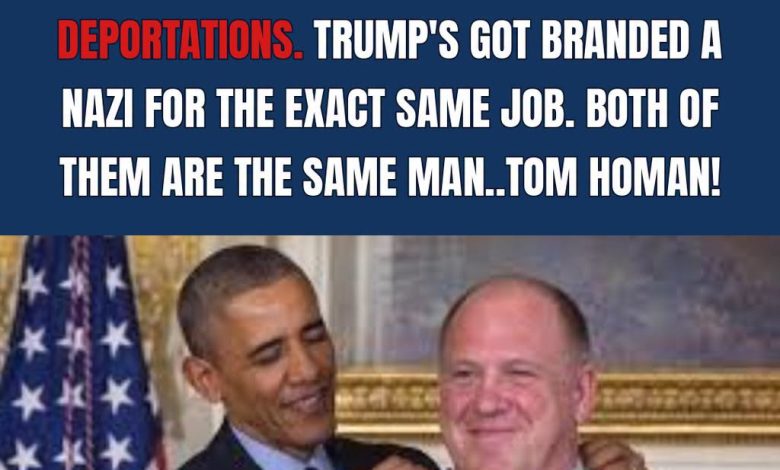
The national debate over Tom Homan reveals an uncomfortable truth about American politics: the same immigration official can be praised as an effective public servant under one president and condemned as an extremist under another.
Homan spent decades working in federal immigration enforcement. During the Obama administration, he led Immigration and Customs Enforcement’s Enforcement and Removal Operations division, the branch responsible for locating and removing people subject to deportation orders. He did not serve as director of the entire agency under President Barack Obama, but he held one of its most influential enforcement positions.
In 2015, Homan received a Presidential Rank Award for Distinguished Service, one of the federal government’s highest honors for career executives. The award was issued during the Obama administration and recognized his performance as a senior Department of Homeland Security official.
That history complicates the current political narrative.
Today, Homan serves as President Donald Trump’s White House border czar and is one of the most visible defenders of the administration’s immigration agenda. Critics have compared ICE officers and their tactics to fascists or Nazis—language Homan has publicly condemned as dangerous and inflammatory.
Americans are entitled to criticize immigration operations. Questions about due process, detention conditions, enforcement priorities and the treatment of families deserve serious examination. Government power must always remain subject to constitutional limits and public accountability.
But serious criticism is not the same as historical demonization.
Comparing ordinary immigration officers to Nazi officials does little to clarify policy disagreements. It replaces arguments about statutes, court orders and enforcement procedures with emotionally charged labels. It may also encourage the public to treat career law-enforcement personnel as political enemies rather than government employees carrying out policies established by elected leaders.
The partisan contrast is especially striking because the Obama administration also conducted deportations on a large scale. In fiscal year 2013, when Homan was leading ICE’s removal division, the United States recorded approximately 432,000 removals—the highest annual figure of the Obama presidency and higher than any single year of Trump’s first term.
That does not mean the two administrations followed identical policies. Their priorities, rhetoric and methods differed. The Obama administration increasingly focused enforcement on recent border crossers and people considered public-safety threats, while Trump has argued that virtually anyone without lawful status may be subject to removal. Current reporting also shows that recent ICE operations have detained a growing number of people without criminal convictions, providing legitimate grounds for scrutiny.
Consistency, however, should still matter.
A country cannot maintain confidence in its institutions when enforcement is described as responsible governance under a Democratic president but automatically portrayed as authoritarian under a Republican one. The legality and morality of an operation should depend on what the government actually did, not merely on which political party controlled the White House.
The media also has a responsibility to distinguish between enforcement against violent offenders, enforcement against people with final removal orders and broader operations involving noncriminal immigrants. Treating every case as identical misleads the public. So does suggesting that every criticism of ICE is anti-police or that every enforcement action is unquestionably justified.
A credible immigration system requires several principles to operate together: secure borders, respect for lawful immigration, protection of due process, enforcement of valid court orders and meaningful oversight of federal officers. Ignoring any one of those principles creates either disorder or abuse.
Tom Homan’s record should be debated honestly. Supporters can point to his long experience and his consistent belief that immigration laws must be enforced. Critics can challenge the breadth and tactics of the current administration’s operations. What neither side should do is rewrite his professional history to fit a convenient partisan story.
Homan did not suddenly become an immigration enforcer when Donald Trump entered politics. He performed similar work under Barack Obama and received a major federal award during that administration.
Americans may disagree strongly about deportation policy. But those disagreements should be grounded in facts—not selective memory, exaggerated comparisons or outrage that changes according to the president’s political party.