Trump Draws A Hard Line In Hormuz: Will Deterrence Protect Shipping Or Expand The War?
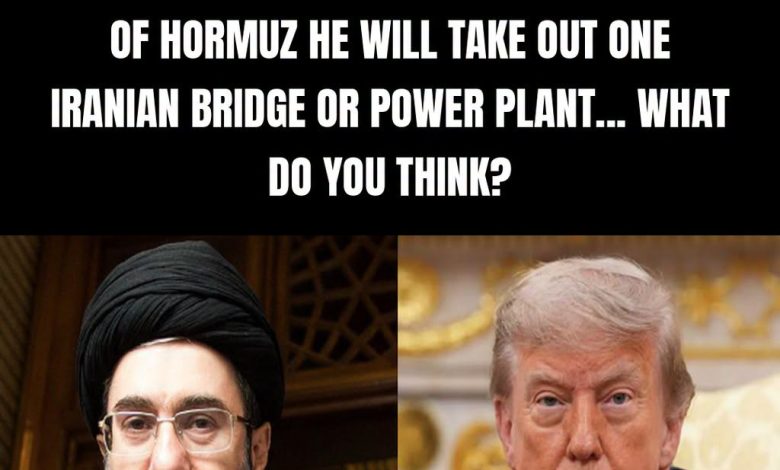
President Donald Trump has issued one of his clearest warnings yet to Tehran: If Iran attacks a ship in the Strait of Hormuz, the United States will retaliate by destroying an Iranian bridge or power plant.
The declaration, posted on July 22, represents an attempt to replace vague warnings with a specific and immediate consequence. According to Trump, the policy would apply whenever Iran targets a vessel with a missile, rocket, drone or another weapon.
For Americans concerned about national security, energy costs and freedom of navigation, the logic is straightforward: Commercial vessels must not become bargaining chips for an authoritarian regime.
The Strait of Hormuz is not an obscure regional waterway. It is one of the world’s most important energy chokepoints, connecting Persian Gulf producers with international markets. The U.S. Energy Information Administration notes that enormous volumes of petroleum pass through the strait and that existing alternative routes could carry only part of that supply if the passage were closed.
That means an attack thousands of miles from the United States can eventually affect fuel prices, transportation expenses, manufacturing costs and grocery bills at home.
Trump’s warning is therefore intended to accomplish more than defend individual ships. It seeks to establish a predictable deterrent: Iran attacks maritime commerce, and Iran immediately loses valuable infrastructure.
Supporters of the policy will see it as a necessary correction after years of threats, proxy warfare and maritime harassment. They argue that warnings without credible consequences encourage Tehran to keep testing American limits. From this perspective, clearly defining the cost of aggression could reduce uncertainty and prevent Iran from assuming that Washington will respond only with diplomatic statements.
Deterrence works only when an adversary believes both that America can respond and that its president is willing to do so.
Yet strength should not be confused with recklessness.
Bridges and power stations may support military operations, but they can also serve millions of ordinary civilians. Striking such infrastructure without carefully establishing its military role could create humanitarian consequences, raise serious questions under international law and invite Iran to retaliate against American forces or allied energy facilities across the region. Reuters reported that legal experts and international leaders have already raised concerns about attacks on nonmilitary infrastructure.
Iran has also warned that it would answer attacks on its infrastructure with retaliatory action, increasing the danger that a limited exchange could develop into a much wider conflict.
That is the central test of Trump’s strategy.
Can the United States impose costs strong enough to deter Iran without beginning an uncontrolled cycle of retaliation?
A successful policy would require more than dramatic declarations. Washington would need reliable intelligence, clear rules for selecting lawful military targets, strong defenses for American personnel and close coordination with allies whose ships and energy facilities could become targets.
The administration must also define its political objective. Is the goal to keep the Strait of Hormuz open, compel Iran to negotiate, destroy its maritime strike capabilities or weaken the Iranian government itself? Without a clearly limited objective, tactical retaliation can gradually become an open-ended military commitment.
Trump is correct about one fundamental principle: No hostile government should be permitted to attack commercial shipping and manipulate the global economy without consequences. The United States has a legitimate interest in protecting navigation, American personnel and the stability of energy markets.
But lasting strength requires discipline as well as firepower.
The most effective American policy would combine credible military deterrence, protection for civilian shipping, economic pressure and a realistic diplomatic path that allows de-escalation once Iran stops its attacks. That is not appeasement. It is the difference between using force to achieve a defined national objective and using force without knowing where the escalation will end.
American families deserve leadership that protects sailors, stabilizes energy markets and confronts hostile regimes. They also deserve an honest accounting of the risks.
Iran must understand that attacks in the Strait of Hormuz will carry a serious price. At the same time, Washington must ensure that every response strengthens American security rather than pulling the country deeper into another prolonged Middle Eastern war.