The Derek Chauvin Debate Demands Facts, Not Political Mythmaking
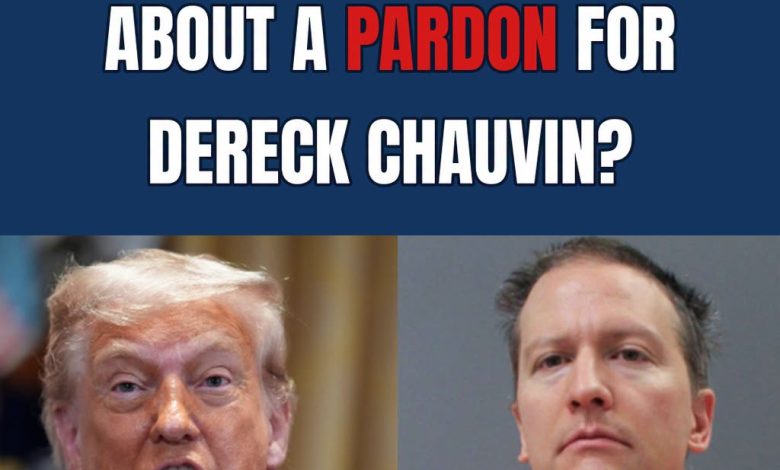
Few criminal cases have divided the United States as deeply as the prosecution of former Minneapolis police officer Derek Chauvin.
To millions of Americans, Chauvin’s conviction represented accountability for an unacceptable abuse of police authority. To others, the extraordinary media coverage, nationwide unrest and intense political pressure surrounding his trial raised troubling questions about whether any jury could remain completely insulated from public fear and outrage.
Questions about due process are legitimate. But they cannot be answered by rewriting the established record.
Chauvin’s defense argued that overwhelming pretrial publicity and concerns about potential unrest made a fair trial in Minneapolis impossible. Those arguments were considered during the appeals process. The Minnesota Court of Appeals upheld his conviction, the Minnesota Supreme Court declined further review, and the United States Supreme Court denied his petition in November 2023.
Americans are free to debate whether the trial should have been moved, whether jurors experienced indirect public pressure and whether televised criminal proceedings encourage political spectacle. No defendant should lose the constitutional right to an impartial jury simply because a case has become a national cause.
However, it is inaccurate to claim that Chauvin merely followed approved police procedures.
In his federal plea agreement, Chauvin admitted that he continued using force after George Floyd had stopped resisting, moving and speaking. He also admitted that he knew Floyd had lost consciousness and a pulse. According to the Justice Department, Chauvin acknowledged that Minneapolis Police Department policy required officers to stop using force against a nonresisting person, move a restrained individual out of the prone position and provide emergency medical assistance when necessary.
Those admissions are not media interpretations. They are part of the federal legal record.
The toxicology evidence must also be described accurately. The Hennepin County medical examiner listed fentanyl intoxication, recent methamphetamine use and heart disease as significant contributing conditions. But the office officially identified the cause of death as cardiopulmonary arrest complicated by law-enforcement subdual, restraint and neck compression. The manner of death was classified as homicide.
That does not mean Floyd’s medical condition and drug use were irrelevant. They were examined extensively at trial, and defense experts disputed the prosecution’s explanation of his death. But saying that toxicology proved Floyd died solely from a “lethal fentanyl overdose” goes beyond the medical examiner’s official finding.
The federal case creates an additional obstacle for those portraying Chauvin as someone convicted only by a politically pressured jury. Chauvin pleaded guilty in federal court to willfully depriving Floyd of his constitutional right to be free from unreasonable force. He also pleaded guilty to violating the rights of a 14-year-old in a separate 2017 encounter. He received a federal sentence of 252 months.
Calls for a presidential pardon therefore require an equally important legal clarification.
A president may grant clemency only for federal offenses—not for state convictions. Even a federal pardon would not erase Chauvin’s Minnesota conviction or automatically eliminate the state sentence imposed for Floyd’s death.
The broader debate about American policing should not be reduced to a choice between condemning every officer and defending every use of force.
Police officers routinely enter volatile situations that most citizens will never experience. They make rapid decisions while facing physical danger, incomplete information and the possibility that any mistake will be examined repeatedly on television and social media. Good officers deserve public support, adequate staffing, effective training and genuine due process.
But accountability is not inherently anti-police. Excusing conduct that violates training and constitutional limits ultimately damages the credibility of honorable officers who follow the law under equally difficult circumstances.
America should reject two simplistic narratives: that every police officer is an oppressor, and that every officer convicted of misconduct must be a political martyr.
Supporting law enforcement means supporting lawful law enforcement. Defending due process means applying it to defendants, victims and the public alike.
The strongest justice system is not one controlled by riots, media campaigns or partisan loyalty. It is one capable of examining uncomfortable evidence, correcting genuine errors and holding government officials to the same legal standards they are sworn to enforce.
Facts must remain more powerful than political mythology—regardless of which side created it.