Twelve Nights of Resolve: Trump’s Iran Strategy Shows That American Warnings Still Matter
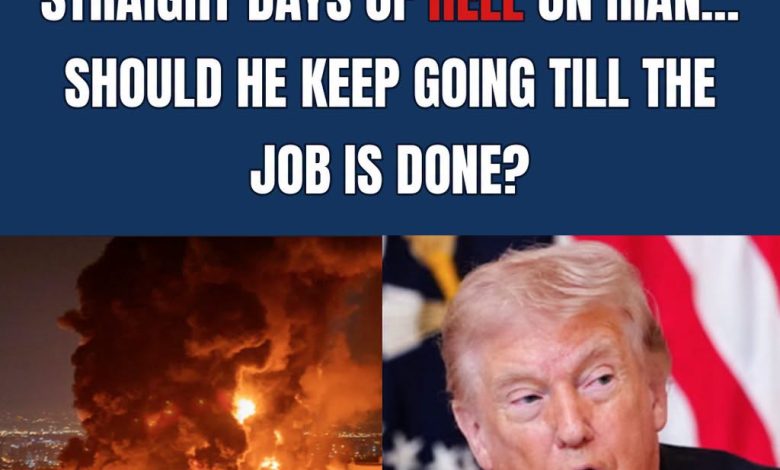
For years, Iran’s ruling regime has armed militant proxies, threatened international shipping and advanced a nuclear program that alarms both the United States and its allies. President Donald Trump’s latest campaign of military and economic pressure represents a dramatic rejection of the passive approach that too often allowed Tehran to escalate without facing immediate consequences.
After twelve consecutive nights of U.S. strikes, the message from Washington is unmistakable: attacks on American forces, regional allies or vital commercial routes will not be treated as routine provocations.
That message matters.
Deterrence fails when an adversary believes American warnings are temporary, politically constrained or unlikely to be enforced. Iran has spent decades testing those limits through armed groups such as Hezbollah and the Houthis while maintaining a degree of separation from their actions.
Trump’s approach seeks to eliminate that convenient distance. When Iranian-backed forces attack Americans or threaten global shipping, Tehran itself may be held responsible.
This is a significant strategic shift. The administration is no longer treating every proxy attack as an isolated incident. It is confronting the broader network that supplies weapons, funding and political direction to militant organizations across the Middle East.
The renewed strikes have reportedly targeted Iranian military infrastructure as the administration increases pressure on Tehran over its nuclear activities and threats to maritime commerce.
Supporters of the campaign argue that this is what peace through strength looks like: establishing consequences severe enough to make aggression more costly than restraint.
They have a point. Diplomacy without leverage rarely changes the behavior of a hostile regime. Agreements become meaningless when one side uses negotiations merely to delay consequences, rebuild its capabilities or demand economic concessions without abandoning its strategic objectives.
But strength alone is not a complete strategy.
The administration must explain what constitutes victory. Is the objective to protect American forces? Restore freedom of navigation? Permanently dismantle Iran’s nuclear capabilities? Force Tehran back into negotiations? Or weaken the regime until it can no longer support its proxies?
Without a clearly defined end state, even a successful military campaign can become an expensive and open-ended conflict.
That risk cannot be ignored. The wider war has already imposed substantial financial costs, contributed to American casualties and placed additional strain on military resources. Disruptions near the Strait of Hormuz and the Red Sea have also increased pressure on global energy markets.
These consequences do not automatically prove the campaign is wrong. National security sometimes requires sacrifice. But American families deserve an honest explanation of the mission, its likely cost and the conditions under which U.S. forces will return home.
Congress also has a constitutional responsibility to debate the scope and duration of major military operations. Recent war-powers votes demonstrate that concerns about executive authority are not confined to one party.
Supporting a forceful response to Iran does not require giving any president unlimited authority or an indefinite timetable.
The strongest case for Trump’s strategy is therefore not that military power can solve every problem. It is that credible force can create the conditions in which diplomacy finally becomes meaningful.
Iran’s leaders should understand that the United States will defend its troops, its allies and the shipping routes on which the global economy depends. At the same time, Washington should leave Tehran a clear path toward de-escalation—one that requires verifiable limits on its nuclear program, an end to attacks on American personnel and meaningful restrictions on support for militant proxies.
America should neither retreat at the first sign of resistance nor drift into a war without measurable objectives.
Real strength means confronting an enemy when necessary, defining the mission clearly and knowing what must happen before the fighting ends.
Trump has demonstrated that American warnings can still carry consequences. The next test is whether his administration can turn military pressure into a durable security outcome—rather than another conflict that continues long after its original purpose becomes unclear.
Standing firm is important. Finishing wisely is what will determine whether the campaign ultimately makes America safer.