What is the purpose of the “chip” in the one prong of this fork? Any ideas?
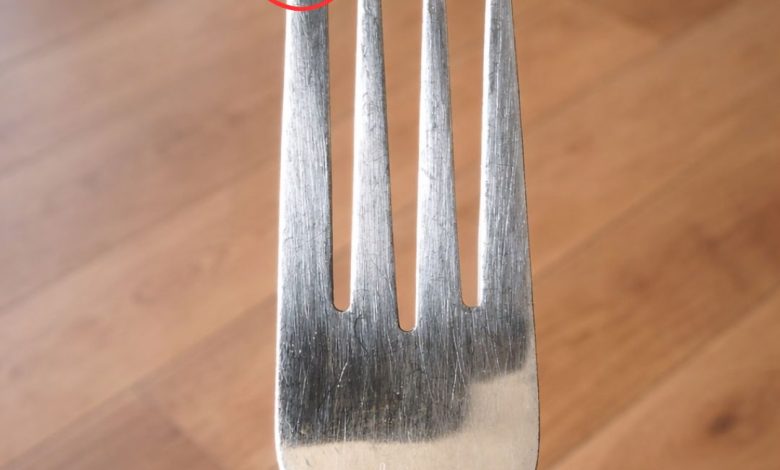
Why Does This Fork Have a “Chip” in One Prong?
At first glance, the small notch or “chip” visible on one prong of this fork may appear to be damage. However, the fact that the same feature appears on multiple forks indicates that it is intentional. This design detail has a specific and practical purpose related to manufacturing and functionality.
What the Notch Actually Is
- The notch is not accidental damage
- It is a factory-made design feature
- It is commonly found on mass-produced flatware
- Its placement is consistent across identical forks
Primary Purpose: Manufacturing Alignment
The most common reason for this notch is related to how forks are made.
- During production, forks are stamped and shaped by machines
- The notch serves as an alignment or indexing point
- It helps machinery:
- Position the fork correctly
- Ensure uniform tine spacing
- Maintain symmetry during cutting and finishing
- This improves consistency and quality control in large-scale manufacturing
Secondary Purpose: Structural Stress Relief
In some designs, the notch also has a mechanical benefit.
- It helps reduce internal stress in the metal
- Prevents:
- Warping during heat treatment
- Cracking during polishing or bending
- This can increase the durability and longevity of the fork
Not a Specialized Eating Function
- The notch is not intended for cutting food
- It does not enhance grip or spearing ability
- It is not related to etiquette or table setting
- Any perceived functional use while eating is incidental
Why Only One Prong?
- A single prong is sufficient for alignment reference
- Adding more notches would:
- Increase production steps
- Potentially weaken the fork
- Manufacturers choose the least intrusive location
Is It Common?
- Yes, especially in:
- Stainless steel flatware
- Mid-range to mass-produced sets
- Less common in:
- Hand-forged forks
- High-end artisanal cutlery
Conclusion
The “chip” in the fork prong is a deliberate manufacturing feature rather than a flaw. Its main role is to assist with precise alignment during production and, in some cases, to relieve metal stress. While it may look unusual at first, it is a subtle sign of industrial design efficiency rather than damage.