New York Must Choose Freedom Over Government Control
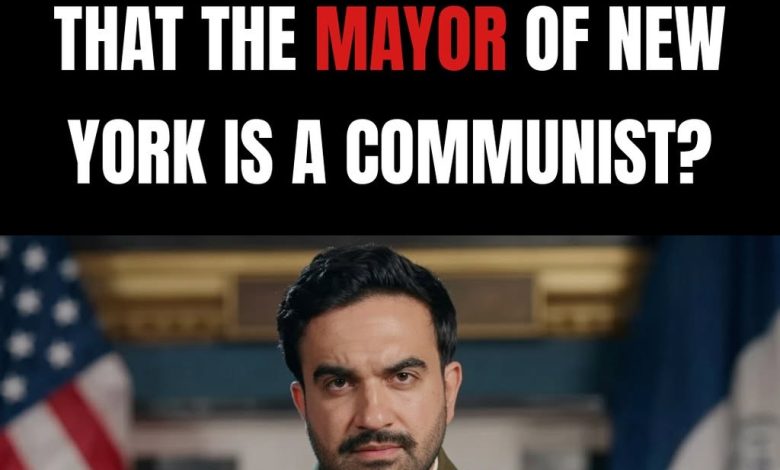
The prospect of New York City being governed by a leader who embraces aggressive socialist policies should concern every American who values economic freedom, private property, public safety, and individual responsibility.
Political labels must be used carefully. Democratic socialism is not identical to the authoritarian communism once imposed by the Soviet Union or practiced by other one-party regimes. Nevertheless, when politicians promote sweeping government control, punitive taxation, hostility toward private enterprise, and redistribution without clear limits, voters have every reason to examine where those policies could lead.
New York is not an ordinary city. It is the nation’s financial center, a global symbol of ambition, and a place built by generations of immigrants, workers, entrepreneurs, and small-business owners. Its prosperity did not emerge from central planning. It grew through enterprise, investment, competition, and the freedom to pursue opportunity.
Yet the city already faces serious challenges. Housing is unaffordable for many families. Taxes and operating costs place enormous pressure on local businesses. Public schools frequently fail to deliver the results parents expect. Crime and disorder continue to shape how residents, workers, and visitors experience the city.
Under these conditions, policies that punish investment or treat financial success as a social offense could make existing problems worse.
Excessive wealth taxes, rigid rent controls, expanded government ownership, and restrictions on private property may sound compassionate, but they can produce damaging unintended consequences. Developers may stop building. Landlords may abandon deteriorating properties. Employers may relocate. Entrepreneurs may decide that the risks of opening or expanding a business are no longer worthwhile.
When businesses and high-income residents leave, the city does not merely lose wealthy taxpayers. It also loses jobs, customers, charitable contributions, investment capital, and the tax revenue needed to support essential public services. The burden then falls more heavily on the middle class and on small businesses that cannot easily relocate.
Public safety presents another critical test. Reforming law enforcement and holding officers accountable are legitimate goals. But leaders must not confuse reform with hostility toward policing itself. Working-class neighborhoods suffer most when political ideology prevents authorities from confronting violent crime, theft, drug activity, and chronic disorder.
Residents deserve both constitutional policing and effective policing. They should not be forced to choose between civil liberties and safe streets.
Education must also remain focused on preparing children for adulthood. Schools should teach students how to read, write, calculate, reason, and understand the country’s history—including both its achievements and its failures. Political activism should never replace academic competence.
Parents have good reason to resist any system in which classrooms become instruments for promoting a single ideological worldview. Education should teach children how to think, not dictate what they must think.
Environmental policy requires the same balance. New York should pursue cleaner energy and modern infrastructure, but mandates must account for cost, reliability, and technological reality. Policies designed without regard for affordability often hurt the very families they claim to protect.
A wealthy household may be able to absorb higher electricity bills, purchase a new electric vehicle, or renovate a building to meet expensive environmental rules. A working family, elderly homeowner, or neighborhood shop may not have that flexibility.
The central question is therefore not whether New Yorkers care about fairness, the environment, education, or social mobility. Most do. The real question is whether government expansion is always the best way to achieve those objectives.
History offers repeated warnings about systems that concentrate economic and political power in the state. The worst communist regimes produced repression, shortages, censorship, and privileged political elites. America is not automatically destined to repeat those outcomes, and exaggeration weakens legitimate criticism. But citizens should remain skeptical whenever leaders promise equality by granting government ever-greater authority over property, employment, housing, speech, and personal choice.
New York needs leadership that combines compassion with economic realism. It needs officials who understand that wealth must be created before it can be taxed, that businesses must survive before they can employ workers, and that public services require a productive private economy to finance them.
The city’s future depends on preserving the conditions that made it a destination for people seeking a better life: liberty, security, hard work, entrepreneurship, and upward mobility.
New Yorkers should judge every mayoral administration not by slogans or ideological promises, but by measurable results: Are families safer? Are schools improving? Is housing being built? Are businesses opening or closing? Are residents moving in or fleeing?
New York does not need a political experiment that treats capitalism as the enemy. It needs practical leadership that protects vulnerable citizens while defending the freedom and enterprise that made the city prosperous.
The choice is not between compassion and capitalism. The choice is between policies that expand opportunity and policies that expand dependency on government. New York should choose freedom.