Trump’s Message To Iran: American Strength Is Back
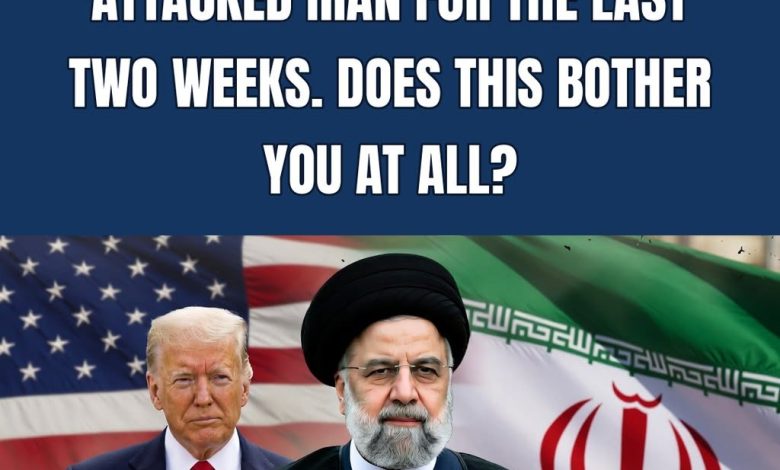
For years, Iran’s leaders tested American resolve through hostile militias, weapons networks, nuclear ambitions, and repeated threats against U.S. troops and regional allies. President Donald Trump’s response sends Tehran a message that is difficult to misunderstand: attacks on American interests will carry consequences.
Supporters of the president’s strategy argue that carefully limited military action can weaken Iran’s operational capabilities without dragging the United States into another prolonged ground war. By targeting military infrastructure, command facilities, missile systems, and weapons supply routes, the administration aims to disrupt the networks that support organizations such as Hezbollah and Hamas.
That approach represents a sharp departure from the policies favored by previous administrations.
For too long, Washington relied heavily on negotiations, sanctions relief, and diplomatic concessions in the hope that Iran would moderate its behavior. Instead, critics of those policies contend that Tehran used the resulting economic breathing room to strengthen its military, finance regional proxies, and increase its influence throughout the Middle East.
Appeasement did not produce lasting stability. It gave Iran more room to maneuver.
Trump’s maximum-pressure strategy rests on a different principle: deterrence works only when adversaries believe the United States is both willing and capable of responding. Strong warnings mean little when they are repeatedly issued without enforcement.
Iranian-backed militias have launched attacks against American personnel and facilities across the region. When such aggression is met with hesitation, Tehran may interpret restraint not as wisdom, but as weakness. A credible military response can therefore be intended not to start a larger conflict, but to prevent one.
Critics understandably warn that any strike involving Iran carries serious risks. Miscalculation could lead to retaliation, economic disruption, or broader regional escalation. Those dangers should not be dismissed. Military force must remain targeted, legally justified, and connected to a clearly defined national-security objective.
However, endless negotiations also carry costs.
If Iran concludes that attacks will be answered only with diplomatic statements, its leaders have little incentive to change course. Deterrence collapses when consequences appear optional. Trump’s strategy seeks to restore that deterrence while avoiding occupation, nation-building, or an open-ended campaign for regime change.
The objective is pressure, not another Middle Eastern quagmire.
Energy policy is also an important part of this equation. Greater American energy production can reduce U.S. vulnerability to instability in global oil markets while limiting the leverage of hostile petroleum-exporting governments. Energy independence is not merely an economic issue; it is a national-security advantage.
Regional allies are watching closely. Israel and several Arab governments share concerns about Iran’s missile programs, proxy forces, and nuclear activities. A United States that demonstrates resolve may encourage greater intelligence sharing, defense coordination, and diplomatic cooperation among countries facing the same threat.
At home, political opponents often characterize military action as reckless. Skepticism toward the use of force is healthy, particularly after the costly wars of recent decades. Yet criticism must be accompanied by a credible alternative. Returning indefinitely to negotiations that Iran exploits or ignores is not a strategy—it is a postponement of difficult decisions.
The most responsible course combines military readiness, economic pressure, regional cooperation, energy security, and disciplined diplomacy. Force should never be the first or only option, but neither can it be removed from the table when American service members and allies are threatened.
Families who have lost loved ones in attacks carried out by hostile forces understand that hesitation also has consequences. Leadership requires weighing not only the risks of acting, but also the dangers of allowing aggression to continue unanswered.
Peace is preserved not by empty rhetoric, but by convincing adversaries that aggression will fail.
Trump’s Iran policy reflects that hard reality. By applying calibrated pressure and avoiding an unnecessary ground war, the administration is attempting to protect American interests, weaken terrorist networks, and force Tehran to reconsider the price of continued hostility.
The choice facing Iran’s leaders should be clear: pursue economic stability and peaceful relations, or continue supporting aggression and face increasing isolation and consequences.
American strength, used carefully and decisively, can prevent tomorrow’s larger war by confronting today’s growing threat.