A Simple Water-Pipe Puzzle Is Tricking Thousands—Here’s Why
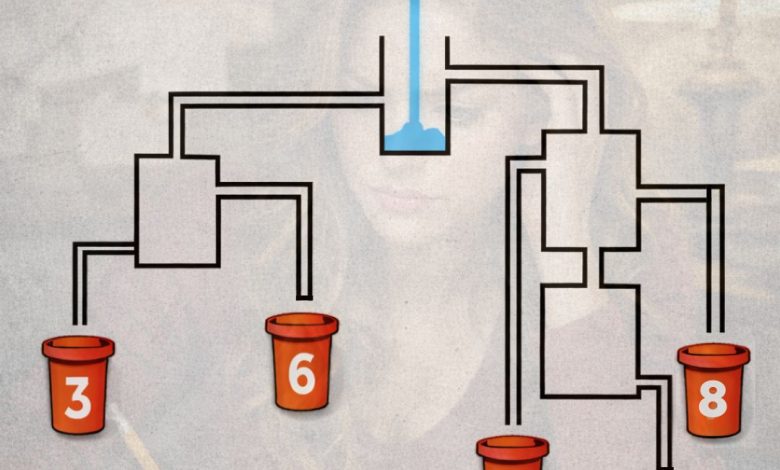
At first glance, the challenge looks straightforward: a faucet pours water into a network of pipes that lead to several buckets. The task is to figure out which bucket fills up first. But the puzzle hides a detail that changes everything—some pipes are blocked, so water cannot travel through certain routes.
What Makes This Puzzle So Deceptive
Many people make a quick assumption based on bucket numbers or bucket positions. That instinct is exactly what the puzzle is designed to exploit.

Key twist to remember:
- Numbers don’t matter.
- Only open, unblocked pipes matter.
- If a route is blocked, that bucket will never fill, no matter how “close” it seems.
Step-by-Step: How to Solve It Correctly
- Start at the faucet
Track where the water enters the pipe system. - Check every branch for blockages
Any section that is sealed or blocked means water cannot pass. - Eliminate buckets that depend on blocked paths
If a bucket can only be reached through a blocked pipe, it is out. - Follow the remaining open route to the first reachable bucket
The bucket with the first fully open path will fill first.
The Answer: Which Bucket Fills First
After tracing the open pathways:
- Buckets 3, 6, and 7 are eliminated because their pipes are blocked.
- Bucket 9 has the only clear, unobstructed path.
Result:
- Bucket 9 fills up first.

Common Mistakes People Keep Making
- Assuming the bucket numbers indicate order (they do not)
- Overlooking a single blocked section in the pipe network
- Rushing, instead of tracing the path carefully from start to finish
Why Puzzles Like This Are More Than Just Games
This kind of brainteaser rewards the same skills used in real-world decision-making:
- Attention to detail (spotting what others miss)
- Logical reasoning (following evidence, not assumptions)
- Patience (slowing down to avoid predictable errors)