ABC, NBC, and CBS Face Backlash Over Decision Not to Air Trump’s Presidential Address
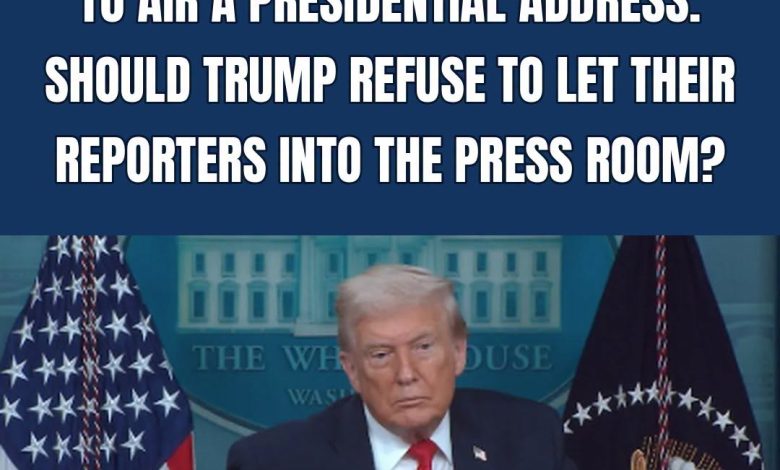
The nation’s largest broadcast networks are facing criticism after ABC, NBC, and CBS reportedly declined to carry President Donald Trump’s address, raising serious questions about media fairness, editorial power, and the public’s access to presidential communications.
For millions of Americans, a presidential address is not simply another television program. It is an opportunity to hear directly from the nation’s leader on issues that may affect national security, immigration, the economy, elections, energy policy, and foreign affairs.
When major networks choose not to broadcast such a message, critics argue that they are doing more than making a programming decision. They are deciding which presidential statements the public should hear—and which ones viewers must search for elsewhere.
That power deserves scrutiny.
Supporters of the president contend that the networks’ decision reflects a broader pattern of hostility toward Trump and the voters who support his America First agenda. They argue that television executives routinely provide extensive coverage of controversies surrounding the administration while giving less attention to its policy arguments and accomplishments.
The central issue is not whether network executives agree with the president. Journalists are not required to support any administration. However, major broadcasters that claim to serve the public should distinguish between challenging a president’s claims and preventing viewers from hearing those claims in the first place.
The networks could have aired the address and followed it with fact-checking, opposing viewpoints, or expert analysis. That approach would have allowed Americans to hear the president directly while giving journalists the opportunity to provide additional context.
Instead, refusing airtime risks reinforcing the belief that influential media organizations act as political gatekeepers rather than neutral information providers.
Some Trump supporters have called for the White House to reconsider the access granted to reporters from networks that decline to broadcast major presidential communications. They argue that organizations benefiting from regular access to briefings, officials, and press conferences should demonstrate a willingness to present important administration messages to their audiences.
However, removing reporters from the White House press room would also create legitimate concerns. Press access should not depend on favorable coverage, and governments should not punish journalists merely for making editorial decisions the administration dislikes.
Accountability must therefore work in both directions.
Networks should be transparent about why they decline a presidential address. The White House, meanwhile, should defend its position without undermining the broader principle of a free and independent press.
The strongest response is not censorship from either side. It is greater transparency, wider access, and direct communication with the American people.
In today’s fragmented media environment, Americans can watch presidential speeches through cable news, online platforms, social media, and official government channels. Yet ABC, NBC, and CBS still occupy a powerful position in the national information system. Their decisions influence what millions of households see and how major political events are understood.
With that influence comes responsibility.
Viewers deserve the opportunity to hear important presidential messages, evaluate the arguments themselves, and decide what they believe. Networks may criticize, analyze, and challenge the president—but they should be cautious about substituting their editorial judgment for the judgment of the American public.
A healthy democracy requires both an independent press and an informed citizenry. Neither institution is strengthened when political communication is filtered according to partisan expectations.
The American people do not need media executives—or government officials—to decide what they are permitted to hear. They need access to the information, competing perspectives, and the freedom to reach their own conclusions.