America Must Turn Military Strength Into Lasting Security Against Iran
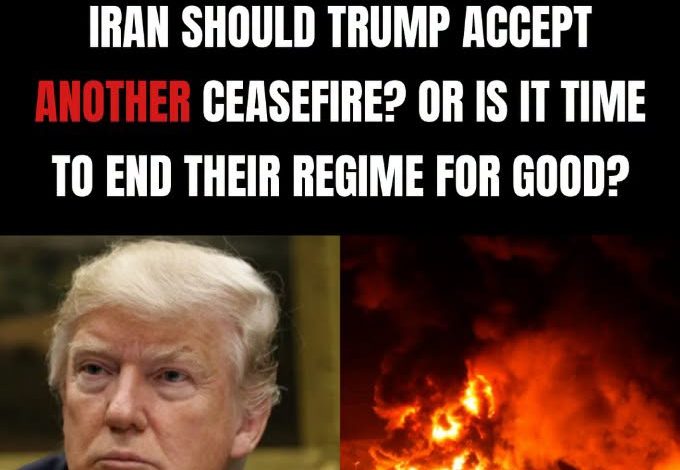
For thirteen consecutive nights, American forces have struck Iranian military targets in a campaign intended to weaken Tehran’s ability to threaten U.S. personnel, regional allies, and vital international shipping routes. The operation demonstrates overwhelming American firepower—but military success should not be confused with a completed strategic victory.
U.S. Central Command confirmed that its latest strikes further degraded Iranian military capabilities. President Donald Trump’s administration has argued that the campaign is necessary to protect Americans and defend U.S. national-security interests. The president also formally notified Congress that renewed hostilities began on July 7, 2026.
The central question is no longer whether the United States can punish Iran. The United States has already demonstrated that it can. The question is what political and security outcome that force is supposed to produce.
For decades, Iran’s rulers have financed armed proxies, threatened Israel, challenged American influence, and used regional instability to strengthen their position. Temporary pauses have repeatedly given Tehran opportunities to rebuild military capacity, reorganize its networks, and return to confrontation under more favorable conditions.
That history explains why many Americans are skeptical of another loosely structured ceasefire.
A pause without enforceable conditions could allow Iran to preserve the very capabilities that triggered the conflict. Any agreement must therefore require verifiable restrictions on Iran’s nuclear program, an end to attacks against American forces, protection for commercial shipping, and meaningful consequences for violations.
Yet calls to “finish the job” also require precision. That phrase cannot simply mean expanding the conflict until the Iranian government collapses. Regime change could produce unpredictable consequences, including civilian suffering, regional fragmentation, attacks on American bases, and a costly occupation or reconstruction commitment.
Strength without a defined end state can become strategic drift.
Iran has already demonstrated that it retains the ability to retaliate. Iranian forces have targeted American positions around the Persian Gulf, while attacks and military activity near the Strait of Hormuz have disrupted one of the world’s most important energy corridors. The conflict has increased risks to service members, civilians, merchant crews, and the global economy.
The administration should therefore state its objectives plainly.
America’s goal should be to ensure that Iran cannot develop a nuclear weapon, cannot attack U.S. forces without devastating consequences, and cannot hold international shipping hostage. Those objectives are serious, measurable, and directly connected to American security.
President Trump is right that deterrence requires credibility. Adversaries must believe that attacks on Americans will produce consequences greater than any advantage they hope to gain. Previous policies too often treated negotiations as an achievement in themselves, even when Iran used diplomatic delays to strengthen its bargaining position.
But credible deterrence involves more than bombing targets. It also requires economic isolation, intelligence cooperation, missile defense, protection of American bases, support from regional partners, and a realistic diplomatic framework backed by enforcement.
A ceasefire should be accepted only when it advances those objectives—not merely because international institutions demand a pause. Diplomacy is valuable when it locks in military gains. It becomes dangerous when it gives an adversary time to recover without changing its conduct.
Congress also has a responsibility. A campaign of this scale should not operate indefinitely without public debate over its authorization, costs, risks, and ultimate purpose. Supporting American troops means more than praising their courage. It means ensuring they are sent into danger with clear orders, adequate resources, lawful authority, and an achievable mission.
The United States should neither retreat prematurely nor enter an open-ended war driven by slogans.
The correct path is maximum military pressure tied to specific, enforceable demands. Iran must understand that attacks on Americans, nuclear escalation, and disruption of global commerce will bring overwhelming consequences. At the same time, Washington must define what compliance looks like and what conditions would permit hostilities to end.
America has shown its strength. It must now prove its strategic discipline.
Lasting security will not come from a symbolic ceasefire, but neither will it come from war without limits. It will come from converting battlefield dominance into an enforceable settlement that protects American lives, restrains Iran, secures vital trade routes, and prevents the next conflict before it begins.