Are you old enough to know what this is? Most people can’t seem to work it out…
What You’re Looking At
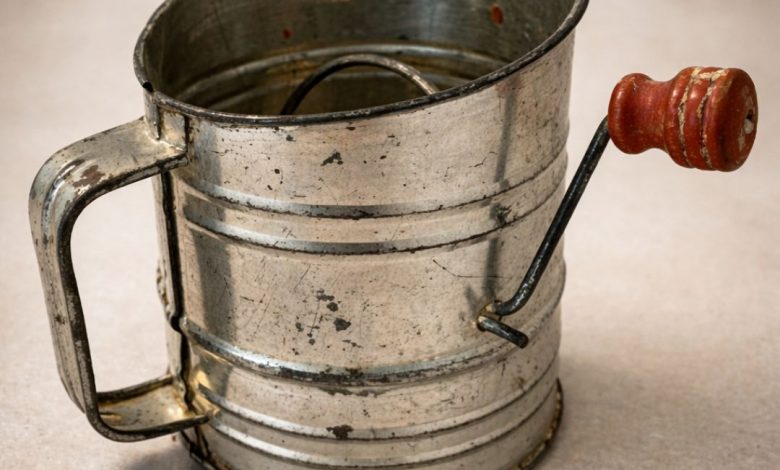
This item is a vintage hand-crank flour sifter, commonly found in home kitchens around the 1950s. Its standout detail is the reddish wooden knob attached to a side crank—made for comfortable gripping while sifting.
Key Features You Can See
- Cylindrical metal body with horizontal ridges for strength and grip
- A sturdy side handle for steady holding
- A manual crank arm with a red wooden handle/knob
- An internal wire/agitator mechanism that helps push flour through the mesh (typically at the base)
- Visible wear, scratches, and patina, which are normal signs of long-term use in older kitchen tools
How a Hand-Crank Sifter Works
Sifters like this were designed to make dry ingredients lighter and more consistent. The process is simple:
- Add flour (or another dry ingredient) into the sifter.
- Hold the side handle firmly over a bowl.
- Turn the crank so the internal mechanism moves.
- The motion breaks up clumps and helps the ingredient fall through evenly.
Why Sifting Mattered in Mid-Century Baking
In many 1950s recipes, sifting wasn’t optional—it was part of getting reliable results. A good sifter helped:
- Remove lumps from flour, cocoa, or powdered sugar
- Add air for a lighter texture in cakes and biscuits
- Improve mixing consistency, especially in batter-based baking
- Combine dry ingredients more evenly when used before mixing
Common Uses (Then and Now)
- Flour for cakes, cookies, bread
- Powdered sugar for dusting and icing
- Cocoa powder for smoother chocolate mixtures
- Cornstarch for sauces or baking blends
- Dry spice blends (in small amounts) for even distribution
Why Collectors and Home Cooks Still Like Them
Vintage sifters remain popular because they are:
- Durable (metal construction and simple mechanics)
- Practical (works without electricity)
- Nostalgic (classic mid-century kitchen look)
- Display-worthy in farmhouse, retro, or traditional décor
Care Tips for a Vintage Metal Sifter
To keep it usable and preserve its condition:
- Hand-wash gently and dry immediately to reduce rust risk
- Avoid long soaking, especially around moving parts
- If the crank stiffens, clean out old residue and dry thoroughly
- Store in a dry place to protect metal and the wooden knob
Final Note
With its metal body, hand crank, and distinct red wooden handle, this 1950s-style flour sifter represents an era when kitchen tools were made to be simple, repairable, and long-lasting—and it can still do its job well today.