Austin Metcalf’s Father Condemns Media Narratives After Son’s Killer Receives 35-Year Sentence
The murder of 17-year-old Austin Metcalf should have remained focused on a young life lost, a grieving family and the evidence presented inside a Texas courtroom. Instead, the case became another national political and racial controversy—one amplified by television personalities and social media commentators who were far removed from the tragedy.
Austin was fatally stabbed during a high school track meet in Frisco, Texas, on April 2, 2025. He and Karmelo Anthony, the student who stabbed him, were both 17 at the time. On June 9, 2026, a Collin County jury rejected Anthony’s self-defense argument, convicted him of murder and sentenced him to 35 years in prison.
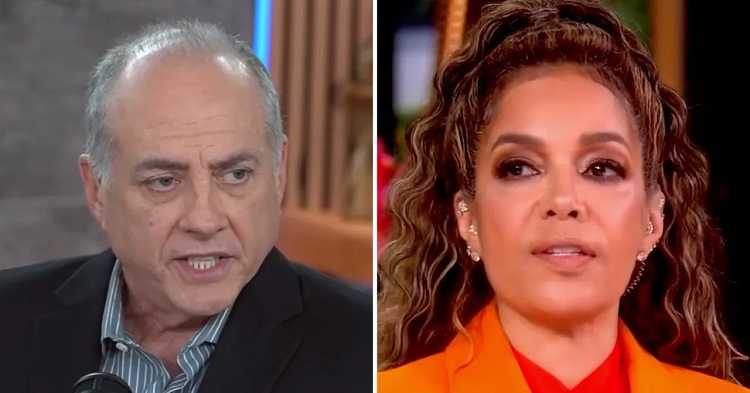
For Austin’s father, Jeff Metcalf, the verdict did not end the family’s ordeal. He has since spoken publicly against commentators whom he believes have distorted the case, promoted incomplete accounts of the confrontation and used his son’s death to generate attention.
A Father Pushes Back Against “The View”
Metcalf directed some of his strongest criticism toward Sunny Hostin and “The View.”
During a televised discussion, Hostin emphasized the size difference between the teenagers, describing Anthony as weighing approximately 130 pounds and Austin as weighing 200 pounds. She also said Anthony was the only Black student beneath the team tent and questioned whether the absence of Black jurors meant he had received a jury of his peers.
The racial makeup of the jury is a legitimate subject for legal scrutiny: reporting from the trial confirmed that none of the 12 jurors was Black. However, that fact alone does not establish that jury selection was unlawful or that the verdict was racially motivated. Those are legal questions requiring evidence about how jurors were questioned, challenged and selected—not assumptions made during a television segment.
Metcalf argued that the commentators discussing the case did not personally know Austin, his twin brother Hunter or Anthony.
“They don’t know me. They don’t know Hunter, Austin. They don’t know Karmelo,” he said, accusing public figures of pursuing attention and attempting to monetize his son’s death.
His frustration is understandable. A father who has buried his teenage son must now watch strangers convert the worst moment of his life into television content, political messaging and viral social-media arguments.
The Jury Heard the Evidence
The courtroom—not a daytime talk show—was where the competing claims were tested.
Anthony’s attorneys maintained that he acted in self-defense during the confrontation beneath the Memorial High School team tent. Prosecutors argued that the stabbing was an unjustified act of murder. Student witnesses described the argument that preceded the killing, and the jury ultimately rejected Anthony’s defense.
After finding Anthony guilty, jurors also rejected a lesser manslaughter outcome and imposed the 35-year prison sentence. Anthony will be eligible for parole after serving part of that term under Texas law.
That verdict does not prohibit journalists or legal analysts from questioning aspects of the proceedings. The American justice system permits appeals, post-trial motions and examination of possible constitutional violations. But responsible commentary must distinguish between asking legitimate questions and declaring—without sufficient evidence—that race explains the entire case.
A Tragedy Turned Into a Racial Flashpoint
Anthony is Black, and Austin was white. Those facts quickly became central to the online discussion, even though both the prosecution and Austin’s father argued that the confrontation was not fundamentally about race. The Associated Press reported that social-media posts helped transform the killing into a broader racial controversy extending far beyond the Texas community where it occurred.
That transformation came at a cost.
Austin became a political symbol instead of being remembered as a real teenager—a student and athlete with a twin brother, parents, teammates and an unfinished future. Anthony was likewise reduced by many online voices to either a racial victim or a political villain, leaving little room for sober consideration of the evidence.
A murder trial should not be treated as raw material for ideological entertainment.
Commentators have every right to examine the legal process, including the composition of the jury and the standards governing self-defense. But they also have a responsibility to correct inaccurate claims, acknowledge disputed evidence and avoid presenting speculation as established fact.
The Legal Fight Is Not Completely Over
Although Anthony has been convicted and sentenced, his lawyers filed a motion in July 2026 seeking a new trial and requesting the judge’s recusal. The defense has raised allegations concerning trial procedure and Anthony’s decision not to testify. Those claims remain part of the post-trial legal process and do not erase the existing verdict unless a court grants relief.
This distinction matters. It is accurate to say that a jury convicted Anthony of murder and sentenced him to 35 years. It is also accurate to say that his attorneys continue to challenge that conviction.
What is not responsible is bending selective facts to produce a predetermined racial or political conclusion.
Austin’s Family Deserves More Than Political Theater
Jeff Metcalf’s public statements reflect more than anger at one television host. They represent a grieving parent’s demand that his son be treated as a human being rather than a convenient character in somebody else’s national narrative.
The family has already endured the loss of Austin. His twin brother, Hunter, must live with the absence of someone who had shared nearly every stage of his life. No television debate can adequately express that loss.
The central truth is that Austin Metcalf was killed, a jury considered the evidence, and Karmelo Anthony was convicted and sentenced.
Legal questions may continue through the courts. Public discussion will undoubtedly continue as well. But the media should approach the case with accuracy, restraint and basic respect for the family whose pain cannot be measured in ratings, clicks or political influence.
Jeff Metcalf is right about one essential point: his son’s death should not be exploited for attention.
America can debate race, self-defense and the justice system without rewriting evidence, assigning unproven motives or forgetting the teenager whose life was taken. Austin’s memory deserves facts—not political theater.