Discovered in a box of vintage items and assorted tools. What is this object?
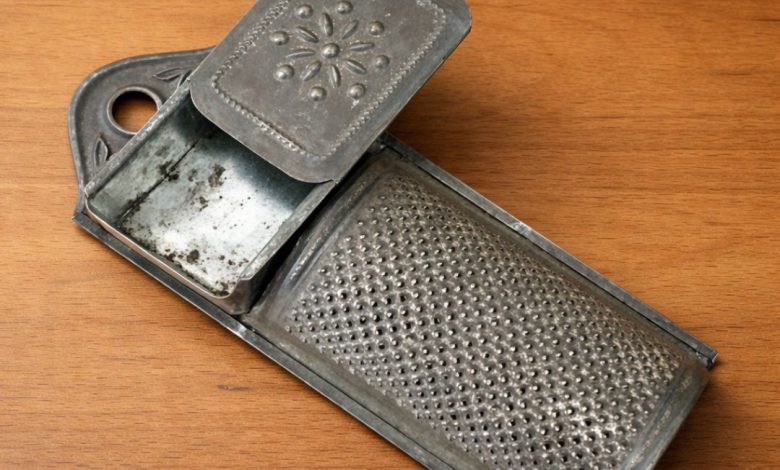
An antique nutmeg grater is a compact, hand-held tool designed to turn whole nutmeg seeds into fresh, fine shavings or powder. Long before pre-ground spices were widely available, grating nutmeg on demand preserved maximum aroma and flavor.
What You’re Seeing in the Image
This style typically includes:
- A metal grating surface with many raised perforations for shredding nutmeg
- A hinged or sliding cover that protects the grater and helps contain the spice
- A loop or ring at the top for hanging or carrying
- A box-like form that can catch shavings, keeping the workspace cleaner
Why Nutmeg Needed a Dedicated Tool
Nutmeg is extremely aromatic, but its fragrance fades quickly after grinding. A dedicated grater allowed cooks to:
- Produce fresh spice instantly
- Control texture (fine dust vs. coarser shavings)
- Add nutmeg directly to foods without storing large amounts of pre-ground spice
How a Vintage Nutmeg Grater Works
- Open the cover to expose the grating surface.
- Rub the whole nutmeg seed against the perforated metal using steady pressure.
- The grater creates tiny shavings that fall into the body of the tool (or onto the dish).
- Close the cover when finished to protect the grating plate and reduce mess.
Common Materials and Construction
These tools were built for durability and daily use, often made from:
- Tinplate, steel, or iron (sometimes with a protective coating)
- Stamped metal construction for strength with light weight
- Decorative details such as embossed patterns on the cover
When These Tools Were Most Popular
Vintage nutmeg graters were especially common in 18th and 19th century households and remained in use well into the early 20th century, when portable kitchenware and table-side seasoning were part of everyday dining culture.
Typical Uses in the Kitchen
Nutmeg was grated into both sweet and savory dishes, including:
- Custards, puddings, cakes, and cookies
- Hot drinks like cocoa, mulled beverages, and egg-based drinks
- Cream sauces, potatoes, and soups
- Classic dishes where a light nutmeg finish is essential
Key Features Collectors Look For
If you are identifying or evaluating an antique piece, check for:
- Intact hinge and closure (opens and shuts smoothly)
- Sharp, raised perforations (not overly flattened from wear)
- Minimal rust-through or structural weakness
- Original decorative stamping and overall completeness
Care and Safe Handling
Because these are old metal tools, basic precautions matter:
- Clean gently with warm water and mild soap, then dry immediately
- Avoid long soaking to prevent corrosion
- If there is heavy rust, flaking metal, or unknown coatings, consider keeping it as a display collectible rather than a food-contact tool
- Store in a dry place to slow oxidation
Why Antique Nutmeg Graters Still Matter
A vintage nutmeg grater is a small but telling piece of culinary history—built to deliver fresh flavor, reduce waste, and make spice preparation simple. Even today, it highlights a timeless cooking principle: grind or grate spices fresh whenever possible for the best taste.