Do You Still Recall This Classic Tool?
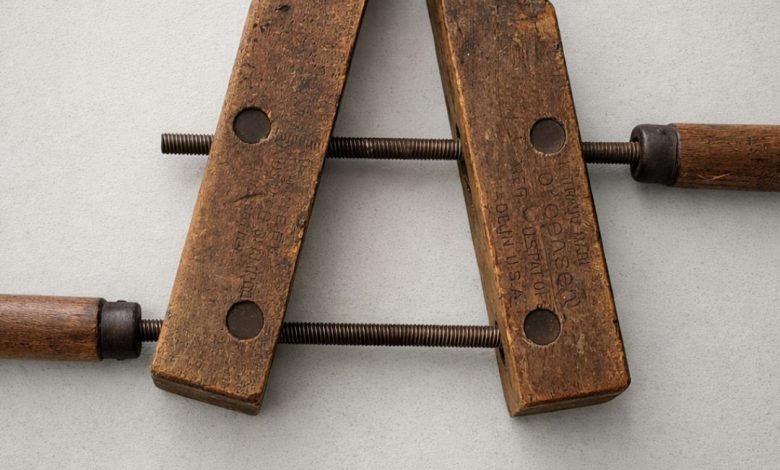
What’s in the Photo
The tool shown is a vintage wooden “handscrew” clamp (often called a wood screw clamp). It features:
- Two solid wooden jaws with a tapered shape for gripping
- Two threaded steel screws that control jaw pressure and alignment
- Wooden handles for comfortable tightening
- Stamped branding and origin marks, including “Jorgensen” and “Made in U.S.A.”
Why This Clamp Design Is So Useful
Unlike many modern clamps that tighten from one point, a handscrew clamp uses two independent screws, which gives you:
- Parallel clamping (even pressure across the jaw)
- Angled clamping (tighten one screw more than the other to hold tapered parts)
- Gentle but strong grip (wood jaws reduce marring on workpieces)
A Quick Background on the Maker and Markings
This style of clamp is associated with historic American toolmaking. According to the information provided:
- The Cincinnati Tool Company was founded in 1877.
- In 1925, it changed its name to the Hargrave Company, operating under that name until 1955.
- A “circled H” on Cincinnati Tool Company tools indicates it was designed by John M. Hargrave (1889–1975).
These kinds of timeline and maker details are often what make a clamp like this a collectible woodworking piece, not just a shop tool.
How It Works (Simple Explanation)
Think of the clamp as two jaws that can be “tuned” at two points: the top screw and the bottom screw.
- Tightening both screws evenly keeps the jaws parallel.
- Tightening one screw more makes the jaws tilt, letting you clamp angled or irregular shapes securely.
How to Use It (Step-by-Step)
- Open the jaws by loosening both handles.
- Position the workpiece between the jaws.
- Set the angle (if needed):
- For flat, parallel clamping: tighten both screws evenly.
- For angled parts: tighten one screw more than the other until the jaws match the part’s angle.
- Finish tightening until the piece is secure (firm pressure, not crushing).
- Check alignment—handscrews can hold pieces squarely if you take a moment to balance both screws.
Common Woodworking Uses
- Edge gluing boards (steady, even pressure)
- Holding small assemblies while drilling, sanding, or carving
- Clamping irregular shapes that metal clamps struggle to grip
- Protecting delicate surfaces (wood jaws are naturally “soft” compared to metal)
- Temporary holding tool for layout, fitting, and dry assemblies
What Collectors and Woodworkers Look For
If you’re evaluating or describing a vintage clamp like this, the most important details are:
- Branding and stamps (e.g., Jorgensen, Made in U.S.A.)
- Condition of screw threads (smooth turning, not heavily stripped)
- Jaw integrity (no major cracks or severe warping)
- Original handles (matching wood, securely attached)
- Patina vs. damage: honest wear is normal; structural issues reduce usability
Care Tips to Keep It Working for Decades
- Keep it dry (wood movement and rust are the main enemies)
- Lightly clean and protect the screws (a small amount of oil can help prevent corrosion)
- If the jaws feel rough, a gentle cleaning and optional light waxing can improve feel without removing character
- Store it where it won’t be crushed or bent—handscrews last longest when the jaws stay true
Why Vintage Wooden Handscrews Still Deserve a Place in the Shop
Even with modern clamps available, a vintage handscrew remains valuable because it’s:
- Highly adjustable (parallel or angled clamping)
- Workpiece-friendly (less likely to dent wood)
- Durable and repairable (simple, serviceable design)
- Often tied to American toolmaking history, especially when maker marks and timelines are traceable through stamped details.