Does anyone know what these are? My friend has them and we aren’t sure what they are.
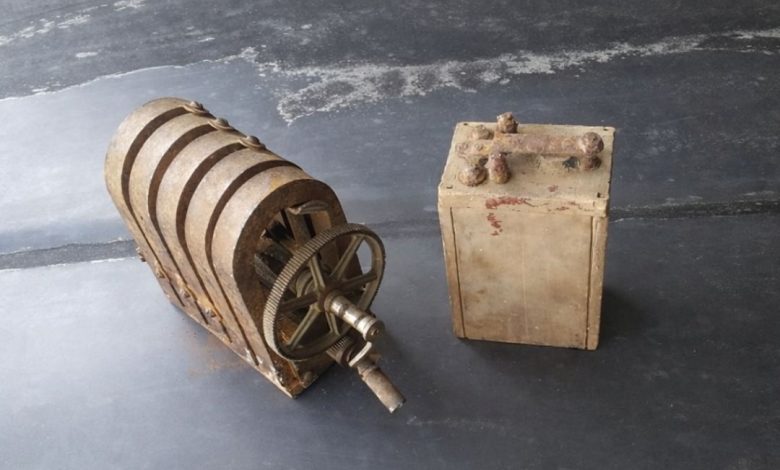
These objects appear to be two pieces of early communications equipment from the age of wired telegraph and telephone service. The larger crank-operated unit is most likely an antique hand-crank telephone magneto generator, and the wooden box is most likely a telegraph or local-battery battery box. They may not have originally been sold as one matched set, but they fit the same general era of early electrical communication.
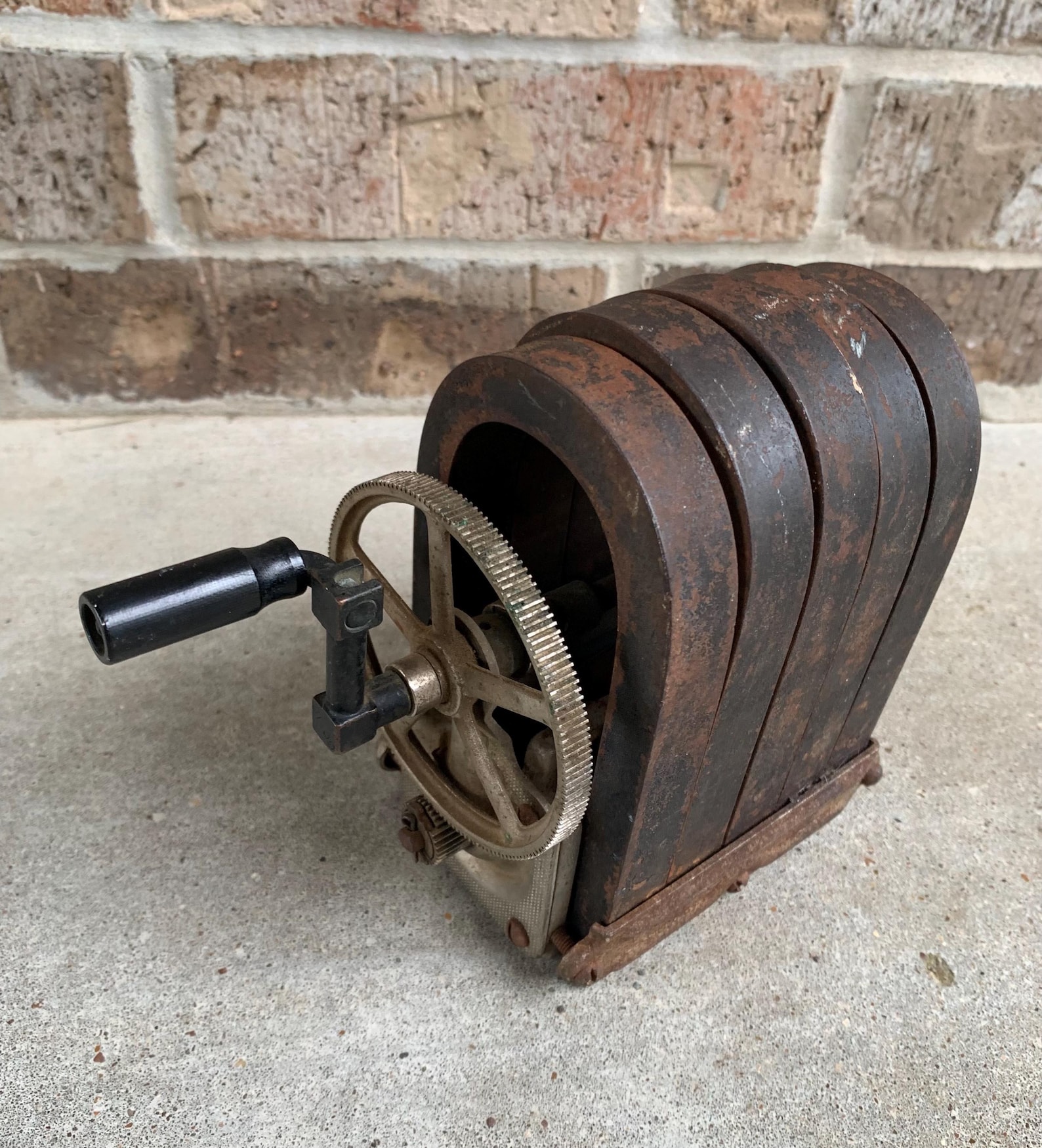
The first item is the easier one to identify. It closely matches a Western Electric No. 48-A 5-bar A.C. generator, a type listed in a 1912 Western Electric magneto telephone bulletin. In simple terms, this was a hand-crank generator used on early telephones. When someone turned the crank, it produced alternating current to ring the bell on another phone or signal the local operator. This style of equipment belongs to the late 1890s through the early 1900s, and surviving examples are often associated with an 1894 patent date, even if the actual unit was manufactured later.
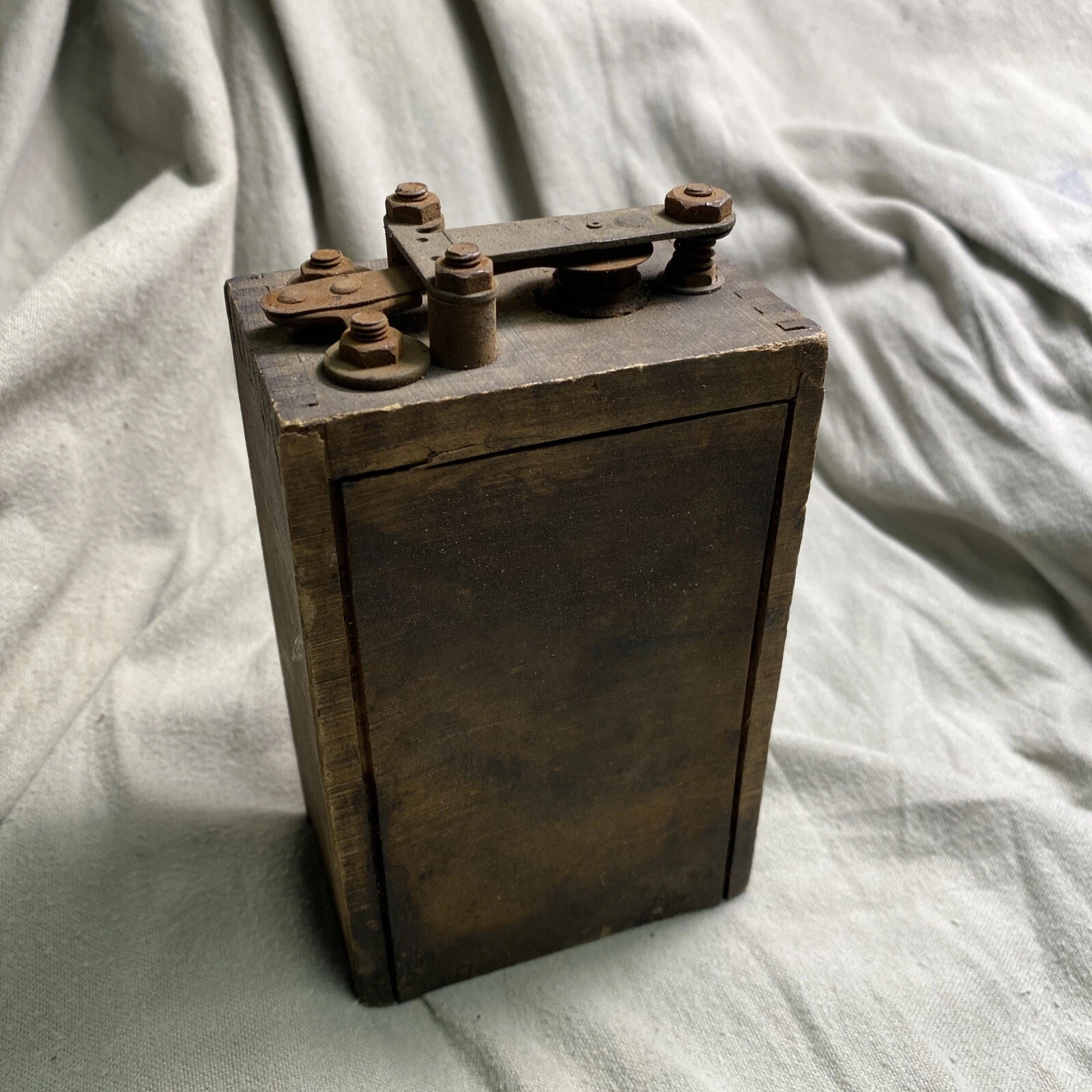
The wooden box is less certain, but it most likely served as a battery box for telegraph or early local-battery communication equipment. Telegraph systems depended on a battery, a transmitting device, and a receiving device, and many offices used a local battery as part of the setup. Museums also document wooden battery boxes as standard support equipment for older communication systems. So, even though one auction-style description calls it a Morse code “transponder,” the safer identification is an antique battery box used to supply power to telegraph or related equipment. A reasonable date range for that piece would be the late 1800s to early 1900s, though similar wooden battery boxes remained in use later in some systems.
What makes these items interesting today is that they represent a time when communication was still manual, mechanical, and local. Before modern phone networks supplied power from central exchanges, many systems relied on hand-cranked magnetos and separate battery boxes to make calls and send signals. In other words, these are not just odd old parts — they are real pieces of early American communication history.