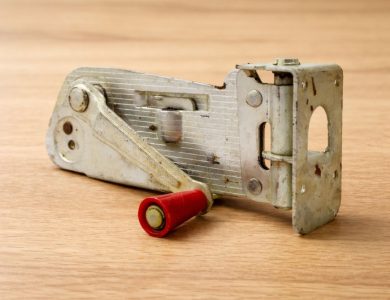
Dug this out of a bin of old toys at a garage sale.
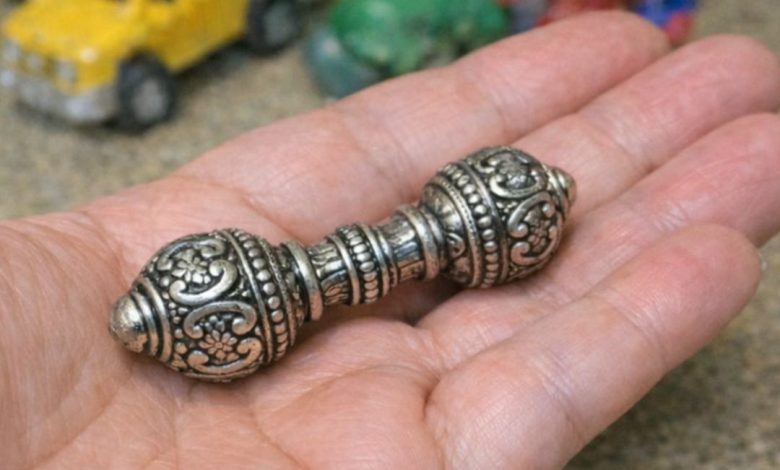
Garage sales have a way of turning up the unexpected. Between old board games, chipped glassware, and boxes of children’s toys, people often discover objects that seem completely out of place. That was exactly the case when a large, heavy metal piece shaped like an oversized jack surfaced from a bin of old toys, leaving everyone wondering what it really was.
At first, the object looked too unusual to ignore. It had the familiar crossed form of a classic jack, but it was clearly no child’s plaything. It measured about 8 inches across and weighed roughly 3 pounds, making it far too heavy and substantial to be used as a toy. Its surface was decorated with ornate engraved details and an aged patina, giving it the look of something far older and more refined than the other items around it.
That combination of weight, craftsmanship, and decorative design quickly ruled out the most obvious guesses. It did not function like a toy, and it lacked the practicality of an ordinary household tool. While some might have mistaken it for a paperweight or decorative accent, the object seemed to carry a more specific purpose. Its design suggested that it once belonged in a formal setting where appearance mattered just as much as function.
After closer examination, the mystery became clearer. The piece appears to be an antique knife rest, a once-common item used on elegant dining tables in earlier centuries. Before modern table settings became standardized, knife rests were placed beside the plate so diners could lay their knives down without staining the tablecloth. In wealthier homes, these table accessories were often made not only for convenience but also to reflect taste and status.
This find seems to belong to that more decorative category. Antique knife rests were especially popular during the 18th and 19th centuries, and many were crafted from materials such as brass, bronze, silver, or other heavy metals. Some were simple and practical, while others were designed as miniature works of art. The one found at the garage sale, with its rich detailing and impressive weight, likely served both purposes: protecting the linens while adding elegance to the dining table.
The craftsmanship offers important clues about its age and background. The object’s patina suggests genuine age, and the quality of the engraved patterns points to skilled metalwork rather than mass production. Pieces like this are often associated with the late Victorian period or the early 20th century, though an exact date would depend on style comparison, construction details, and any markings that may be present.
For collectors, that matters. Antique knife rests can attract real interest in the antiques market, especially when they feature unusual forms, decorative metalwork, or strong condition. Their value can vary widely depending on rarity, maker, age, and overall preservation. A plain example may sell for a modest amount, while a more distinctive piece with exceptional detail can command much more from collectors who specialize in antique tableware or decorative metal objects.
If someone finds a similar item, the best approach is to preserve it carefully. Harsh cleaning can strip away the patina that helps confirm age and character, so gentle cleaning is essential. Many collectors prefer to display such pieces in a cabinet, on a shelf, or inside a case where the detail can be appreciated without exposing the metal to unnecessary wear.
What makes this story especially fascinating is where the object was found. Hidden among old toys, it could easily have been dismissed as junk or mistaken for a novelty piece. Instead, it turned out to be a small but elegant artifact from a very different era of dining and domestic life. It is the kind of discovery that reminds us why garage sales continue to attract treasure hunters, collectors, and curious shoppers alike.
Sometimes, the most interesting finds are the ones no one recognizes at first. In this case, a mysterious heavy metal “jack” was not a toy at all, but a forgotten antique knife rest with a story rooted in formal dining history. And that is exactly the kind of surprise that keeps people digging through dusty bins, hoping the next strange object might reveal a piece of the past.