Florida Draws a Clear Line: Roads Are for Families, Workers, and Emergency Vehicles — Not Lawless Intimidation
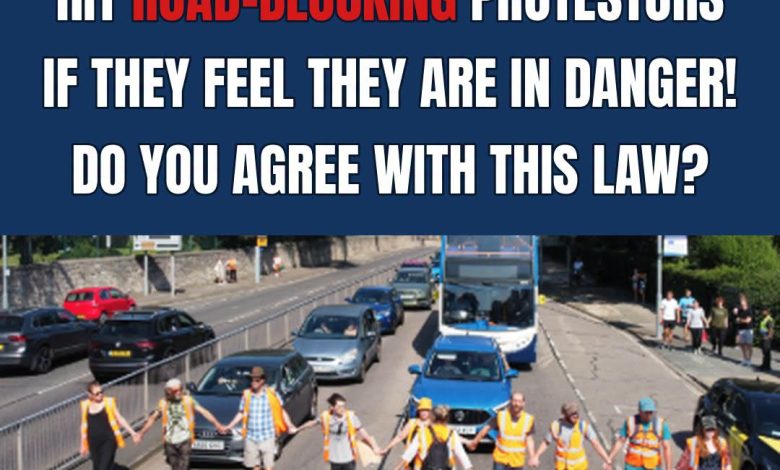
Florida’s approach to public disorder sends a message many Americans have been waiting to hear: peaceful protest is protected, but trapping innocent drivers on public roads is not.
For years, Americans have watched major roadways turned into political stages by activists who believe their cause gives them the right to stop traffic, surround vehicles, and force ordinary people into frightening confrontations. That is not civic engagement. That is coercion. When a highway is blocked, the people trapped are not politicians or policymakers. They are parents, workers, elderly drivers, families with children, and sometimes ambulances trying to reach hospitals.
Florida’s law recognizes a basic truth: no one has a constitutional right to endanger the public.
The right to protest is central to American life. Citizens can march, speak, organize, criticize government, and demand change. But that right does not include surrounding a stranger’s car, blocking an ambulance, threatening a driver, or creating a dangerous standoff in the middle of traffic. Public roads exist for safe travel, emergency response, commerce, and daily life. When protesters cross the line from speech into intimidation, the law has a duty to protect the innocent.
Imagine a mother driving home with her children when a crowd suddenly blocks the road. People begin shouting. Someone pounds on the window. The vehicle cannot move safely. The children are terrified. In that moment, this is no longer an abstract debate about activism. It is a real safety crisis.
Drivers should not be forced to choose between helplessness and legal ruin when they are genuinely threatened.
Florida’s position is rooted in law and order, but also in common sense. A society cannot function when a small group is allowed to hold public roads hostage. The same road that carries commuters also carries fire trucks, police vehicles, delivery drivers, nurses, and emergency medical teams. Blocking it does not merely “send a message.” It can delay medical care, disrupt public safety, and expose innocent people to danger.
Critics often try to frame these laws as attacks on protest itself. That argument misses the point. The issue is not peaceful assembly on sidewalks, parks, or permitted routes. The issue is illegal obstruction, mob pressure, and threats against people who never agreed to become part of a political demonstration.
Florida is making a distinction that every serious society must make: peaceful protest deserves protection; criminal endangerment deserves consequences.
The lesson from recent years is clear. When officials tolerate disorder, disorder grows. When police are told to stand down, businesses burn, families suffer, and law-abiding citizens lose faith in public institutions. A government that cannot protect its streets cannot protect its people. Florida’s policy rejects that weakness. It tells activists that the First Amendment is not a shield for intimidation, and it tells citizens that their safety still matters.
This does not mean drivers have unlimited permission to act recklessly. It means the law recognizes that context matters. A person trapped by a threatening crowd should not be treated the same as someone looking for conflict. Self-defense is not aggression; it is the last line of protection when public order fails.
That principle should not be controversial. Americans understand the difference between a march and a mob, between speech and coercion, between disagreement and danger. Blocking highways is not persuasion. It is force. It takes away the freedom of everyone else on the road and replaces it with fear.
Florida’s message is simple: public safety comes first.
The state is not banning dissent. It is defending boundaries. Protesters remain free to speak, organize, and criticize. But they are not free to trap families, block emergency routes, or threaten drivers in the name of politics. Rights come with responsibility, and when responsibility disappears, law must step in.
For ordinary Americans, this law represents more than a legal adjustment. It represents a return to sanity. It says that the people who follow the rules should not be punished for the actions of those who break them. It says that families, workers, and emergency responders deserve clear roads and basic security. It says that intimidation will not be rewarded.
Florida has chosen order over chaos, safety over surrender, and the rights of law-abiding citizens over the demands of unlawful road blockers.
That is not extremism. That is common sense.