Florida Draws A Hard Line Against Dangerous Highway Blockades
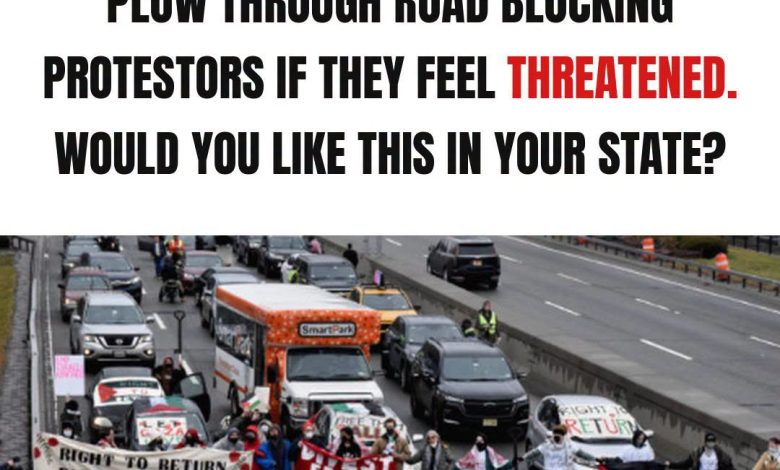
Florida is sending an unmistakable message: public highways cannot be turned into arenas of intimidation, violence, or political coercion.
When demonstrators deliberately surround vehicles, block emergency routes, strike windows, or threaten motorists, the situation is no longer merely an inconvenience. It can become an immediate public-safety crisis—especially for parents traveling with children, elderly drivers, medical patients, and workers who have nowhere to escape.
Supporters of Florida’s approach argue that law-abiding motorists should not be forced to remain trapped inside their vehicles while an aggressive crowd closes in. Police may be minutes away, but a dangerous confrontation can escalate within seconds. Drivers need clear legal protections when they reasonably believe they or their passengers face imminent harm.
Highway blockades also affect people far beyond the protest itself. Ambulances can be delayed, employees can miss work, families can be separated, and ordinary commuters can become unwilling participants in someone else’s political demonstration. The freedom to protest does not include an unlimited right to seize public infrastructure or endanger other citizens.
Critics warn that broader legal protections for motorists could encourage reckless behavior. That concern deserves serious attention. No law should give drivers permission to attack peaceful demonstrators or use unnecessary force. Any legal protection must depend on the specific facts: whether the vehicle was surrounded, whether threats or violence occurred, whether an escape route existed, and whether the driver’s fear was objectively reasonable.
That distinction is essential. Peaceful assembly is constitutionally protected. Threatening motorists, damaging vehicles, obstructing emergency services, and forcibly preventing people from leaving are not legitimate forms of peaceful protest.
Florida’s position reflects a broader law-and-order principle: citizens should not lose their right to personal safety simply because a political crowd has occupied the road. Protesters may express their views, but they must remain accountable for conduct that places innocent people in danger.
Other states should examine whether their existing laws adequately protect both peaceful expression and public safety. The goal should not be to silence protest. It should be to establish a clear boundary between protected demonstration and unlawful intimidation.
Public roads belong to everyone. They should never be weaponized against the people who depend on them.