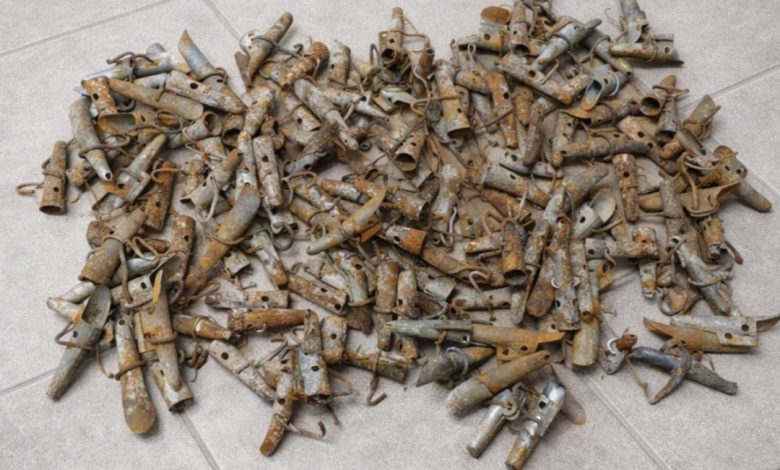
Found a bucket full of these weird metal things in the attic of the old house we just bought. What the hell are they?
What You’re Seeing in the Photo
The image shows a maple tap (also called a spile) inserted into a maple tree. The spile directs clear maple sap out of the trunk and into a bucket for collection.
What Is a Maple Tap (Spile)?
A maple tap/spile is a small metal or plastic tube-like fitting that is gently placed into a drilled hole in a maple tree. Its purpose is to:
- Create a clean pathway for sap to flow out of the tree
- Guide sap into a container (bucket, bag, or tubing system)
- Reduce mess and contamination compared to sap dripping directly from the bark
How Sap Collection Works (In Plain English)
Maple sap movement is driven by freeze–thaw cycles in late winter/early spring. When conditions are right, sap pressure changes inside the tree and sap begins to flow.
- Cold nights (below freezing) help “reset” pressure
- Warmer days (above freezing) encourage sap to move and drip
- The spile simply channels that natural flow into a bucket or tubing line
Why Maple Taps Matter
Using a proper spile helps make collection:
- Cleaner (less debris entering the sap)
- More efficient (steady drip into a container)
- More consistent (better control of where sap goes)
Common Types of Maple Spiles
- Bucket spiles: Designed to hold a bucket on a hook (like in the photo)
- Tubing spiles: Connect to plastic tubing for larger collection setups
- Traditional metal vs. modern plastic: Both work; modern systems often favor plastic for convenience
Basic Tapping and Collection Steps
- Pick the right tree: A healthy maple with a solid trunk.
- Choose the tap spot: Typically on the trunk at a comfortable height, away from obvious scars.
- Drill the tap hole: A clean hole sized to match the spile (correct bit size matters).
- Insert the spile: Tap it in gently until snug—do not overhammer.
- Hang the bucket or connect tubing: Make sure it’s stable and covered when possible.
- Collect sap regularly: Keep sap cold and process it promptly.
Best Practices for Clean, High-Quality Sap
- Use clean equipment: Buckets, lids, and spiles should be washed and rinsed well
- Keep sap cold: Treat sap like milk—it can spoil if warm
- Filter before boiling: Helps remove bark bits or debris
- Empty and rinse containers often: Especially during heavy flow days
Mistakes to Avoid
- Overdriving the spile: Can damage wood and reduce sap flow
- Using dirty buckets/tubing: Increases off-flavors and spoilage risk
- Leaving sap in warm conditions: Leads to sour sap quickly
- Tapping stressed or unhealthy trees: Not ideal for the tree or your sap quality
Tree Care and Sustainability Notes
Responsible tapping focuses on keeping the tree healthy year after year:
- Use proper hole size and depth
- Avoid unnecessary extra taps
- Let the tree heal naturally after the season (no need to plug holes in most cases)
Quick FAQ
- Is the liquid in the bucket syrup already? No—it’s raw sap, mostly water with natural sugars.
- Do spiles hurt the tree? When done correctly, tapping causes a small, recoverable wound.
- Why does sap flow only at certain times? Sap flow depends heavily on freeze–thaw weather patterns.