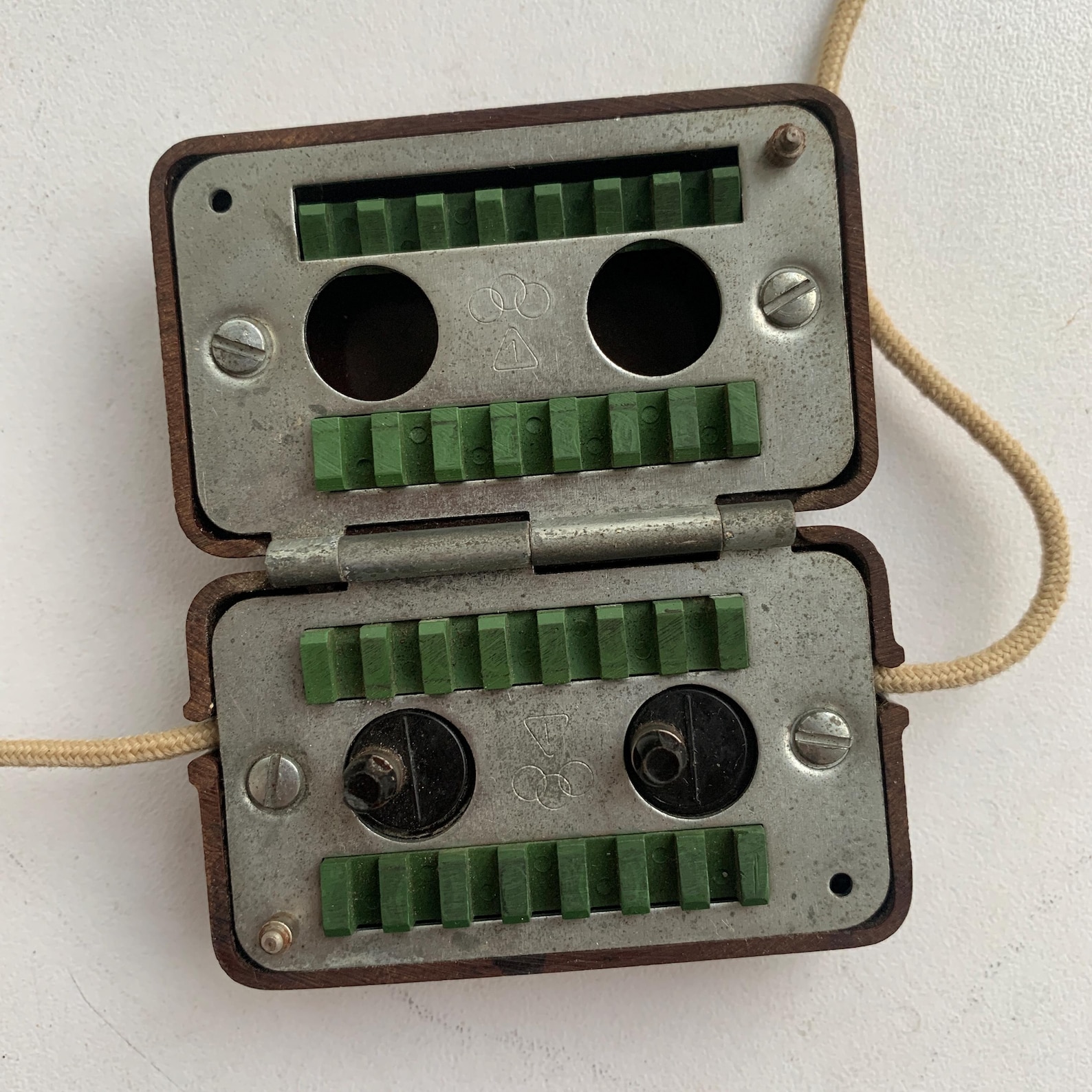
Found in an old house built in 1914, the little gold pins spin if you pull the red cord through.
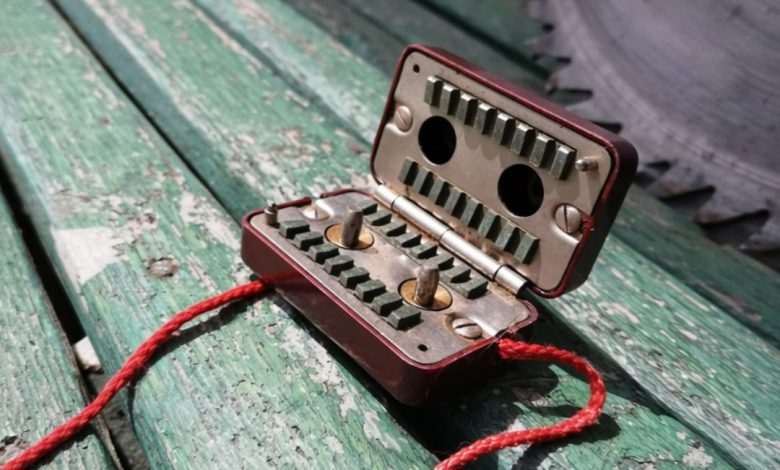
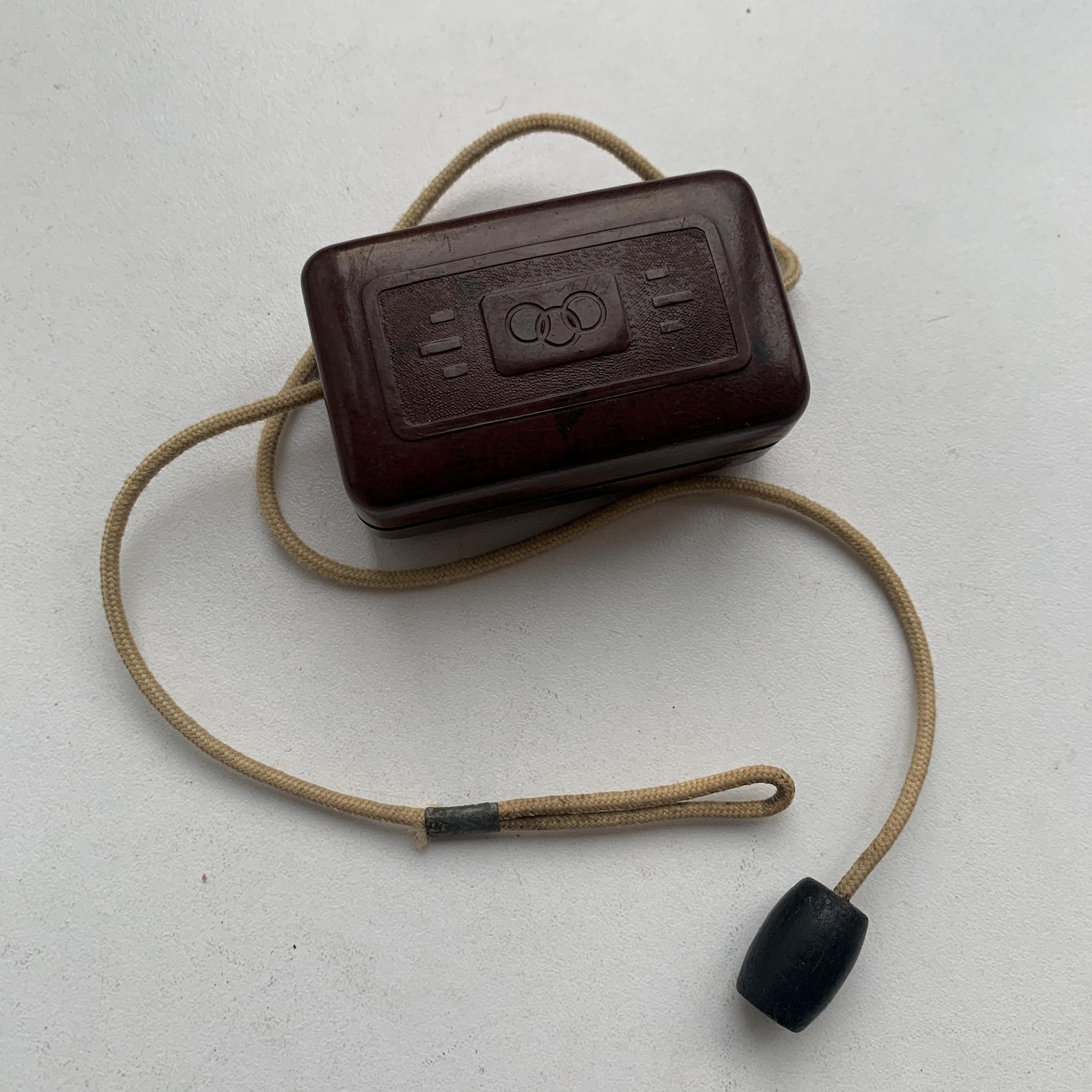
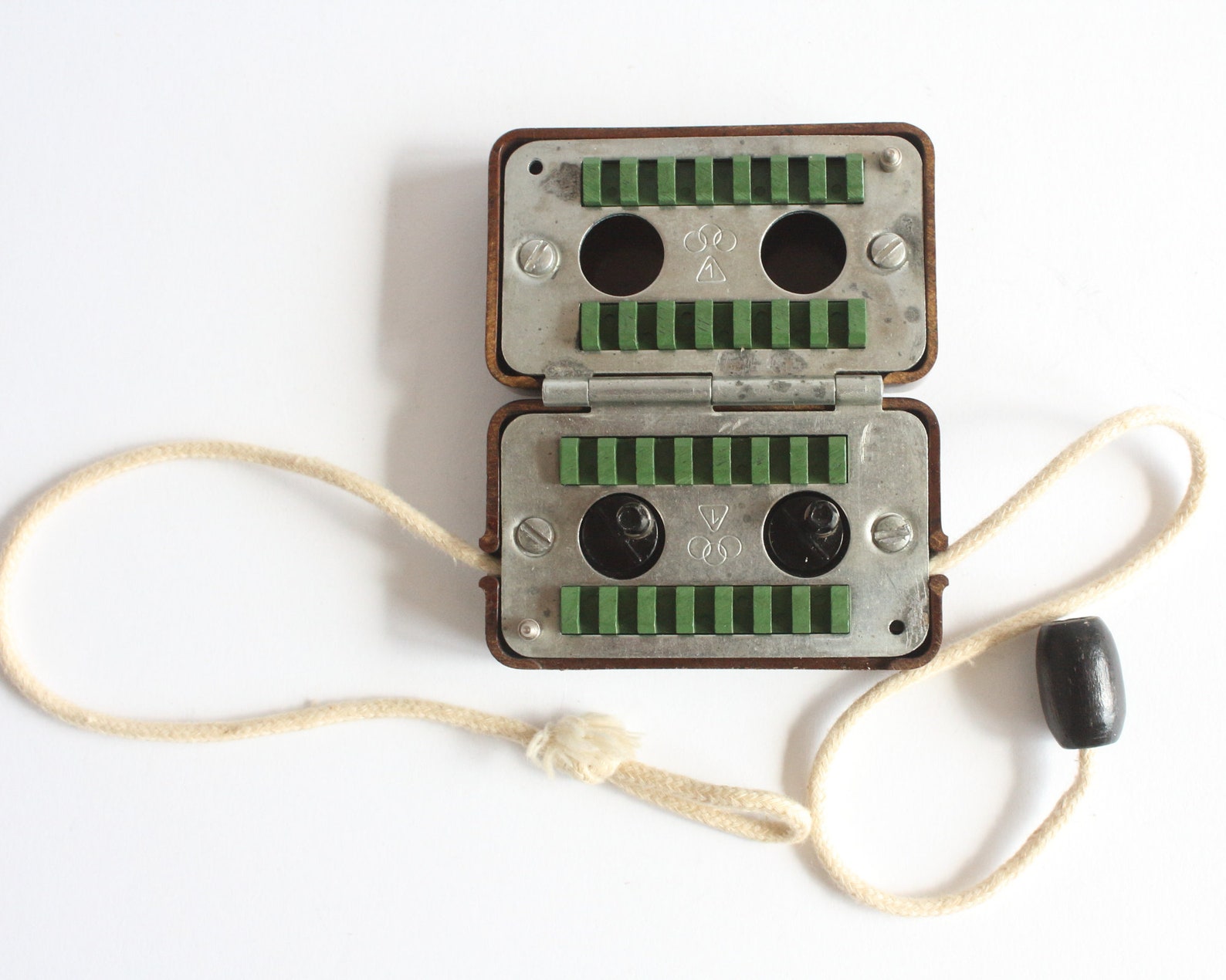
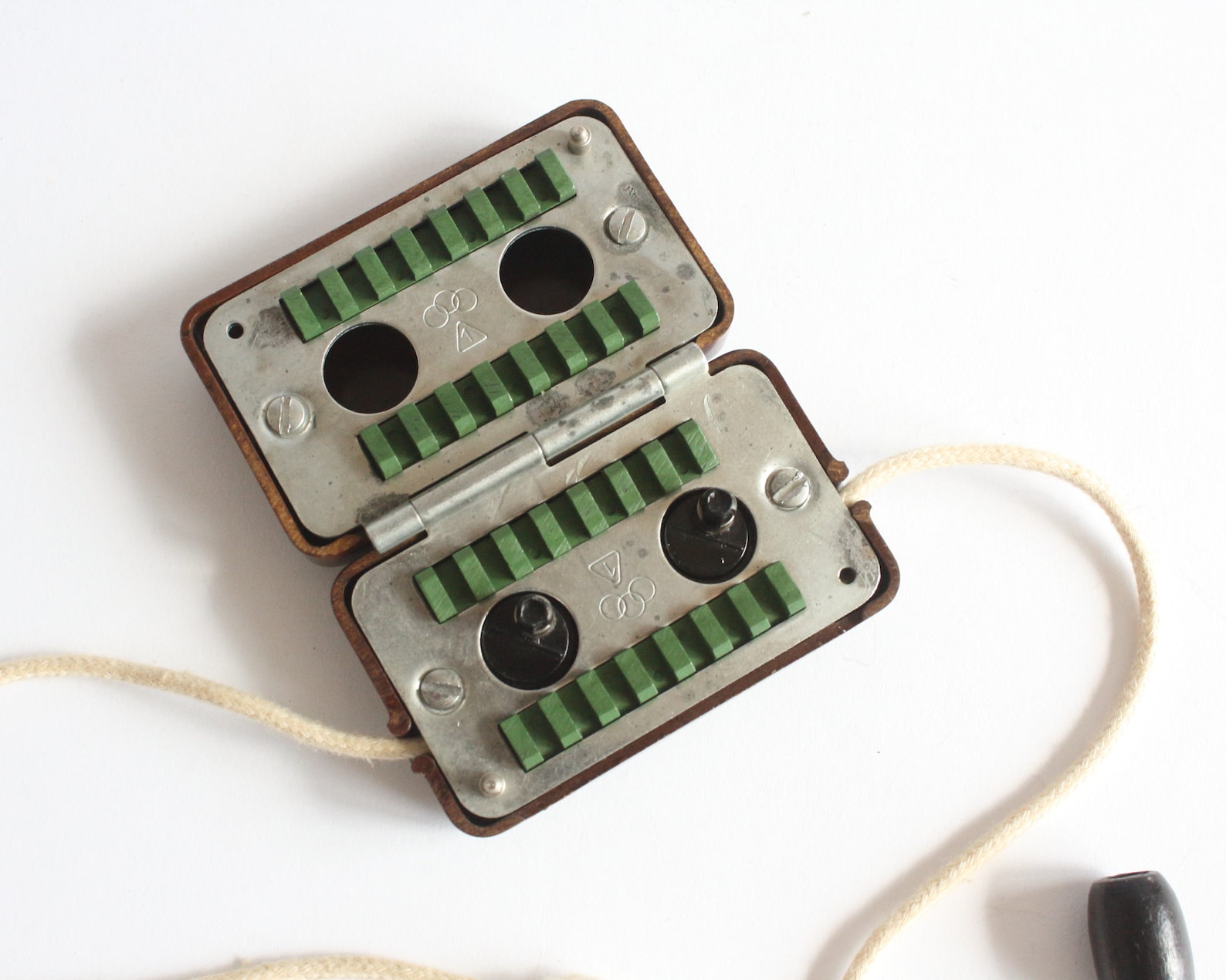
At first glance, it looks like a small plastic case with a string attached. Open it up, though, and you’ll see the purpose immediately: this is a vintage safety razor blade sharpener (often called a razor blade stropper). Devices like the one shown—complete with a pull-cord and a hinged lid—were designed to extend the life of double-edge (DE) razor blades at a time when replacing blades frequently wasn’t as cheap or convenient as it is today.
What It’s Called
This object is commonly known as a razor blade sharpener or safety razor blade sharpener. Collectors also refer to this style as a blade stropper, because many models didn’t “sharpen” by grinding metal away like a knife sharpener—instead, they stropped and realigned the blade’s edge to make it feel sharper again.
When It First Appeared
Safety razors took off in the early 1900s, and blade sharpeners followed soon after because early blades dulled quickly and people wanted to reuse them. These sharpeners were especially common through the first half of the 20th century, when many households tried to get as much mileage as possible from everyday items.
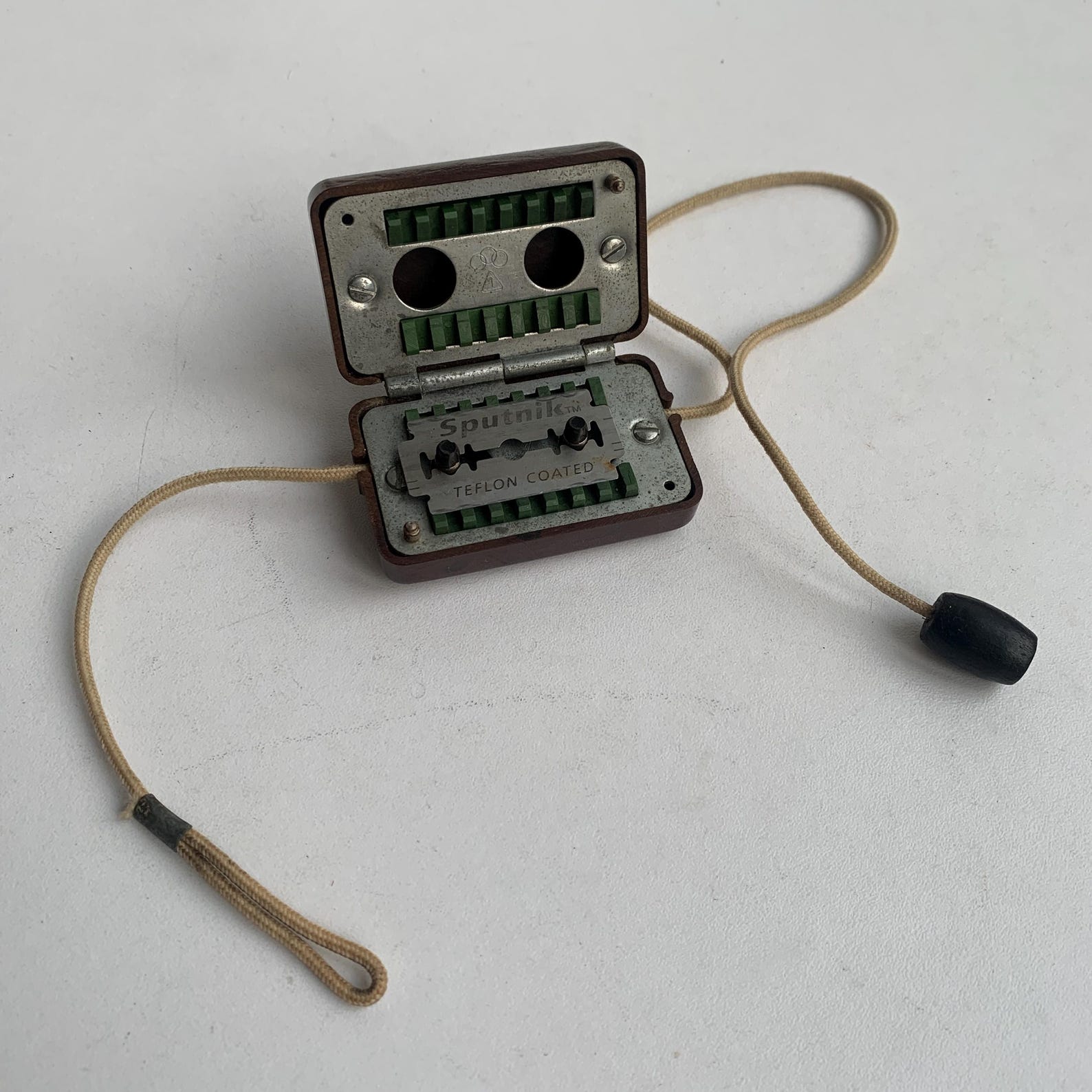
The specific “Space Age” branding seen here (like Sputnik) suggests this particular model style likely became popular from the late 1950s onward, when modern plastics, new coatings, and bold consumer branding were everywhere. In other words: the idea is older, but this exact kind of compact pull-cord sharpener is typically associated with the mid-20th-century to late-20th-century period.
What It Was Used For
The job was simple: make a used safety razor blade shave better for longer.
Back then, a blade that started tugging or feeling rough didn’t always get tossed immediately. Instead, many people used gadgets like this to:
- reduce pulling and irritation
- restore a smoother shave
- stretch a blade for additional uses
- save money and reduce waste (long before “sustainability” was a trend)
How This Type Works (In Plain English)
The design in your images is a classic: a small clamshell case with interior guides and a cord.
Here’s the basic idea:
- You place a double-edge blade inside the holder area.
- You close the lid to clamp it in position.
- You pull the cord back and forth.
- That pulling motion drives an internal mechanism that moves the blade edge across stropping surfaces (or lightly abrasive/aligning surfaces), helping straighten and refresh the edge.
Many versions focused more on realigning the microscopic edge than aggressively removing metal. That’s why “stropper” is a common nickname—similar concept to stropping a straight razor, but packaged into a pocket-sized mechanical tool.
Why People Loved Them
For a lot of Americans, vintage grooming gear carries a certain nostalgia because it reflects a time when:
- tools were built to be reused
- small maintenance habits were part of daily life
- a “good shave” was a routine skill, not a disposable convenience
A compact sharpener like this could sit in a bathroom drawer, travel bag, or shaving kit, ready to refresh a blade in seconds.
Why They Disappeared
These gadgets faded out as shaving technology shifted:
- better stainless steel blades
- mass production lowering blade costs
- the rise of disposable razors and later cartridge systems
Once blades became cheap enough to replace without thinking, a blade sharpener became one more step most people didn’t want.
Why They’re Popular Again (With Collectors)
Today, items like this are collected because they’re:
- clever mechanical designs
- part of classic wet-shaving history
- compact, tactile, and oddly satisfying to use
- great conversation pieces for vintage grooming displays
And for wet-shaving enthusiasts, they represent an era when people tried to maintain tools instead of replacing them.
The Big Takeaway
This small box is more than a curiosity—it’s a snapshot of everyday life from a different time. A vintage safety razor blade sharpener like this existed for one main reason: to keep blades shaving smoothly longer, back when reuse was normal and simple mechanical solutions were everywhere.