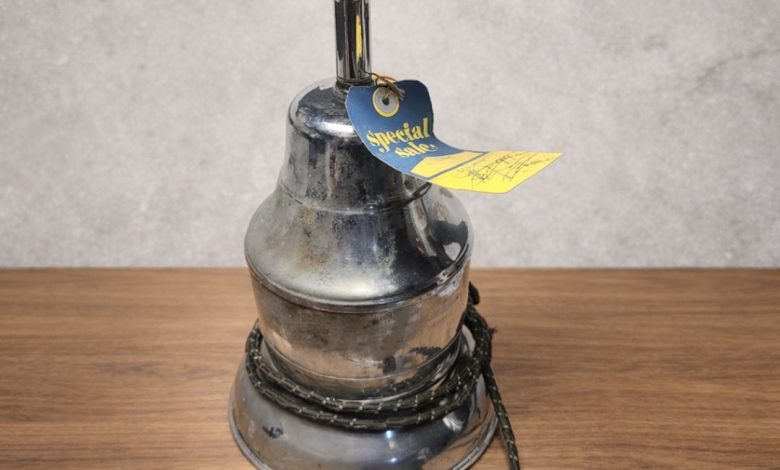
Found this recently in an abandoned farm house. It’s about 15in tall and is made of a steel chrome finish.
What It’s Called
This appliance is commonly referred to as a Vintage 1920s Electric Chrome Hat Steamer, also described in period listings and collector circles as an electric hat steamer, hat shaper steamer, or millinery hat steamer. Its defining purpose was to generate controlled steam for softening and reshaping hats, especially felt and wool styles.
What You’re Seeing in the Photos (Key Identifiers)
- Chrome-plated metal body with a wide, stable base (typical of early countertop electrics).
- Cloth steam bonnet/bag at the top, used to diffuse steam and protect materials from direct metal contact.
- Electric power cord exiting the base, with internal terminals visible underneath—evidence of an internal heating assembly.
- An additional threaded accessory piece (a removable top/attachment) that likely screws into the top to support or position a hat/brim during steaming.
When It Appeared (Time Period)
- Steam has been used in hat-making for centuries, but electric, plug-in hat steamers became practical once household electricity and compact heating elements were widespread.
- Models like this—chrome-bodied, countertop units—are most commonly associated with the early 20th century, with many examples marketed and circulated in the 1910s through the 1930s, including the 1920s.
Who Created It (Origin and Maker)
- Unlike a single-inventor novelty item, the electric hat steamer is best understood as an incremental product category: a practical adaptation of early electric heating technology for millinery use.
- These units were typically manufactured by appliance makers or millinery-supply firms, then sold through department stores, catalogs, or professional hatting suppliers.
- Important note: From the provided photos, there is no clearly visible manufacturer nameplate or brand marking, so the exact company and individual inventor cannot be confirmed from the images alone.
What It Was Used For (Primary Purpose)
The hat steamer’s job was straightforward: produce steam on demand so a hat could be refreshed, cleaned up, and reshaped.
Common uses included:
- Softening felt so the crown and brim could be re-formed
- Removing dents, creases, and “storage lines”
- Refreshing a hat’s structure after rain, sweat, or long wear
- Preparing hats for blocking (professional reshaping on a form)
- Reviving the brim line so hats sat correctly and looked crisp
How It Works (Typical Operating Concept)
While specific internal designs varied, most electric hat steamers followed the same logic:
- Heat is generated internally by an electric element housed in the metal body.
- The unit creates hot vapor/steam that rises toward the top outlet.
- The cloth bonnet/bag disperses the steam, making it gentler and more evenly distributed.
- The user places or hovers a hat near the steam source to soften fibers.
- The hat is then shaped by hand (or positioned using an accessory attachment) and allowed to cool and set.
Why It Was Popular in the 1920s
Hats were not occasional accessories—they were daily wardrobe essentials. In the 1920s, styles like cloche hats, fedoras, and structured felt designs demanded careful shaping. A home steamer helped owners:
- Extend the life of a hat (a meaningful cost saver)
- Keep a polished appearance without frequent professional service
- Maintain fashionable silhouettes as trends changed
Construction and Design Highlights
- Chrome finish: fashionable, easy to wipe clean, and aligned with early modern “shiny appliance” styling.
- Compact countertop form: meant for quick use in a home, barber shop, tailor shop, or millinery workspace.
- Cloth interface at the top: reduced scorching risk and helped distribute heat/steam more evenly across delicate hat materials.
Collector Notes: Condition, Care, and Safety
Because this is a vintage electric appliance, careful handling matters.
- Display value: The chrome body and distinctive steam bonnet make it a strong decorative collectible.
- Electrical caution (very important): Visible aging, frayed insulation, and older internal terminals can make powering it on unsafe.
- If someone wants it functional, it should be evaluated and rewired by a qualified technician.
- Cleaning: Collectors typically use gentle metal-safe polish on chrome and dry/low-moisture cleaning for cloth parts to avoid damage.
Why This Object Still Matters
The vintage electric chrome hat steamer is a small but telling artifact of a time when:
- Clothing care was hands-on, not outsourced
- Appliances were built with heavy materials and simple mechanics
- Steam was the go-to “technology” for restoring shape and dignity to everyday fashion items
In short, it’s a practical, stylish piece of early household engineering—built to help people keep their hats looking sharp in the decades when hats defined the look of an era.