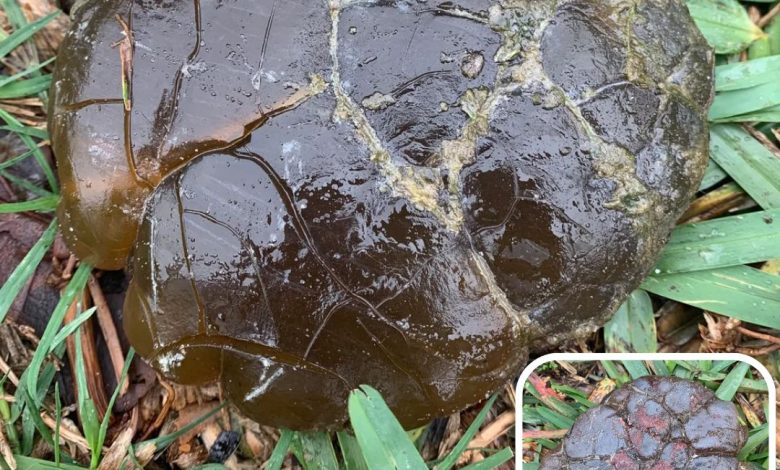
Hard, Waxy, Blob-Looking Thing Found During Low Tide. Are you one of the few who know what it is?
What People Find on the Shore
While walking along a beach, you might spot objects that don’t look like pebbles, shells, or seaweed. These mysterious lumps may be:
- Covered in a soft white layer that resembles cotton wool
- Hard or waxy to the touch
- Containing trapped debris inside
- Accompanied by a strong odor often described as “a cross between squid and farmyard manure”
Because of their powerful smell, dogs often discover them first.
The Big Hope: Ambergris (“Whale Vomit”)
Some beachcombers dream of finding ambergris, sometimes nicknamed “whale vomit” and famously called “floating gold.”
- It has historically been prized by royalty and remains valuable to artisan perfumers.
- A reported find in the UK was estimated at £50,000 (US$71,000) for a 1.57 kg lump.
- The question is: What exactly is ambergris, and why does it still command such high prices?
Why Ambergris Is So Valuable
The high value comes from its rare biological origin and a key compound: ambrein.
- Only sperm whales produce the compound responsible for ambergris’ unique appeal: ambrein.
- Sperm whales mainly eat squid, but squid beaks cannot be digested.
- To prevent injury when passing these sharp beaks, whales coat them with ambrein, essentially gluing the beaks together into a safer mass.
How Ambergris Forms and “Ages” in the Ocean
Ambergris begins as a mixture of:
- Squid beaks
- Ambrein
- Another digestive byproduct: epicoprostanol
It is usually expelled as faecal matter (and sometimes through vomiting, which explains the nickname). After that:
- The lump floats in the sea.
- It gradually changes from a dark, foul-smelling mass into a paler, more waxy material.
- Over time, it becomes less like “waste” and more like a unique ocean-aged substance.
What Changes During Ageing
As it drifts for long periods, ambergris tends to:
- Bleach from black to lighter shades
- Lose some of the faecal odor (more likely to dissolve away)
- Absorb marine scents into its waxy structure (similar to how butter in a fridge picks up nearby smells)
- Become increasingly waxy and smooth
Why Ambergris Is So Rare
Ambergris is uncommon because:
- Not every sperm whale produces these lumps
- Sperm whale numbers are far lower than in the past
- The formation process depends on very specific conditions involving diet and digestion
Why Perfumers Wanted It (and Why Many Don’t Use It Now)
Traditionally, ambergris was used in luxury perfume because it helps fragrance:
- Last longer
- Develop distinctive aromatic notes after reacting with oxygen
However today:
- Many perfumers rely on synthetic alternatives rather than natural ambergris.
Ambergris also carried a reputation as an aphrodisiac, and one study reported it acted as a sexual stimulant in rats.
Fool’s Gold: The Problem With “Ambergris Tests”
Most suspected finds turn out to be something else. A commonly suggested method is the “hot needle test.” Supposedly, if you touch the lump with a hot needle, it should:
- Melt slightly
- Release white smoke
- Produce a distinctive smell
Why This Test Is Unreliable
Many common beach pollutants can behave similarly, including:
- Candle or paraffin wax
- Residues from palm oil distillation
- Rubber
- Solidified sewer grease
These substances are far more abundant than ambergris and can:
- Smooth and bleach over time in seawater
- Melt with heat and release smoke—especially if they’ve absorbed water
The Smell Problem: Humans vs Dogs
People expect ambergris to smell unmistakable, but odor is subjective:
- Human smell perception relies heavily on association (one person may find it pleasant; another may find it disgusting).
- Dogs often prefer rancid odors, so their interest does not confirm authenticity.
Bottom Line: What You Probably Found
Ambergris is exceptionally rare. A waxy, stinky blob is much more likely to be:
- Oil residues (petroleum or vegetable-based)
- Industrial wax
- Sewer grease or other waste products
Practical Takeaway
If you find a strange waxy lump on the beach:
- Treat it with caution—many look-alikes are linked to pollution.
- Consider whether the odor is something you would want “near your body.”
- If it smells unpleasant and rancid, it is most likely not ambergris.