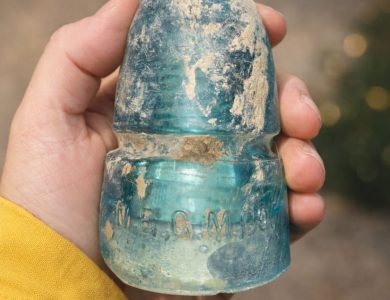
I found a bag full of strange glass tubes in my late uncle’s bedroom drawer…
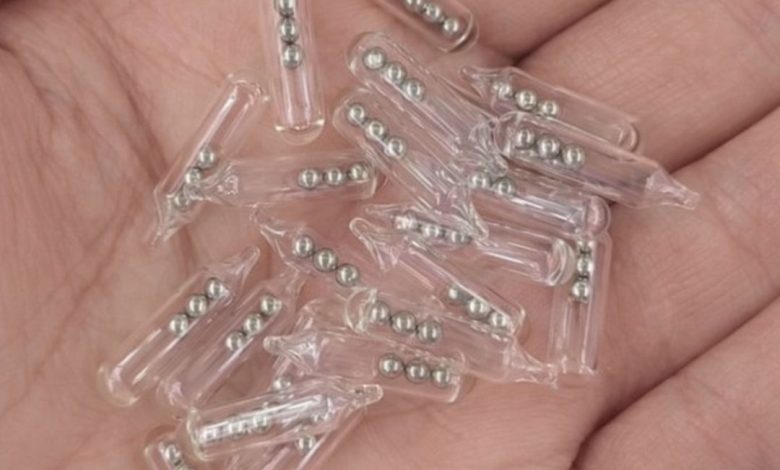
If you’ve ever cut open a soft-plastic bait and found a little clear tube with metal BBs inside, you were looking at a glass rattle insert—often sold as “glass rattles,” “tube rattles,” “worm rattles,” or soft-bait rattle inserts. These are the small pointed glass capsules shown in the photos, each holding three metal balls that click and vibrate when the lure moves.
What it’s called
In American tackle talk, this accessory is most commonly called a glass rattle or rattle insert. When it’s meant specifically for hollow-body tubes or soft worms, you’ll also hear tube rattle or worm rattle.
What it does
A glass rattle insert adds two things that many soft plastics don’t naturally have:
- Sound: the metal BBs create a sharp “tick-tick” clicking noise inside the bait
- Vibration: that clicking also creates micro-vibrations that fish can detect, especially in low visibility
This is why anglers often use rattles in stained water, muddy water, deep water, cloudy days, or heavy cover, when fish may rely more on sound and vibration than sight.

How anglers use it
The second image panel (steps 1–4) shows the basic idea: you insert the glass rattle into the soft bait so it sits inside the body. Many anglers place it in:
- the tail for a “clicking” follow-through
- the mid-body to keep the bait balanced
- the head area for a stronger “knock” on hops and drops
A common rule is to keep it centered so the bait still tracks straight in the water.

When it first appeared
These inserts are part of a longer trend: anglers have been trying to add sound to lures for decades, and soft plastics eventually followed.
- 1949 is widely recognized as the breakthrough year for modern soft-plastic worms (Nick Creme’s early plastic worm), which set the stage for all the soft baits we use today.
- By the late 1960s, hard baits with internal BB sound chambers (like the Rat-L-Trap concept) helped make “rattling” a mainstream fish-trigger.
- Soft-plastic tube lures became a major category in the early 1980s (one famous milestone: the Gitzit tube introduced in 1982), and tubes became a natural place to add internal sound.
- By 1990–1991, patents were already describing lure designs made to accept removable internal rattle assemblies, showing that “add-a-rattle” concepts were firmly established by that period.
- By the early 2000s, bass-fishing articles were explicitly recommending tube rattle inserts (marketed as add-ons) to help trigger bites—exactly the role these glass capsules play today.
So while no single brand “owns” the idea, the modern glass rattle insert for soft plastics became widely used from the 1990s into the early 2000s, as soft-plastic techniques exploded and anglers looked for extra strike triggers.
Why glass?
Glass capsules are popular because they’re:
- small and rigid, so the BBs click sharply
- smooth, so they slide into soft plastics more easily
- consistent, giving a reliable sound profile bait to bait
The bottom line
These little tubes are simple, but they’re designed for one clear purpose: turn a silent soft plastic into a bait that “sounds alive.” When conditions make fish cautious—or visibility is poor—a glass rattle insert can be the extra cue that turns follows into strikes.