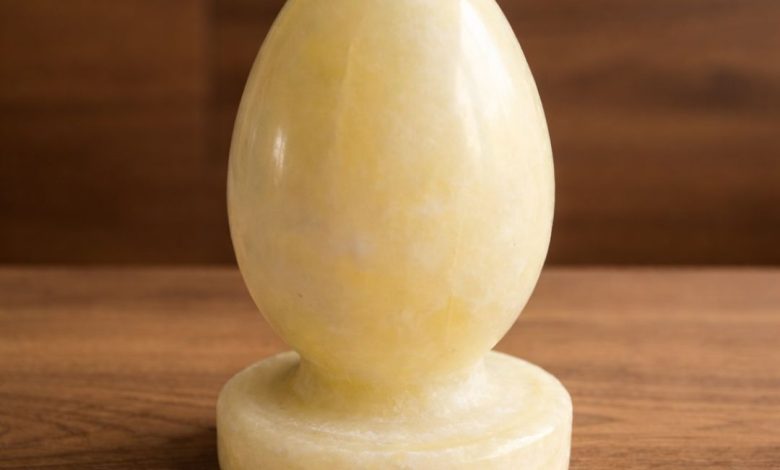
I found it at my grandparents’ house. It fits in my hand. What did they use it for?!
The Mystery Marble at Grandma’s House: Solved
A grandchild spotted a smooth, egg-shaped marble object at their grandparents’ home—small enough to fit in a palm and perfectly able to stand upright. Its clean shape and polished surface made it look like something special, yet no one could immediately name it. The mystery was later cleared up: Grandma recognized it as a paperweight she bought long ago and simply forgot about.
What the Object Is Called
The most accurate name for the item shown is a:
- Stone/Marble Paperweight (often described as an egg-shaped paperweight)
- Sometimes also called a desk weight or decorative paperweight
What the Photo Reveals
From the image, several details strongly support the paperweight identification:
- Material: Cream-colored polished stone (commonly marble, onyx, alabaster, or similar decorative stone)
- Form: An egg/oval shape designed to be comfortable to hold
- Base: A circular pedestal that helps it stand upright and adds stability
- Weight & Function: The thickness and finish suggest it was made to be heavy enough to hold papers down
When Paperweights First Appeared
Paperweights don’t have a single “birthday,” because the idea is simple: people have used heavy objects to hold down paper for centuries. However, paperweights as a recognized desk accessory became popular in stages:
- Early practical use (centuries ago): Any small heavy object could serve as a weight for papers.
- Desk accessory era (1700s–1800s): As offices and personal desks became more common, purpose-made desk weights became more widespread.
- Decorative boom (mid-1800s onward): Paperweights became decorative objects, especially as craftsmanship and gift items expanded.
In other words, the concept is old, but paperweights became a mainstream home-and-office item especially from the 18th–19th centuries onward.
Who Created It
There are two different answers—one for the general invention and one for this specific object:
Who “invented” paperweights?
- No single inventor. Paperweights evolved naturally as paper became common and people needed a simple way to keep documents from shifting.
Who made this exact marble paperweight?
- Unknown from the photo alone. Many stone paperweights were:
- Mass-produced for gift shops and home décor stores
- Sold without permanent maker’s marks
- Made by a wide range of manufacturers across multiple countries over many decades
If the underside has a sticker, stamp, or etched mark, that may identify the maker or retailer.
What It’s Used For
A paperweight is designed to:
- Hold loose papers in place on a desk (especially near windows, fans, or busy workspaces)
- Keep notes, receipts, letters, or photos from sliding or curling
- Serve as a decorative desk accessory
- Act as a small keepsake object tied to a place, time, or person
Why Marble (or Similar Stone) Was a Popular Choice
Stone paperweights are common because they are:
- Naturally heavy for their size (excellent “holding power”)
- Durable and resistant to everyday wear
- Visually appealing with natural veining and soft color
- Easy to polish for a smooth, glossy finish
Takeaway
What looked like a puzzling marble “egg” turned out to be something wonderfully ordinary and timeless: a paperweight—a classic object that can sit on a desk for years until its purpose is forgotten. In many families, these small items quietly become part of the background, only to turn into a mystery when rediscovered.
