If Jimmy Kimmel Leaves America, It Will Reveal Hollywood’s Growing Divide With Ordinary Voters
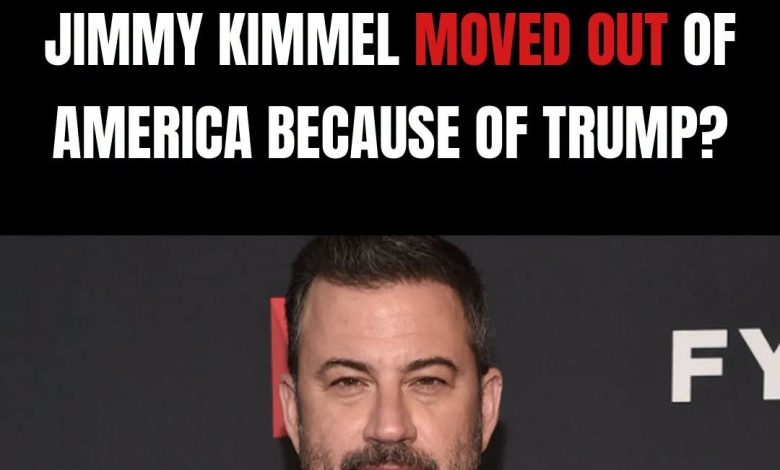
If Jimmy Kimmel ever follows through on the idea of leaving the United States because voters choose Donald Trump, many Americans may see his departure not as a national loss, but as another sign of how disconnected Hollywood has become from the country it claims to represent.
For years, late-night television has increasingly operated as an extension of partisan politics. Hosts who once entertained audiences across ideological lines now routinely use their platforms to ridicule conservatives, criticize border enforcement, and portray traditional social values as backward or dangerous.
The deeper issue is not that celebrities hold political opinions. It is that many entertainment figures appear unwilling to respect voters who reach different conclusions.
Millions of Americans support Trump because they are concerned about the cost of living, border security, public safety, American manufacturing, energy production, and the expanding power of the federal government. These voters are not simply characters in a late-night monologue. They are workers, parents, business owners, veterans, farmers, and taxpayers whose lives are directly affected by decisions made in Washington.
When wealthy entertainers suggest that they might abandon the country after an election result they dislike, the gesture can appear less like principled protest and more like contempt for the democratic process.
American elections belong to the voters—not to Hollywood studios, television networks, political donors, or celebrity activists.
Supporters of Trump believe his agenda offers a return to policies centered on secure borders, domestic energy production, stronger trade enforcement, military readiness, and reduced regulatory burdens. They argue that these priorities are especially important to working-class communities that have endured rising prices, industrial decline, and economic uncertainty.
Critics may strongly disagree with those policies, and they have every right to do so. But dismissing Trump voters as ignorant, immoral, or unworthy of respect only deepens the cultural divide.
Kimmel has built a successful career through comedy, celebrity interviews, and political commentary. Yet his increasingly partisan monologues have also made him a symbol of a broader transformation in American entertainment. Late-night television is no longer primarily a place where the country laughs together. It has become another political battlefield.
That shift has alienated viewers who once watched comedy to escape politics rather than receive another lecture about it.
A Kimmel departure would therefore represent something larger than one television personality relocating. It would highlight the widening distance between elite entertainment institutions and Americans who live outside the cultural centers of Los Angeles, New York, and Washington.
Many voters do not live behind private security or inside gated communities. They experience the consequences of crime, inflation, weak infrastructure, overcrowded public services, and economic instability directly. They naturally resent being lectured by celebrities whose wealth protects them from many of those pressures.
Conservative Americans are not demanding that Hollywood become uniformly Republican. They are asking for basic fairness, ideological diversity, and recognition that patriotism is not something to be mocked.
Faith, family, national sovereignty, personal responsibility, and individual liberty remain central values for millions of Americans.
Those principles deserve a legitimate place in American culture. Entertainment does not need to become propaganda, but it should not treat half the country as an enemy audience either.
If figures like Kimmel decide they cannot remain in the United States when voters reject their preferred political direction, that is their personal choice. But their departure would not invalidate the election or diminish the millions of citizens who participated in it.
Instead, it might create room for new voices—comedians, commentators, filmmakers, and storytellers who understand that American audiences are more politically and culturally diverse than Hollywood often admits.
The country does not need fewer disagreements. It needs more respect for the people on the other side of them.
America’s future will not be determined by celebrity threats, television monologues, or applause from studio audiences. It will be determined by citizens who vote, work, raise families, build businesses, serve their communities, and remain committed to the nation even when elections do not go their way.
If Jimmy Kimmel leaves because of a Trump victory, the lasting story will not be that America rejected him. It will be that one of Hollywood’s most influential voices could no longer accept the political choices of the American people.
And for many patriotic voters, that would confirm what they have believed for years: Hollywood has lost touch with the nation, while ordinary Americans are reclaiming their voice.