It has apparently been in the family for 80 years. Any help identifying this would be great!
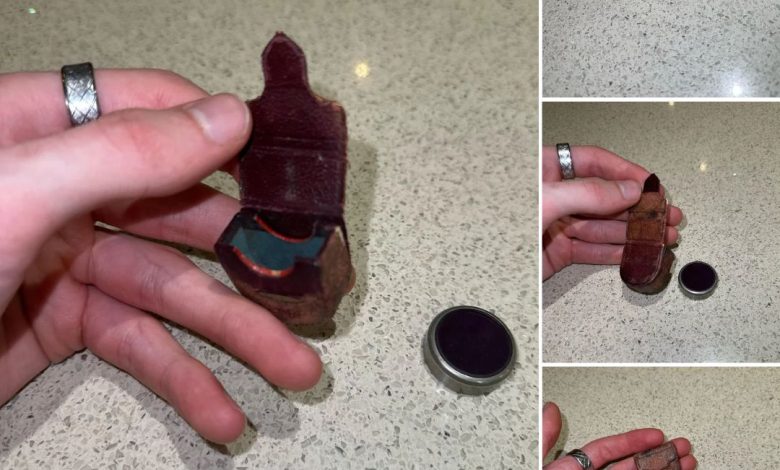
A small leather pouch paired with a round metal insert may look like an odd trinket today, but it is often described as part of a Prussian soldier’s personal kit designed to carry a small quantity of ground coffee. In an era when hot drinks were a daily comfort and a practical calorie boost, keeping coffee dry, clean, and portable mattered—especially on long marches.
What This Object Is
This set typically consists of two main parts:
- A compact leather pouch with a flap closure
- Built to be tough, flexible, and easy to carry
- The flap helps reduce moisture and dirt exposure
- A small round metal container/insert
- Sized to fit neatly inside the leather holder
- Metal helps shield the coffee from crushing and humidity
Key idea: it functioned as a personal micro-storage system for coffee—small enough to be practical, but secure enough to protect a precious ration.
Why Coffee Was Worth Protecting
For many European armies of the 18th–19th centuries, coffee wasn’t just a luxury. It served several field-friendly purposes:
- Morale and routine: a familiar hot drink during hardship
- Warmth in cold conditions: a quick way to heat the body
- Energy and alertness: caffeine helped soldiers stay focused
- Simple preparation: coffee could be brewed with minimal equipment when fire and water were available
In the field, ground coffee could quickly become useless if it got wet or contaminated. A dedicated holder helped keep it dry, portioned, and ready.
How It Was Likely Used
A practical routine in camp or on the march would have looked like this:
- Fill the metal insert with a small portion of ground coffee.
- Nest the insert into the leather pouch and close the flap.
- When stopping to brew, remove the insert and tip coffee into a pot, cup, or improvised brewing setup.
- Return the insert to the pouch after use to keep residue and moisture contained.
What the Materials Tell Us
- Leather exterior: durable, quiet, and comfortable to carry; it also provides light insulation and abrasion resistance.
- Metal insert: hygienic and protective; it prevents the contents from being crushed and creates a more stable micro-environment than cloth alone.
Together, the combination is a classic military design approach: a rugged outer carrier plus a protective inner core.
Historical Context: Why “Small Amount” Matters
Military rations and personal supplies had strict limits due to weight and logistics. A soldier’s coffee supply was typically:
- Portion-controlled (enough for a few brews, not a full household supply)
- Easy to distribute and replace
- Simple to pack alongside other essentials (tobacco, matches, salt, buttons, sewing items)
This is why these holders are notably compact—they are built around the reality of marching life.
What Collectors Look For Today
If you’re evaluating or documenting a piece like this, the most important details usually include:
- Original stitching and flap shape (repairs can be common)
- Leather condition
- Look for cracking, dryness, or excessive softness from over-conditioning
- Fit between pouch and insert (a good fit suggests the set belongs together)
- Wear patterns consistent with use
- Smooth edges, darkened leather, and rubbed corners can indicate age and handling
Preservation Tips (Safe and Conservative)
- Store in a cool, dry place away from sunlight.
- Avoid sealing it in airtight plastic if the leather is old; trapped moisture can cause damage.
- If cleaning is needed, use minimal intervention:
- Soft dry brush for dust
- Avoid heavy oils; over-conditioning can weaken old leather and stitching
Why This Small Item Still Matters
Objects like this are compelling because they reveal the human side of military history: not just weapons and uniforms, but daily comforts and survival routines. A tiny coffee holder captures a simple truth of field life—sometimes the smallest items carried the biggest psychological value.