Kamala Harris’ Latest Speech Revives Questions About Her Ability To Communicate Clearly
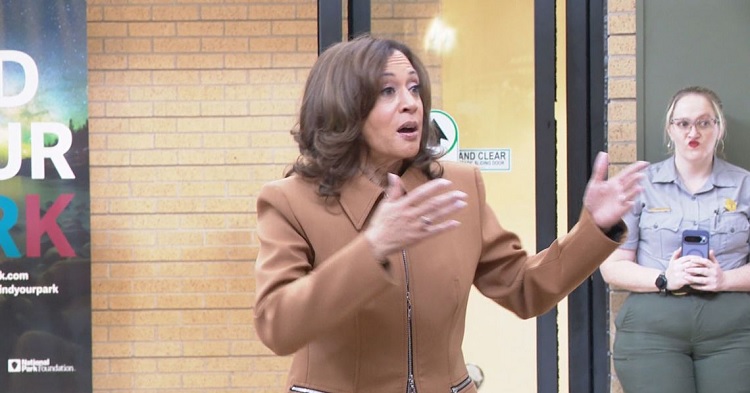
Former Vice President Kamala Harris is once again facing widespread criticism over her speaking style after a recent clip discussing the Little Rock Nine circulated across social media.
Harris began by recalling her visit to Little Rock Central High School, where nine courageous Black students helped integrate the school in 1957 despite threats, hostility, and intense public opposition. She reflected on what those students must have experienced while walking through crowds that opposed their presence.
The historical subject was important and deserved a powerful, carefully structured message. However, critics argued that Harris quickly shifted from the specific story of the Little Rock Nine into a series of broad and repetitive political statements.
“These fights are for something. They’re not against something,” Harris said. She continued by explaining that such struggles come from loving the country, believing in its ideals, and recognizing that reaching those ideals requires work.
Her underlying point appeared to be that civil-rights activism should be understood as a patriotic effort to make America live up to its founding principles. Yet the way she delivered that message struck many listeners as unfocused and unnecessarily difficult to follow.
Harris later declared, “We know what we got to do. Listen, we know what we stand for, so we know what to fight for.”
The remarks immediately attracted criticism from conservative commentators and social-media users, many of whom compared the clip to the confusing answers and repetitive phrases that became a recurring problem during her 2024 presidential campaign.
Some online reactions focused on insults, memes, and speculation about Harris’ personal behavior. Those claims remain unverified and distract from the more legitimate political question: Why does a national political figure with years of public experience continue to struggle to communicate straightforward ideas clearly?
The Little Rock Nine represent one of the most important chapters in the American civil-rights movement. Their courage, discipline, and willingness to confront injustice deserve language that is precise, memorable, and respectful. Harris had an opportunity to connect their experience to modern civic responsibility. Instead, critics say her message became buried beneath abstractions about “fights,” “ideals,” and leadership.
That problem followed Harris throughout the 2024 campaign. She frequently relied on carefully packaged phrases that sounded inspirational but often lacked concrete explanations. Voters heard repeated references to freedom, democracy, opportunity, and “what can be,” but many remained uncertain about how those themes would translate into practical policies affecting inflation, immigration, public safety, energy costs, and national security.
This communication gap helped create a sharp contrast with Donald Trump. Regardless of whether Americans agreed with every proposal he presented, Trump generally delivered his priorities in direct and easily recognizable terms: secure the border, strengthen the economy, expand domestic energy production, protect American workers, and put U.S. interests first.
Harris’ political language often sounded more abstract. She spoke about values and aspirations but struggled to explain the specific actions she would take or the measurable results Americans could expect.
That distinction mattered in the 2024 election. Many voters were not simply choosing between two personalities. They were choosing between competing approaches to leadership. Trump offered a blunt, policy-centered message. Harris frequently delivered carefully rehearsed rhetoric that critics considered vague, circular, and disconnected from everyday concerns.
Clear communication is not a superficial requirement for the presidency. A president must explain complex decisions during wars, economic crises, natural disasters, and periods of national division. Americans need to understand what their government is doing, why it is doing it, and what consequences may follow.
The latest Harris clip therefore matters for reasons beyond social-media entertainment. It raises continuing questions about whether Democratic leaders have learned the lessons of their 2024 defeat.
The party cannot assume that references to identity, history, or democratic ideals will automatically persuade voters. Those subjects can be meaningful, but they must be connected to coherent arguments, credible policies, and tangible results.
Americans are increasingly impatient with political speeches filled with slogans but short on substance. They want leaders who can identify a problem, propose a solution, and explain that solution in language ordinary citizens can understand.
Kamala Harris’ latest remarks offered another reminder of the communication weaknesses that damaged her presidential campaign. The historical importance of the Little Rock Nine was clear. Her broader political message was not.
For Democrats hoping to regain public confidence, that should be treated as a warning rather than dismissed as another viral moment. Voters are demanding competence, clarity, accountability, and results. Any political leader who cannot deliver those qualities will continue to struggle—no matter how many inspirational phrases appear in the speech.