Republicans Who Abandon the SAVE America Act Risk Losing Voter Trust
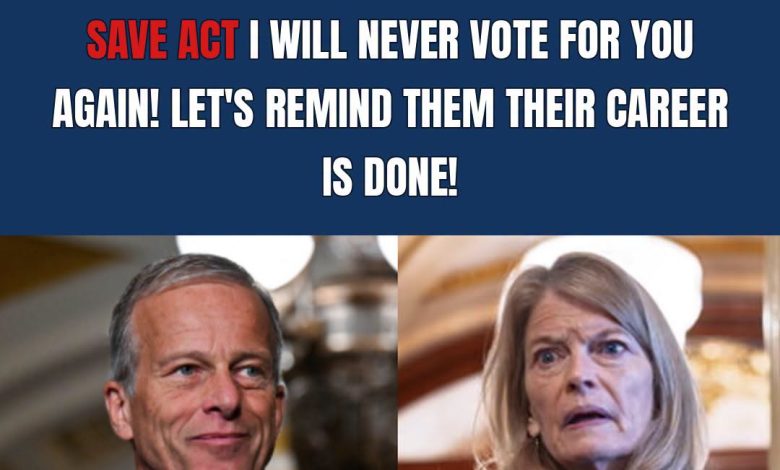
Republican voters are demanding answers from lawmakers who refuse to stand firmly behind the SAVE America Act, a major election-integrity proposal intended to strengthen citizenship verification and voter-identification requirements.
The legislation, which passed the House in February 2026, would require applicants to provide documentary proof of U.S. citizenship when registering for federal elections and generally require voters to present photo identification before casting a ballot. The measure remains stalled in the Senate amid opposition from Democrats and resistance from some Republicans.
For conservatives, the principle behind the legislation is straightforward: American elections should be decided exclusively by eligible American citizens.
Federal law already prohibits noncitizens from voting in federal elections, and falsely claiming citizenship while registering can result in serious criminal and immigration penalties. Recent Justice Department cases demonstrate that violations can occur, even though available research does not establish that noncitizen voting happens on the massive scale sometimes alleged in political speeches.
That distinction matters.
Supporters of stronger safeguards do not need exaggerated claims about “millions” of illegal ballots to make their case. Even isolated violations deserve investigation, and election laws should be designed to prevent unlawful registration before a ballot is cast—not merely punish offenders afterward.
The larger issue is public confidence. When Americans believe voter-registration systems lack adequate safeguards, trust in election outcomes deteriorates. Requiring proof of citizenship could provide voters with greater assurance that eligibility is being verified consistently rather than depending largely on applicants checking a box and signing an attestation.
Critics argue that documentary requirements could create difficulties for eligible citizens who do not have immediate access to a passport, certified birth certificate or other qualifying records. Research from the Bipartisan Policy Center indicates that approximately 12 percent of registered voters may not have commonly accepted citizenship documents readily available, although document access appears broadly similar among Republicans and Democrats.
Those concerns should be addressed through practical solutions—such as reasonable implementation periods, assistance obtaining replacement documents and clear procedures for citizens whose names have changed—rather than used as an excuse to abandon citizenship verification entirely.
Republican lawmakers were elected in part to defend secure borders, national sovereignty and confidence in American institutions. They should therefore explain clearly why they oppose the legislation, which provisions concern them and what alternative protections they are prepared to support.
Simply avoiding the issue will not satisfy voters.
Conservative constituents have grown increasingly frustrated with politicians who campaign on election integrity but retreat when meaningful legislation reaches Congress. A Republican label alone does not entitle any officeholder to permanent support. Lawmakers must earn that support through their votes, their transparency and their willingness to defend the promises they made.
At the same time, accountability should remain democratic and evidence-based. Voters have every right to organize, question incumbents, support primary challengers and examine congressional voting records. But the debate should focus on legislation and documented conduct—not unsupported accusations that every opponent is deliberately helping people cheat.
Election integrity is too important to be weakened by careless rhetoric.
Supporters of the SAVE America Act should make the strongest defensible argument: citizenship is a fundamental qualification for participating in federal elections, enforcement should be consistent, and lawful voters should be able to prove eligibility without facing unreasonable barriers.
Republicans who reject those principles—or refuse to offer a credible alternative—should expect serious scrutiny from their constituents.
The message from conservative voters is increasingly clear: protect the lawful vote, explain your position and remember that public office belongs to the people—not to career politicians or party establishments.