Metal thing with a square hole in the bottom. What is this?
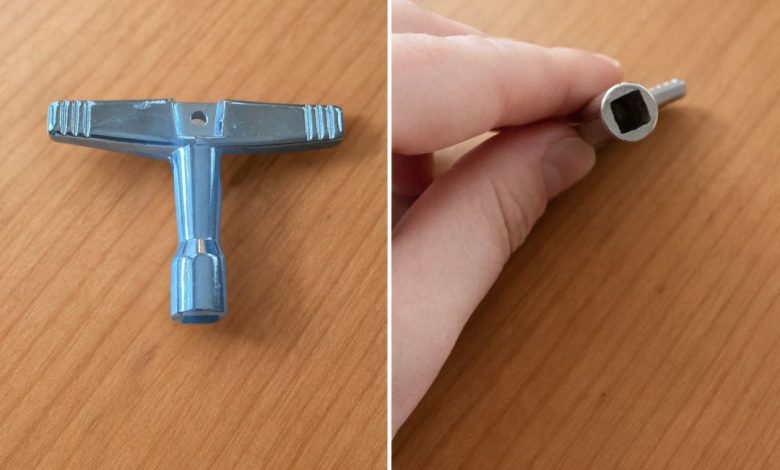
What Is a Drum Key?
A drum key is a small, T-shaped metal tool used to tune and adjust drums, especially snare drums, toms, and bass drums. It fits onto the square-shaped tension rods found around a drum’s rim and allows precise tightening or loosening.
Origin and Early History
- The drum key emerged in the late 19th to early 20th century, alongside the development of modern drum kits.
- As drums evolved from rope-tuned instruments to metal tension rod systems, a specialized tool became necessary.
- The drum key became standard as drum hardware became more mechanized and standardized.
Who Created the Drum Key?
- There is no single inventor credited with creating the drum key.
- It evolved through instrument makers and drum manufacturers responding to the needs of percussionists.
- Early drum companies helped standardize the square socket size, ensuring drum keys were widely compatible.
Design and Structure
Typical features of a drum key include:
- T-shaped body for better grip and torque.
- Square socket opening to fit drum tension rods.
- Metal construction (usually steel or chrome-plated steel) for durability.
- Small hole in the handle, often used to attach the key to a keyring or lanyard.
- Compact size, making it easy for drummers to carry at all times.
Primary Uses
A drum key is used to:
- Tune drumheads by tightening or loosening tension rods.
- Adjust pitch and tone of drums.
- Install or replace drumheads.
- Make quick adjustments during rehearsals or live performances.
Why the Drum Key Matters in Music
- Proper tuning is essential for sound quality, and the drum key makes this possible.
- It allows drummers to customize tone, resonance, and response.
- Despite its small size, the drum key is considered one of the most important tools in percussion.
Summary
The drum key is a simple but indispensable tool in modern music. Developed alongside modern drum hardware, it enables accurate tuning, consistent sound, and professional performance. Though small and often overlooked, it plays a critical role in shaping the sound of drums.