My dad gave this to me several years ago. Any ideas on what it was used for?
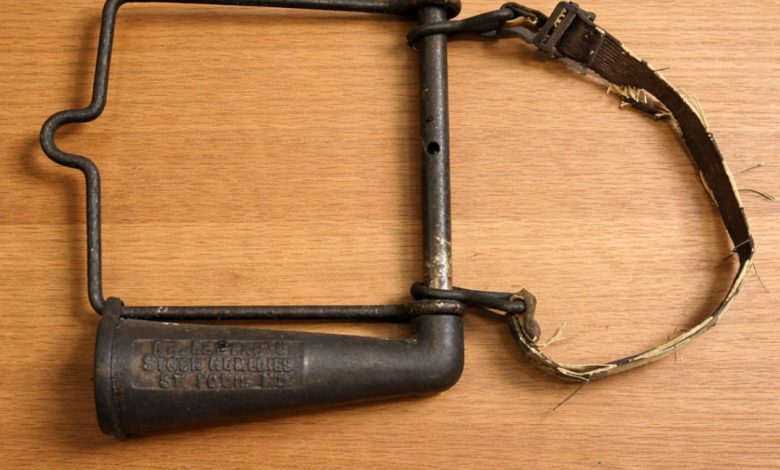
What It’s Called
- Common name: Horse drencher
- Also known as: Drenching bit, drenching bridle/bit, draught-horse drenching bit
- Brand example shown in the photos: “DR. LeGEAR’S STOCK REMEDIES, ST. LOUIS, MO.” (embossed on the funnel/cup)
What You’re Looking At (Key Parts)
- Metal frame/bit: A rigid, squared metal frame that functioned like a mouthpiece/bit assembly.
- Funnel or dosing cup: A conical metal cup (often brass or iron) used to hold liquid medicine.
- Hollow passage (internal channel): Allowed the liquid to flow from the funnel into the horse’s mouth and toward the throat.
- Leather strap/head strap (seen on some examples): Helped secure the tool and control head position.
- Rope or lifting point (historically common): Used to raise the horse’s head to assist swallowing.
When It Was Used (Time Period)
- Most associated with: Early to mid-20th century, especially for working and draught horses.
- Decline: By the 1950s and afterward, many veterinarians moved toward stomach tubing via the nostril (nasogastric intubation) for safer, more controlled dosing.
Who Created It (Inventor vs. Maker)
- Inventor: The exact original inventor is not clearly documented in typical surviving examples, and the design appears to have been produced by multiple makers over time.
- Manufacturers/brands: Some units were clearly branded by veterinary supply or remedy companies, such as Dr. LeGear’s Stock Remedies (shown on the funnel in the images), indicating commercial production rather than a one-off handmade farm tool.
What It Was Used For (Primary Purpose)
- Main job: To administer liquid “drenches” to horses—especially when a horse was sick and would not willingly swallow medicine.
- Most common situation: Colic management in an era when treatment options were more limited and fast dosing was prioritized.
Typical Remedies Given Through a Drencher (Examples)
- Paraffin/mineral oil
- Castor oil
- Epsom salts (magnesium sulfate)
- Other liquid tonics or farm-veterinary preparations of the period
How It Worked (Simple Step-by-Step)
- The bit/frame was positioned so the horse could not easily spit it out.
- The horse’s head was gently elevated (strap/rope assistance was often used).
- The liquid remedy was poured into the funnel/cup.
- The medicine flowed through the hollow channel and into the horse’s mouth/throat.
- With the head raised, the horse was encouraged to swallow rather than expel the fluid.
Why This Tool Faded Out
- Safety concerns: Drenching could increase the risk of aspiration (liquid entering the airway), especially if the horse resisted.
- Better control with tubing: Nasal stomach tubes let veterinarians deliver fluids more precisely and verify placement.
- Advancing veterinary standards: As equine medicine modernized, the drencher became obsolete and shifted into the category of collectible or museum piece.
What the Photos Suggest About This Specific Example
- Material and build: Heavy, utilitarian metal construction consistent with farm and working-horse equipment.
- Branding: The embossing “DR. LeGEAR’S STOCK REMEDIES, ST. LOUIS, MO.” indicates a commercial veterinary-product connection.
- Size: The broad, sturdy frame and large funnel style suggest it was likely intended for larger horses.
Why It Matters Today
- It captures a period when equine care relied on practical engineering and hands-on restraint techniques.
- It illustrates how veterinary medicine evolves—tools that were once essential can become historical evidence of changing standards and safer methods.