Pennsylvania Lawmaker Says Patriotic Jacket Got Him Removed From House Floor Ahead of America’s 250th Birthday
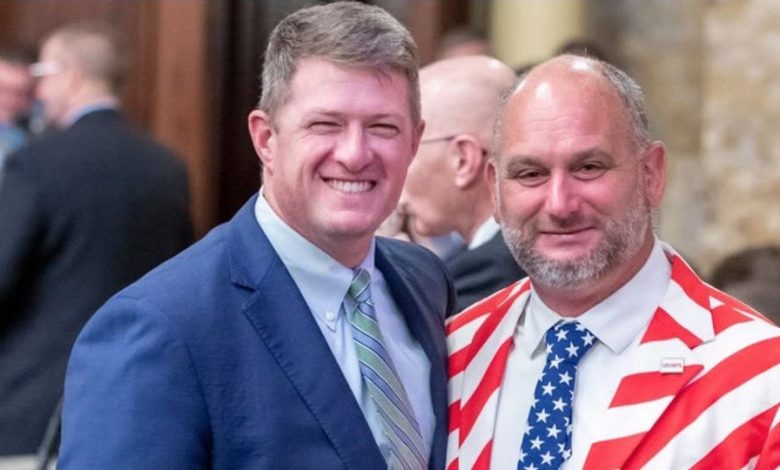
A Pennsylvania lawmaker’s red, white, and blue jacket has turned into a national conversation about patriotism, political decorum, and how America should mark its 250th anniversary.
State Rep. Eric Davanzo, a Republican representing Pennsylvania’s 58th District, said he was asked to leave the House floor after wearing an American flag-themed suit jacket and a blue tie with white stars. Davanzo said the outfit was meant to celebrate America’s upcoming 250th birthday, not to disrupt legislative business.
For many Americans, the controversy feels larger than one jacket. It raises a direct question: When did visible patriotism become something that needed to be policed?
According to Davanzo, he entered the chamber as usual before being told that his attire violated House expectations. He said he was given a choice: remove the jacket or leave the House floor. In a video posted after the incident, Davanzo defended his decision, saying he was proud to wear something that honored the country ahead of the Fourth of July weekend.
The response from House Democratic leadership framed the issue differently. A spokesperson for Speaker Joanna McClinton said lawmakers were in Harrisburg to focus on the serious work of passing a responsible state budget, and criticized some Republicans for showing up in what the statement described as “costumes.”
That explanation has not satisfied critics, especially because Davanzo’s supporters argue that his jacket was not offensive, obscene, or disruptive. It was a loud expression of American pride at a time when the nation is preparing to commemorate 250 years since the Declaration of Independence.
The controversy also touches a deeper nerve in American public life. Citizens are accustomed to seeing politicians wear symbolic clothing for causes, communities, military appreciation events, cultural celebrations, and awareness campaigns. Against that backdrop, many are asking why a flag-themed jacket before America’s semiquincentennial would be treated as unacceptable.
Davanzo and several Republican colleagues have argued that the matter should not be partisan. Celebrating America’s founding, they say, should be something that crosses party lines. The flag belongs to all Americans, not one party, one ideology, or one region of the country.
Still, the incident shows how quickly even patriotic symbols can become political flashpoints. Supporters of the removal may argue that legislative chambers require seriousness and restraint. Critics respond that seriousness should not require elected officials to hide enthusiasm for the country they serve.
The timing makes the dispute even more sensitive. America’s 250th anniversary is not a routine holiday. It is a once-in-a-generation national milestone, especially meaningful in Pennsylvania, home to Philadelphia, Independence Hall, and the founding history that shaped the republic.
For veterans, working families, students, and citizens who still see the flag as a unifying symbol, the image of a lawmaker being pushed off the House floor over patriotic attire feels unnecessary and avoidable. At minimum, it shows a failure of judgment by leaders who could have handled the moment with patience instead of escalation.
The broader lesson is simple: public institutions should be able to maintain decorum without treating patriotism as a problem. A chamber can conduct serious business while allowing elected officials to honor the country, especially during a historic national anniversary.
America’s 250th birthday should be a moment of reflection, gratitude, and unity. Lawmakers can debate budgets, taxes, schools, and policy with passion. But honoring the nation’s founding should not become another reason for division.
As the country prepares to mark this historic anniversary, one principle should remain clear: American pride is not a costume. It is part of the civic inheritance shared by every citizen.